

 Travel Essentials
 Travel Essentials

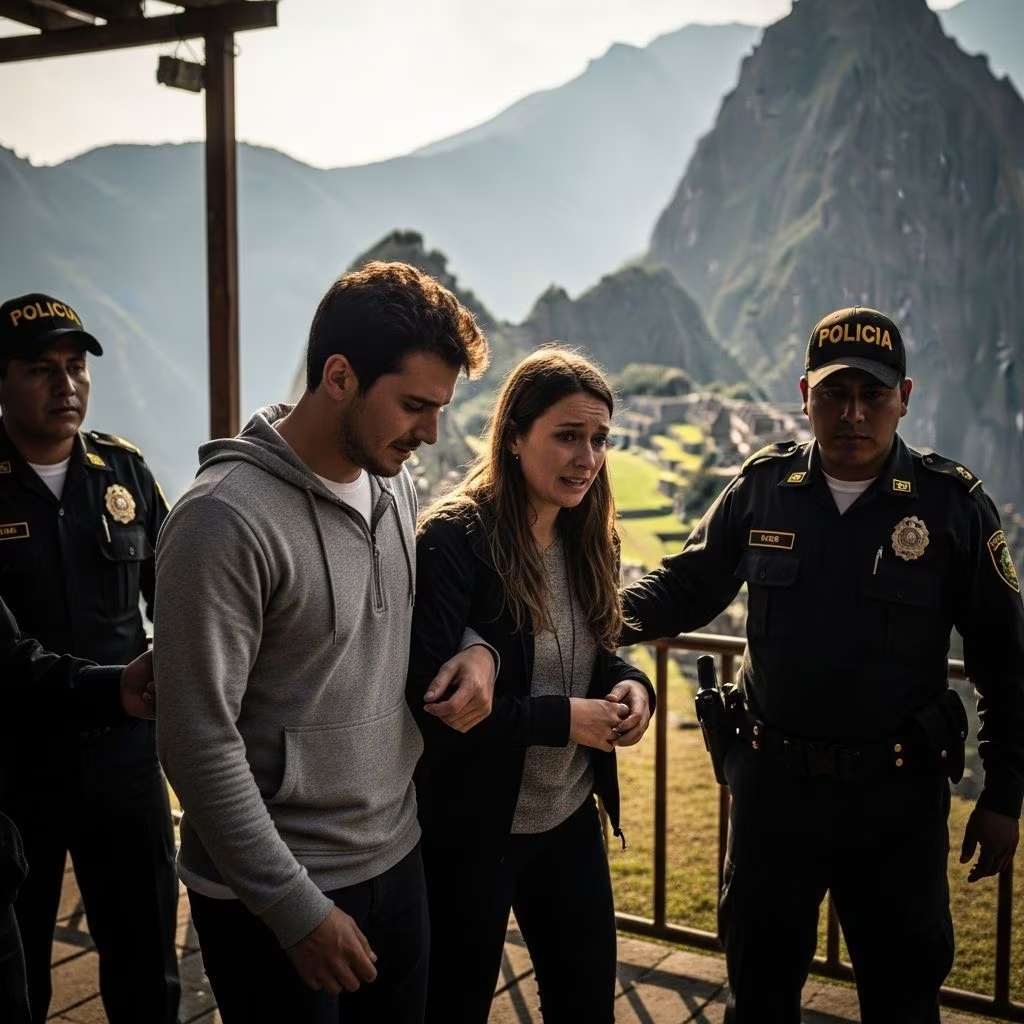
Peru deported five tourists and detained one after vandalism at Machu Picchu, underscoring the strict protection of the UNESCO heritage site.
 Travel Essentials
One of the world’s most iconic archaeological treasures, Machu Picchu, recently became the center of an international controversy when authorities in Peru took decisive action against a group of tourists accused of severe disrespect and damage to the site. This incident underscores the fragile balance between global tourism and the preservation of ancient heritage.
In the early hours of a Sunday morning, six foreign visitors from Chile, Brazil, France, and Argentina bypassed security measures to enter a prohibited zone within Machu Picchu’s National Archaeological Park. Their unauthorized exploration led to tangible harm: a dislodged stone from the ancient wall of the Temple of the Sun crashed to the floor, causing cracks in the sacred structure. Compounding the physical damage, one individual allegedly defecated within the Incan citadel, an act of profound disrespect to a site revered by indigenous cultures and UNESCO-listed as a World Heritage landmark.
Peruvian police acted swiftly upon discovery, detaining the group for investigation. The Temple of the Sun, known locally as Templo del Sol or Torreon, holds immense spiritual significance in Incan cosmology, believed to have served as a ceremonial space for solar worship and elite rituals. Such vandalism not only mars its physical integrity but erodes the cultural legacy entrusted to modern stewards.
Cusco regional police chief Wilbert Leyva confirmed the arrests, stating that the suspects faced scrutiny from the public ministry for crimes against cultural heritage. In a firm demonstration of Peru’s commitment to safeguarding its patrimony, five of the tourists were deported—some reports indicate to Bolivia—while the sixth, an Argentine man who admitted to orchestrating the breach, remained in custody to face formal charges.
Potential penalties are severe: convictions could result in at least four years imprisonment per perpetrator, reflecting Peru’s stringent laws under Decree Legislative 1192, which protects archaeological monuments. The Ministry of Culture issued a statement emphasizing zero tolerance for actions that threaten national treasures, signaling a broader policy shift toward stricter enforcement.
Machu Picchu, perched high in the Andes at 2,430 meters (7,972 feet), was constructed in the 15th century under Emperor Pachacuti and abandoned during the Spanish conquest. Rediscovered in 1911 by Hiram Bingham, it exemplifies Incan engineering with terraced fields, aqueducts, and precisely cut stonework that has withstood centuries without mortar. Today, it attracts over 1.5 million visitors annually, generating vital revenue for Peru but straining its delicate ecosystem and structures.
Climate change, foot traffic, and human error accelerate deterioration. Past incidents include trail erosion from overcrowding and amateur drone flights disrupting the peace. This latest event amplifies calls for enhanced monitoring, such as AI surveillance and increased patrols, already piloted by site managers.
| Preservation Challenge | Impact on Site | Proposed Solutions |
|---|---|---|
| Vandalism & Unauthorized Access | Structural damage, pollution | Biometric ticketing, night closures |
| Over-tourism | Soil compaction, wear on paths | Daily visitor caps (currently 2,500) |
| Environmental Factors | Weather-induced erosion | Restoration projects, vegetation control |
This deportation serves as a stark reminder that iconic destinations are not playgrounds. Tourists often arrive enchanted by Instagram reels, yet few grasp the site’s sanctity. Peru’s response contrasts with lax enforcement elsewhere, like graffiti at Egypt’s pyramids or littering at Angkor Wat, positioning it as a model for heritage defense.
Travel influencers and agencies must pivot toward education. Pre-trip campaigns could highlight dos and don’ts: stick to marked paths, no climbing, respect closures. Operators like PeruRail and Inca Trail guides already enforce codes, but individual accountability remains key.
“The six tourists are being detained and investigated… for the alleged crime against cultural heritage.” – Cusco Police Chief Wilbert Leyva
To experience Machu Picchu ethically:
Recent upgrades include timed slots and Huayna Picchu peak lotteries, reducing dwell time per area. Violations trigger fines from $150 upward, with deportation for egregious cases.
While this scandal dents perceptions, Peru’s tourism sector—worth billions—rebounds through transparency. Officials frame it as protecting the 90% of visitors who respect boundaries. Comparable cases, like the 2019 banning of a Slovenian influencer for kissing a sacred rock, reinforce this stance.
Economically, Machu Picchu funds community projects in Aguas Calientes and Cusco. Stricter rules could deter bad actors while elevating the site’s allure as a premium, reverent journey. International bodies like UNESCO applaud such vigilance, aiding grant eligibility for conservation.
No. All off-path zones are off-limits, enforced by guards and cameras. Violators risk immediate detention.
Up to four years prison and deportation; fines start at S/1,000 (~$260).
Yes, security has intensified. Over 99% of visits are incident-free.
Alert on-site staff or call park emergency lines.
Visit Mandor Gardens or Ollantaytambo for Incan vibes without crowds.
As Peru fortifies its crown jewel, travelers worldwide must internalize the ethos: heritage sites are living testaments, not photo ops. This episode, while unfortunate, catalyzes positive change—bolstered security, global awareness, and a tourism model prioritizing preservation. Plan your pilgrimage thoughtfully, and contribute to Machu Picchu’s eternity.
