

 Travel Essentials
 Travel Essentials

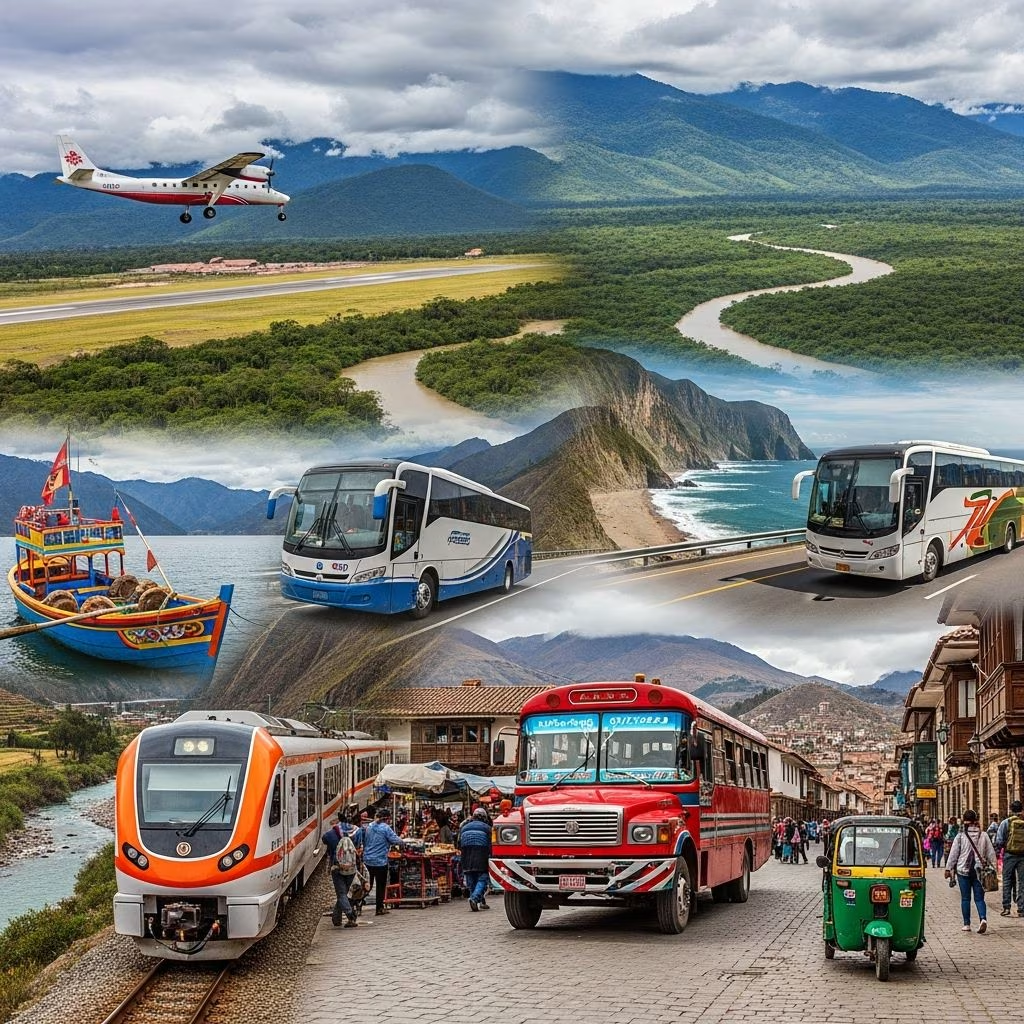
Discover efficient ways to travel Peru: buses for budget routes, flights for speed, scenic trains to Machu Picchu, and local taxis. Tips on safety, costs, and best choices for every itinerary.
 Travel Essentials
Peru’s transportation system offers a mix of affordable, scenic, and efficient options to explore its diverse regions, from coastal deserts to Andean peaks and Amazon rainforests. Whether you’re on a tight budget or seeking speed, understanding buses, flights, trains, and local rides ensures smooth travels.
Most journeys begin at Lima’s Jorge Chávez International Airport, the primary gateway for international flights. From there, navigate the bustling streets using micros (small buses) and combis (minivans), which provide cheap public transit across cities like Lima, Arequipa, Cusco, and Trujillo. Fares start under 4 Peruvian soles (S/) for cross-city trips, making them accessible but crowded with frequent stops.
In Lima, expect chaotic traffic; these vehicles speed through avenues, so stay alert. For safety, use apps like Uber or InDriver in larger cities, which offer metered rides and English support. Moto-taxis, three-wheeled scooters, dominate smaller towns like Cusco’s outskirts, costing S/2-5 for short hops but less safe on highways.
For covering Peru’s expansive terrain quickly, domestic flights are ideal. Major airlines like LATAM, Sky Airline, and JetSMART connect Lima to nearly all key cities within 1-2 hours. Routes to Cusco, Arequipa, Trujillo, and Iquitos save days compared to road travel.
Tickets range S/100-300 one-way, depending on season and advance booking. Book via airline sites or apps for deals; airports like Cusco’s Alejandro Velasco Astete handle high altitudes, so arrive early. Flights bypass Andean roads’ hazards, perfect for multi-region itineraries.
| Popular Routes | Duration | Avg. Cost (S/) | Best For |
|---|---|---|---|
| Lima-Cusco | 1h 15m | 150-250 | Machu Picchu access |
| Lima-Arequipa | 1h 30m | 120-200 | Colca Canyon |
| Lima-Iquitos | 1h 45m | 200-350 | Amazon gateway |
Buses form Peru’s most extensive network, linking cities, towns, and villages affordably. Long-distance trips cost S/6-7 per hour on coastal Panamericana Highway, cheaper inland. Cruz del Sur, Oltursa, Tepsa, and Civa lead with semi-cama (reclining) or cama (full bed) classes, air-conditioning, and videos.
Safety tip: Opt for direct routes from major terminals; avoid unmarked vans at night.
Peru’s rails deliver breathtaking views, especially to Machu Picchu. PeruRail and IncaRail monopolize the Cusco-Ollantaytambo-Aguas Calientes line (no roads beyond). Book Vistadome (panoramic windows) or Hiram Bingham (luxury) months ahead; prices S/200+ round-trip.
Other routes: Ferrocarril Central Andino’s Lima-Huancayo (12-14 hours) crosses 69 tunnels and 58 bridges through Andes— a geological marvel. Huancayo-Huancavelica extends south. Trains to Puno from Cusco via Ruta del Sol combine bus-train hybrids for lake access.
Expect slow paces for scenery; combine with buses for flexibility.
Colectivos, Peru’s shared taxis, cram 6-7 passengers for inter-town hops along coasts and mountains. Faster than buses (e.g., coastal towns), they depart when full from markets or terminals, costing S/10-20 per leg. Flag them or ask locals.
In highlands, they navigate winding roads; hold tight for sharp turns. For families, private transfers via apps or agencies offer comfort from airports to trailheads.
Reach Amazon hubs like Iquitos solely by air or boat from Pucallpa/Yurimaguas. Slow cargo-passenger boats (2-4 days) mimic historic voyages; faster speedboats cut to 8-10 hours but riskier. Book at ports; bring hammocks and food.
Lake Titicaca ferries link Puno to Isla del Sol (Bolivia), 3 hours for S/30-50.
Car rentals suit road-trippers exploring Sacred Valley or Nazca Lines. Agencies at airports charge S/100-200/day; expect manuals for mountains. Roads are paved coastally but potholed inland—drive defensively.
International license needed; fuel ~S/20/liter. Not ideal for cities due to traffic/parking woes.
Peru’s roads see speeding and overtakes; choose licensed operators. Theft risks on night buses—use locks. Women: Sit front, travel days. COVID-era: Masks optional, but check health rules.
| Mode | Cost (Lima-Cusco) | Time | Pros | Cons |
|---|---|---|---|---|
| Flight | S/150-300 | 1.5h | Fast, views | Airport hassles |
| Bus (Tourist) | S/100-200 | 20-22h | Stops, safe | Long |
| Public Bus | S/80-120 | 24+h | Cheapest | Crowded, risky |
| Train (to MP) | S/200+ | 3-4h | Scenic | Expensive, limited |
Public buses at S/80-120, but tourist services like Peru Hop add safety for slightly more.
Yes, especially peak season (Jun-Aug); reserve 60-90 days via PeruRail/IncaRail.
With reputable companies like Cruz del Sur, yes—avoid locals. Use valuables pouches.
Possible with experience; rentals require manuals. Stick to paved routes.
Boats from Pucallpa (10h speedboat) or Yurimaguas.
