

 Travel Essentials
 Travel Essentials

Navigate Perugia's medieval streets, art galleries, historic squares, and culinary traditions in a comprehensive guide to maximizing your visit to Umbria's enchanting heart.
 Travel Essentials
Perugia stands as one of Italy’s most underrated destinations, offering travelers an authentic Italian experience without the overwhelming crowds found in major tourist hubs. As the regional capital of Umbria, this ancient hilltop city combines medieval charm with remarkable artistic heritage, making it an ideal choice for those seeking to discover the genuine character of central Italy. Whether you’re arriving for a single day or planning an extended stay, understanding how to navigate Perugia efficiently will help you maximize your experience and create lasting memories.
Located in the heart of Umbria, Perugia has historically served as both a cultural and economic center for the region. The city’s strategic position has made it easily accessible by train from major Italian cities, particularly Florence, making it an excellent addition to any Italian itinerary. What distinguishes Perugia from other Italian destinations is its ability to offer substantial attractions and authentic experiences while maintaining a relaxed, residential atmosphere that allows visitors to engage genuinely with local life.
The city’s nickname as the “little city of infinite views” perfectly captures what makes it special. Perched at elevation, Perugia offers panoramic vistas from numerous vantage points throughout its historic center, providing endless opportunities for photography and contemplation. This geographical characteristic influences nearly every aspect of visiting the city, as elevation changes and viewpoints become integrated into the natural rhythm of exploration.
Most visitors arrive in Perugia via train, with the station situated in the lower part of the city. Rather than attempting to walk uphill through modern districts, take advantage of the Minimetrò, a modern cable car system that efficiently transports you from the station area directly into the heart of the historic center. This system terminates at Pincetto, from which escalators lead upward to the Giardino del Pincetto, a verdant space offering your first stunning vistas of both the city and the surrounding Umbrian countryside.
This initial ascent serves multiple purposes: it acclimates you to the city’s vertical layout, provides immediate visual orientation, and sets the tone for understanding Perugia’s relationship with its landscape. The journey itself becomes part of your experience rather than merely a practical necessity.
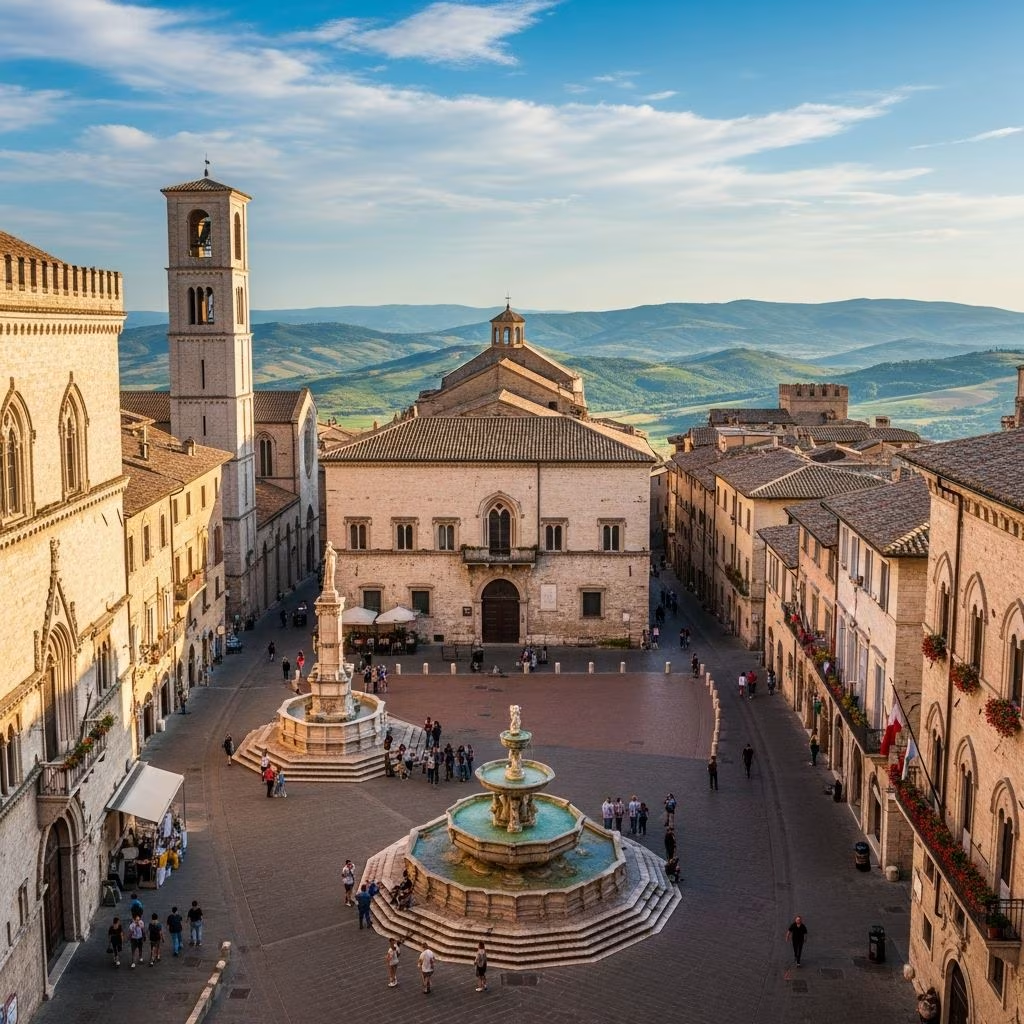
Every exploration of Perugia logically gravitates toward Piazza IV Novembre, the city’s theatrical main square that has served as the civic and social heart of the community for centuries. This plaza represents far more than merely another Italian square; it embodies layers of history spanning from Roman and Etruscan civilizations through medieval and Renaissance periods to the present day.
The square’s architectural framework comprises several significant structures that warrant individual attention. The Cattedrale di San Lorenzo dominates one side, while the imposing Palazzo dei Priori anchors the opposing view. Together, these structures create a sense of grandeur that reflects Perugia’s historical importance. The piazza itself functions as a living room for the city, where locals and visitors intermingle over coffee, gelato, and conversation, particularly during afternoon and evening hours.
From this central location, Corso Pietro Vannucci extends as the city’s primary pedestrian thoroughfare, lined with boutiques, cafes, and galleries that reflect contemporary Perugia life. Walking this street provides insight into how the city balances tourism with maintaining authentic local commerce and culture.
One of Perugia’s most remarkable attractions exists literally beneath the surface: the extensive underground tunnel system known as Perugia Sottorranea. Accessible through the Cathedral, these passages represent centuries of urban development, from Etruscan foundations through Roman construction to medieval additions. Walking through these dimly lit corridors provides a visceral connection to the layers of history underlying the modern city.
The Etruscan Well, another subterranean marvel, offers another perspective on the ancient civilizations that shaped the region. These underground attractions require advance booking but provide experiences unavailable in most European cities, as they allow visitors to literally descend into the past.
Perugia maintains several exceptional art galleries and museums that deserve consideration based on your interests and available time. The Galleria Nazionale dell’Umbria houses an impressive collection of works spanning medieval through Renaissance periods, providing comprehensive context for understanding regional artistic development. The Collegio del Cambio showcases Renaissance frescoes and provides insight into merchant society during the city’s prosperous periods.
For those with limited time, prioritize based on personal interests rather than attempting comprehensive coverage. Spending 60-90 minutes in a single well-chosen museum often proves more rewarding than rushing through multiple institutions.
Several elevated vantage points throughout Perugia reward the effort of climbing stairs. The Sciri tower, recently restored and maintained by dedicated volunteers, requires climbing 232 steps to reach a rooftop platform offering some of the city’s finest panoramic views. This modest attraction remains free to access and open daily except Tuesdays, with summer hours typically spanning late morning through early afternoon and again in evening hours.
Porta Sole, one of the city’s most ancient gates, offers another elevated perspective from one of Perugia’s highest points. The effort required to reach these viewpoints becomes trivial when considering the reward of panoramic vistas extending across the Umbrian countryside toward distant hills and villages.
No day in Perugia reaches completion without engaging with Italian aperitivo culture, the afternoon or early evening ritual of enjoying drinks and light refreshments while socializing. Numerous establishments throughout the historic center offer this experience, but those with elevated locations provide the added dimension of city and countryside views that enhance the occasion.
Perugia’s culinary identity includes distinctive local products worth seeking out during your visit. Regional specialties reflect the intersection of Umbrian agricultural traditions and historical culinary practices developed over centuries. Rather than targeting specific restaurants, consider exploring the city’s food options gradually, stopping at casual establishments where you encounter appealing aromas and interesting crowds.
The city’s layout reflects medieval urban planning principles, with narrow streets, unexpected staircases, and surprising piazzas creating an environment conducive to wandering and discovery. This design, while sometimes challenging for navigation, becomes one of Perugia’s greatest assets once you accept that disorientation represents opportunity rather than inconvenience.
Consider abandoning rigid itinerary adherence in favor of following streets that appeal to you, descending stairways that promise interesting destinations, and pausing in quiet courtyards that reveal themselves around corners. This approach often leads to the most memorable encounters and discoveries—local artisan studios, neighborhood cafes frequented by residents, and architectural details that mass tourism overlooks.
Should your schedule permit or should you be planning repeat visits, several compelling destinations exist within reasonable travel distance from Perugia. Assisi, renowned for its spiritual significance and artistic heritage, lies approximately 30 kilometers distant. Lake Trasimeno offers a completely different landscape experience, featuring water-based recreation, lakeside villages, and renowned sunset viewing opportunities. Gubbio presents another medieval town experience in miniature form, with distinct architectural and historical characteristics differentiating it from Perugia. Additionally, Le Cascate delle Marmore, Italy’s tallest waterfalls, provides opportunities for outdoor activities including hiking, rafting, and river walking.
Successfully maximizing a single day in Perugia requires strategic timing. Early arrival allows you to experience the city before afternoon crowds peak. Beginning with your cable car ascent and viewpoint appreciation establishes geographic understanding before descending into the medieval street network for closer exploration. Mid-afternoon timing for museum visits, when ambient light proves optimal for photography and crowds thin slightly, often provides the most pleasant experience.
Reserving late afternoon and early evening for elevated vantage point revisits and aperitivo experiences creates satisfying narrative arc for your day. This sequence allows you to view the city under different lighting conditions, with morning light, midday brightness, and golden-hour illumination each revealing different aspects of Perugia’s character.
Yes, one day provides adequate time to experience Perugia’s primary attractions, historic center, and essential character. However, two days allows for more leisurely pace, deeper museum engagement, and day trip possibilities.
Spring (April-May) and fall (September-October) offer pleasant temperatures, fewer crowds than summer months, and optimal lighting conditions for photography. These seasons also feature regional festivals and cultural events enriching visitor experiences.
No. The historic center is entirely walkable, and public transportation efficiently connects the train station to the upper city. A car becomes useful only for exploring distant day trip destinations.
The Galleria Nazionale dell’Umbria provides the most comprehensive overview of regional artistic heritage. The Collegio del Cambio offers exceptional Renaissance frescoes in intimate settings. Choose based on personal interest in medieval art versus Renaissance culture.
Reservations enhance flexibility and guarantee access to underground attractions. Walking tours and food tours benefit from advance booking, particularly during peak season months.
Perugia rewards visitors who venture beyond standardized guidebook recommendations and embrace the spontaneity that medieval urban layouts encourage. The city’s true appeal emerges not from checking boxes on attraction lists but from absorbing the atmosphere of a living community that has maintained its essential character despite centuries of change. Whether you spend a single day or multiple visits, Perugia offers layers of discovery that continue revealing themselves with repeated exploration. The city’s combination of historical significance, artistic heritage, culinary traditions, and genuine Umbrian character makes it an essential destination for travelers seeking authentic Italy beyond the typical tourist circuit.
