

 Travel Essentials
 Travel Essentials

Explore Petrópolis and Teresópolis, two elevated mountain towns near Rio de Janeiro offering world-class hiking, stunning natural landscapes, and alpine retreats.
 Travel Essentials
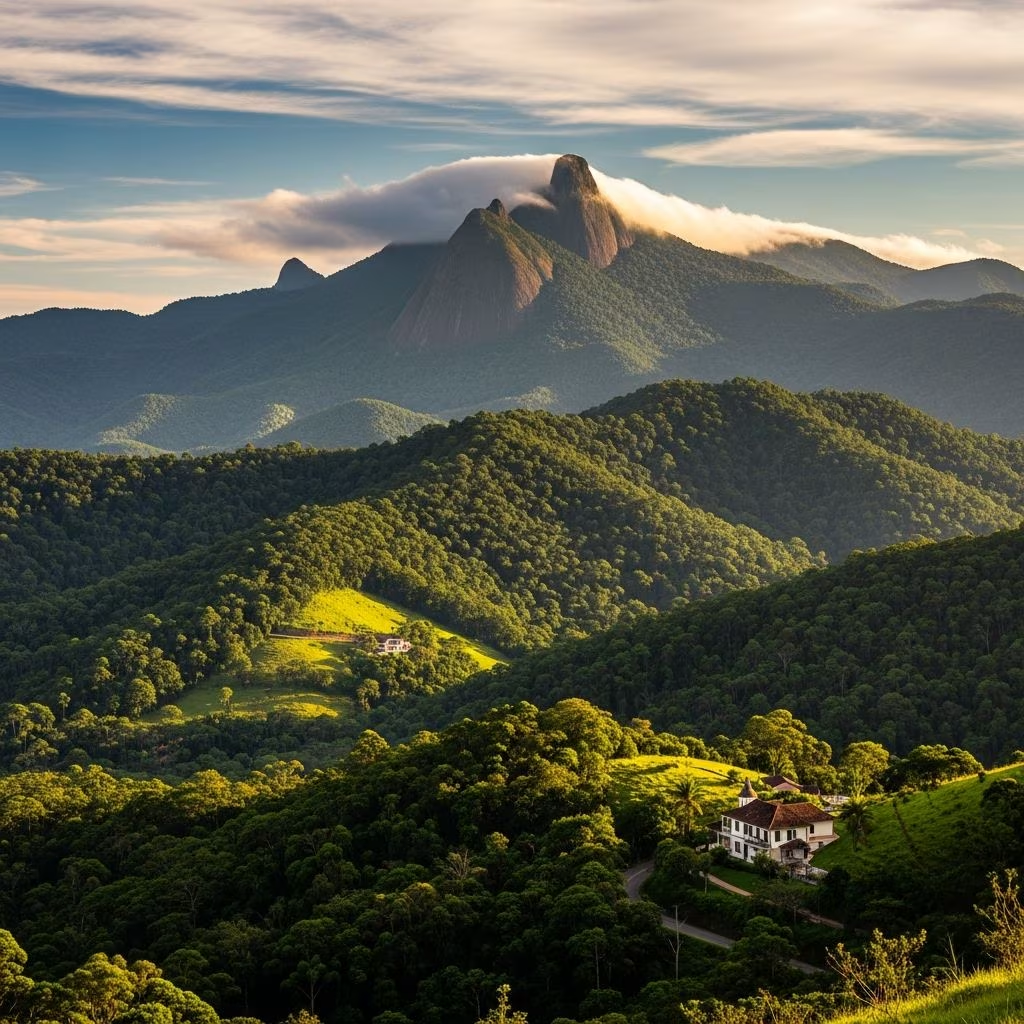
Just beyond the bustling streets and beaches of Rio de Janeiro lies a dramatically different landscape—one characterized by misty mountain peaks, dense Atlantic rainforests, and the refreshing coolness of higher elevation. Petrópolis and Teresópolis represent two of Brazil’s most compelling mountain destinations, situated approximately 70 kilometers north of Rio’s urban core. These elevated towns provide an essential contrast to coastal tourism, attracting adventurers, nature enthusiasts, and travelers seeking respite from tropical heat.
Both municipalities exist within Brazil’s Serra da Mar mountain system, a UNESCO World Heritage site that forms a natural barrier between the Atlantic coast and inland regions. Petrópolis sits at approximately 838 meters elevation, creating a distinctly temperate microclimate compared to the lowlands. The higher altitude translates to noticeably cooler temperatures, reduced humidity, and an entirely different ecosystem dominated by cloud forests and endemic flora.
The two towns function as gateway communities to Serra dos Órgãos National Park (locally known as PARNASO), which encompasses 105 square kilometers of protected mountainous terrain. This positioning makes them ideal base camps for multi-day treks, day hikes, and geological exploration. The area represents one of South America’s most significant biodiversity hotspots, with rare plant and animal species found nowhere else on Earth.
Serra dos Órgãos National Park derives its name from its most distinctive feature—dramatic, organ-pipe-shaped rock formations rising sharply from forested slopes. The park’s most recognizable landmark is Dedo de Deus (God’s Finger), an unmistakable pointed peak that has become synonymous with the region. Equally imposing is Agulha do Diabo (Devil’s Needle), another vertical rock spire that challenges experienced climbers.
The park’s geological character reflects millions of years of tectonic activity, erosion, and weathering. These processes created the spectacular pointed summits that distinguish the landscape from other Brazilian mountain regions. The terrain varies dramatically—from accessible valley trails to technical climbing routes requiring specialized equipment and expertise.
Vegetation throughout the park reflects the Atlantic Forest biome, specifically the montane cloud forest variant. This ecosystem experiences frequent misting and fog, particularly at higher elevations, creating conditions that support unique plant communities adapted to moisture-rich environments. Visitors frequently encounter dense vegetation, mossy rocks, and the sounds of endemic bird species.
Serra dos Órgãos National Park maintains an exceptional trail network exceeding 200 kilometers of marked routes. This extensive system accommodates varying fitness levels and experience levels, from casual nature walks to challenging multi-day expeditions.
Day Hikes and Casual Routes
The park offers numerous accessible options for visitors with limited time or moderate fitness levels. The Trilha Suspenso (Suspended Trail) spans just 1.3 kilometers and guides hikers past multiple waterfalls and natural swimming pools. These shorter routes allow visitors to experience the park’s natural beauty without committing to overnight camping or technical climbing.
Mirante do Soberbo, accessible from Teresópolis, provides panoramic views of the God’s Finger formation and surrounding ranges without requiring full climbing expertise. This viewpoint attracts photographers and casual hikers seeking dramatic vistas without intensive physical exertion.
The Petrópolis-Teresópolis Crossing
The Travessia Petrópolis-Teresópolis represents Brazil’s premier long-distance trekking route, a three-day expedition covering approximately 32 kilometers across the park’s mountainous spine. This crossing has achieved international recognition among hiking communities, drawing adventurers from across the globe.
Day one presents the route’s most demanding section, requiring approximately five to seven hours of continuous hiking with significant elevation gain. The initial ascent climbs roughly 1,100 meters while traversing dense forest to reach Castelos do Açu shelter. Hikers encounter Pedra do Queijo, an intermediate viewpoint offering preliminary vistas of Rio de Janeiro and Guanabara Bay.
Day two incorporates technical climbing sections, particularly the Cavalinho passage requiring actual rock climbing techniques and rope work. This day culminates at Pedra do Sino, the crossing’s highest point at approximately 2,263 meters. The summit delivers 360-degree perspectives encompassing multiple mountain ranges, Rio de Janeiro city, and on exceptionally clear days, distant peaks including Agulhas Negras and Serra Fina.
Day three provides relative relief, descending through rainforest while passing two significant waterfalls. The Véu de Noiva (Veil of the Bride) waterfall, measuring 16 meters, represents the route’s final major natural feature before reaching Teresópolis.
Serra dos Órgãos National Park distinguishes itself through exceptional infrastructure and organization. The park entrance costs R$52 (approximately US$14), providing access to clearly marked trails, maintained pathways, and official visitor centers.
Multi-day hikers benefit from the park’s accommodation system. Official mountain shelters and camping facilities operate at budget-friendly rates, ranging from R$10 for basic camping to R$39 for dormitory-style bunkbeds. This structured approach eliminates the need for backcountry camping improvisation, allowing trekkers to focus on the experience rather than logistical concerns.
The park operates year-round, though optimal trekking conditions exist during May through August, when rainfall decreases and trails dry. The rainy season (November through March) creates challenging muddy conditions and increased rockfall hazard, particularly on technical sections.
Prospective trekkers should approach the Petrópolis-Teresópolis Crossing with realistic self-assessment. The three-day route demands excellent physical conditioning, particularly for the demanding first day. Participants require solid trekking experience, as the route incorporates exposed ridge traversals, scrambling, and technical climbing sections demanding rope proficiency.
Trail conditions vary seasonally. During wet periods, sections become slippery and technically challenging. The via ferrata (iron ladder/cable) sections on day two require specific climbing experience and fear-of-heights management. Numerous trip reports emphasize that casual hikers underestimate the route’s demands at their peril.
Guided expeditions mitigate risk through professional route management, safety protocols, and real-time decision-making regarding weather and hazard conditions. Most tour operators restrict groups to experienced mountaineers or require intermediate minimum experience levels.
Beyond formal trekking routes, the Petrópolis and Teresópolis region offers diverse activities catering to varying interests. Visitors can pursue rock climbing on established routes, botanical exploration, wildlife observation, and cultural heritage site visits.
Teresópolis hosts local breweries and artisanal food establishments reflecting the town’s cooler climate agriculture. The region’s elevation supports apple orchards, trout farms, and other temperate crops distinct from coastal Rio. These agricultural products feature prominently in local gastronomy.
Historical attractions complement natural attractions. Petrópolis contains 19th-century architecture reflecting its significance as an imperial mountain retreat. Visitors encounter colonial-era buildings, museums, and heritage sites providing cultural context for the region’s development.
Petrópolis and Teresópolis remain highly accessible from Rio de Janeiro. Private transfers require approximately one hour and 50 minutes covering roughly 70 kilometers, with well-maintained highway connections facilitating travel. Public transportation exists but generally requires longer transit times.
Most organized treks include round-trip transportation from Rio de Janeiro, eliminating individual logistics concerns. Tour operators coordinate pickup times, equipment provision, guide assignment, and meal arrangements, streamlining the experience for visitors.
The region accommodates various budget levels. Luxury mountain lodges cater to visitors seeking comfort, while hostel-style accommodations serve budget-conscious travelers. Camping options range from established park facilities to private campgrounds.
The mountain environment creates distinct seasonal experiences. Winter months (June through September) bring cooler temperatures, clearer visibility, and drier trail conditions. Summer months introduce heat, humidity, and afternoon thunderstorms characteristic of tropical regions.
Morning departures on trekking routes capitalize on cooler temperatures and better atmospheric visibility. Afternoon weather deterioration commonly occurs, with clouds obscuring summit views by midday. Multi-day trek planning accounts for these meteorological patterns.
| Experience Level | Recommended Route | Daily Hiking Hours | Elevation Gain |
|---|---|---|---|
| Beginner | Trilha Suspenso, Mirante do Soberbo | 1-3 hours | 200-400 meters |
| Intermediate | Multi-waterfall circuits, partial traverses | 4-6 hours | 500-800 meters |
| Advanced | Petrópolis-Teresópolis Crossing, Dedo de Deus | 5-7 hours | 1,000+ meters |
| Expert | Technical rock climbing routes | Variable | Variable |
What is the best time to visit for trekking?
May through August offers optimal conditions with lower rainfall, drier trails, and clearer visibility. This period represents peak season for organized expeditions.
Do I need specialized climbing equipment for day hikes?
Casual day hikes like Trilha Suspenso require only standard hiking footwear and daypack supplies. Technical routes like the Petrópolis-Teresópolis Crossing necessitate climbing expertise, harnesses, and rope knowledge.
Are guided tours necessary for the three-day crossing?
While experienced mountaineers may self-guide, professional guides significantly enhance safety and environmental knowledge. Guides navigate route logistics, assess weather conditions, and provide geological and ecological context.
What should I pack for multi-day trekking?
Essential items include weather-appropriate clothing, sturdy hiking boots, sleeping gear, water purification capabilities, navigation tools, and emergency supplies. Tour operators typically provide detailed packing lists.
Can families with children enjoy the region?
Absolutely. Short day hikes like Trilha Suspenso accommodate families and younger hikers. Multi-day technical treks require older children with substantial hiking experience and excellent physical conditioning.
Serra dos Órgãos National Park represents a critical conservation zone within the Atlantic Forest biome. Visitation brings ecological responsibility—hikers should remain on marked trails, carry out all waste, and minimize environmental disturbance. The park’s infrastructure design reflects this conservation philosophy, concentrating visitor impact on designated trails while protecting sensitive ecosystems.
The park’s organization extends beyond trail maintenance to include habitat protection, species monitoring, and climate resilience planning. Entrance fees directly fund these conservation efforts, making visitors active contributors to ecosystem preservation.
Whether pursuing a casual day excursion or committing to a challenging three-day expedition, Petrópolis and Teresópolis present opportunities for authentic mountain experiences near one of South America’s largest cities. The region’s combination of accessible infrastructure, iconic geological formations, and ecological significance attracts diverse visitor profiles.
The contrast between these cool mountain towns and Rio’s tropical energy creates compelling contrast within a single trip. Many visitors structure longer Rio vacations to incorporate mountain time, expanding their understanding of Brazil’s geographic and climatic diversity.
Planning involves honest self-assessment of fitness levels, experience, and interests. The region accommodates everyone from casual nature appreciators to elite mountaineers, ensuring memorable experiences across the entire spectrum of adventure tourism.
