

 Travel Essentials
 Travel Essentials

Explore two charming mountain towns and Serra dos Órgãos National Park offering diverse activities from leisurely walks to challenging multi-day treks.
 Travel Essentials
Just beyond the bustling energy of Rio de Janeiro lies a quieter world of misty mountains, pristine waterfalls, and verdant forests. Nestled approximately 70 kilometers north of the vibrant coastal city, the twin mountain towns of Petropolis and Teresopolis offer travelers an entirely different perspective on Brazilian nature and culture. These elevated communities, positioned at altitudes that provide relief from Rio’s tropical heat, have become essential destinations for those seeking adventure, tranquility, or a combination of both.
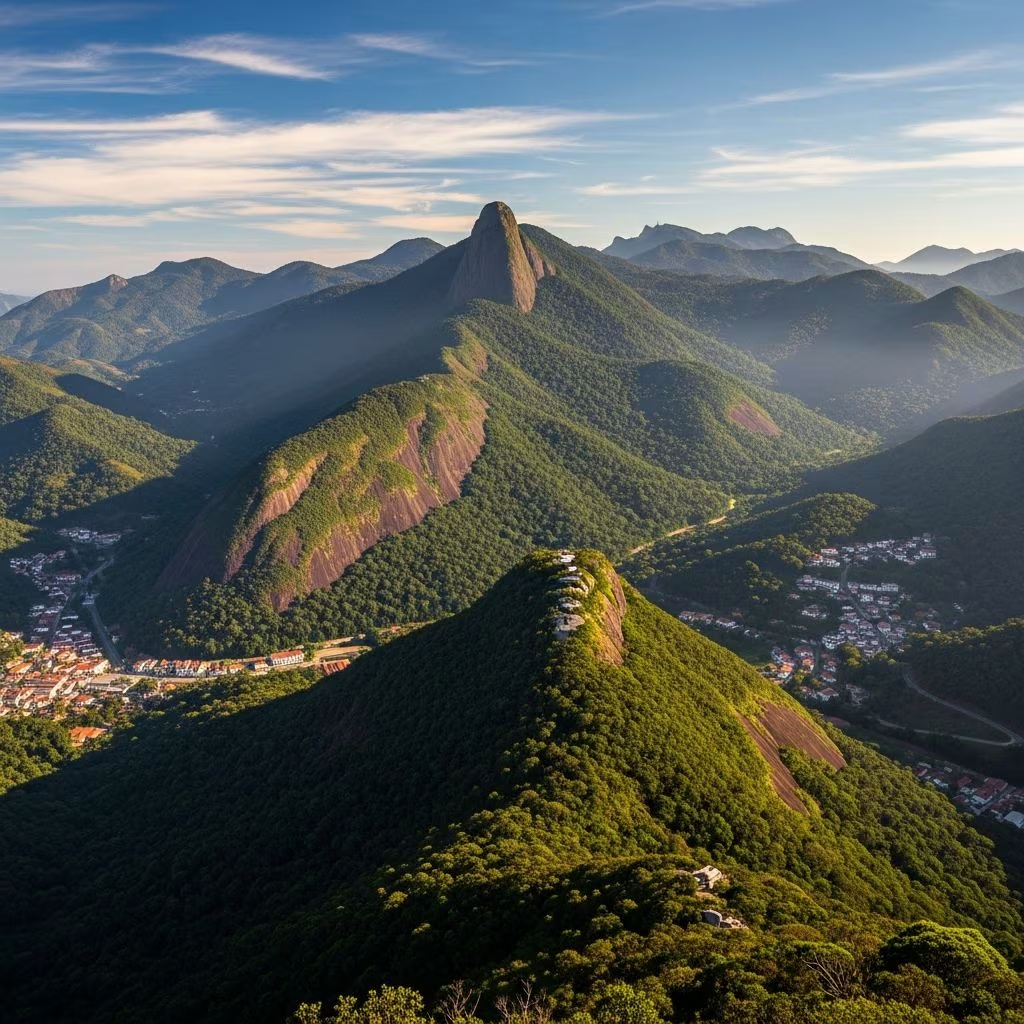
What makes this region particularly special is its dramatic topography and exceptional natural heritage. The landscape here is defined by towering peaks, lush Atlantic Forest vegetation, and a network of trails that range from gentle nature walks to serious mountaineering challenges. For many visitors, these mountain towns represent the perfect complement to a Rio de Janeiro itinerary, offering a refreshing contrast to beach culture and urban exploration.
Petropolis sits at an elevation of 838 meters, making it significantly cooler than Rio’s coastal regions. This elevation advantage historically attracted Brazilian emperors and wealthy families seeking refuge during hot months, which shaped the town’s character as a retreat destination. Today, the cooler climate continues to make it an attractive escape, particularly during Rio’s warmer seasons.
The region’s most defining feature is the Serra dos Órgãos mountain range, a dramatic formation of distinctive peaks and rock formations that dominate the landscape. This range, part of the larger Serra do Mar system, creates a natural boundary and encompasses over 105 square kilometers of protected parkland. The park’s name—which translates to “Mountains of Organs”—references the organ-like appearance of the vertical rock formations that characterize the ridgeline.
The national park, locally referred to by its Portuguese acronym PARNASO, represents one of Brazil’s most important conservation areas. Within its boundaries lies an extraordinary concentration of biodiversity, with the Atlantic Forest providing habitat for countless species found nowhere else on Earth. The park’s ecosystem demonstrates the remarkable complexity of tropical mountain forests, where elevation changes create distinct ecological zones, each supporting different plant and animal communities.
The park’s infrastructure reflects its popularity and well-established tourism reputation. Entrance fees are remarkably affordable, with daily admission enabling access to all facilities and trails. For those planning extended visits, the park provides multiple accommodation options ranging from budget-conscious camping areas to basic dormitory-style bunking arrangements, all maintained to safe and sanitary standards. This tiered pricing structure makes multi-day experiences accessible to travelers with varying financial resources.
The park maintains an impressive network of more than 200 kilometers of marked trails, representing one of Brazil’s most comprehensive hiking systems. This extensive trail matrix accommodates every skill level and physical capability, from families with young children to elite mountaineers. The diversity of options means that virtually any visitor can find an experience matching their abilities and interests.
For those preferring shorter experiences, several excellent options provide satisfying mountain exposure without requiring full-day commitments. The Trilha Suspenso, extending just 1.3 kilometers, offers a particularly unique perspective as it passes through suspended sections that provide thrilling vantage points of surrounding valleys and waterfalls without requiring technical climbing abilities.
For intermediate hikers, numerous trails present rewarding challenges with reasonable time commitments. These moderate routes typically pass through waterfalls and natural pools, allowing swimmers to refresh themselves during their hikes. Many such trails combine the therapeutic benefits of forest immersion with recreational water activities, creating memorable full-day experiences.
The Travessia Petropolis-Teresopolis stands as one of Brazil’s most acclaimed long-distance hiking routes and represents a serious mountaineering undertaking. This approximately 30-kilometer trek connects the two towns by traversing the entire width of Serra dos Órgãos, requiring hikers to summit multiple peaks and navigate technically challenging terrain over a three-day period.
The crossing’s initial stage presents the most strenuous day of the entire traverse. From the Petropolis park entrance, hikers ascend seven kilometers while gaining approximately 1,100 meters of elevation. This relentless uphill progression demands significant cardiovascular fitness and mental determination as the trail climbs through dense forest with minimal respite.
The route features the Pedra de Queijo viewpoint, where landscape perspectives suddenly open after hours of enclosed forest walking. Beyond this marker, the terrain becomes marginally less severe as the trail reaches Ajax, a location with natural water sources and the first mountain shelter. This arrival point, called Castelos do Açu shelter, sits at 2,246 meters elevation and provides vistas encompassing Rio de Janeiro city, Guanabara Bay, and the entire mountain range.
The middle day of the crossing intensifies the challenge considerably by introducing rock climbing elements. A section known as Cavalinho requires participants to employ actual climbing techniques, including the use of ropes and harnesses, transforming the hike into a mountaineering expedition. This technical requirement means that participants must possess genuine climbing skills or willingness to be guided through advanced movements.
This day culminates at Pedra do Sino, the national park’s highest point at 2,275 meters. The summit provides an extraordinary 360-degree perspective revealing multiple mountain ranges, the distant city of Rio, and on exceptionally clear days, views extending to Agulhas Negras peak and the Serra Fina mountain range. Hikers spend their second night at Pedra do Sino’s base camp, allowing for the possibility of witnessing sunrise from this commanding elevation.
The final day reverses the physical demands of the initial ascent, featuring a descent through pristine Atlantic Forest. Though less elevation gain occurs, the descent presents different challenges as hikers navigate downhill terrain toward Teresopolis. The route passes two significant waterfalls, with the Veu de Noiva (Bride’s Veil) waterfall standing as the most dramatic feature at 16 meters in height.
The crossing concludes at the Teresopolis park dam, the official endpoint of the traverse. For many participants, the final hours feel notably less demanding than the first day, though fatigue from previous days makes the descent mentally challenging despite reduced physical exertion.
Successful completion of this trek demands proper preparation and realistic self-assessment. The route’s popularity occasionally creates misconceptions about its difficulty level, leading underprepared hikers to underestimate the challenge. Multiple sources consistently emphasize that completion requires excellent physical condition and solid previous trekking experience.
Professional guidance becomes particularly important given the technical climbing requirements. Expert guides familiar with the specific route, seasonal conditions, and emergency protocols provide invaluable expertise beyond simple navigation. Reputable trekking companies offer organized expeditions that include transportation, meals, equipment, accommodation, first aid resources, and experienced leadership.
Organized expeditions typically begin at approximately $1,595 USD per person, reflecting the comprehensive services included. Most packages feature private transportation from Rio to Petropolis, return transportation from Teresopolis to Rio, all meals during the trekking days, tent accommodation, expert guide services, climbing equipment, and park fees. This all-inclusive structure simplifies logistics for international visitors unfamiliar with local arrangements.
Not all visitors possess the fitness level or time required for the full three-day crossing. Fortunately, the park system accommodates shorter engagements. Several operators offer one-day or two-day options that sample the crossing’s highlights without demanding the complete commitment. These abbreviated experiences provide similar mountain exposure and technical challenges while remaining accessible to broader audiences.
While the three-day crossing dominates attention, the park offers numerous other compelling experiences. Dedo de Deus, the iconic “God’s Finger” formation that appears on countless regional promotional materials, attracts experienced rock climbers attempting its full-day ascent. For those unwilling to undertake technical climbing, the Mirante do Soberbo viewpoint on Teresopolis’s outskirts provides breathtaking perspectives of this distinctive peak without requiring specialized skills.
Petropolis developed its identity during the imperial era when Brazilian royalty established it as a summer palace destination. This historical legacy remains visible in the town’s architecture, museums, and cultural institutions. The elevation and climate made it particularly attractive to wealth and power, resulting in distinctive urban development patterns.
Teresopolis, by contrast, cultivated a quieter, more relaxed atmosphere. Local culture emphasizes natural recreation and mountain community values rather than grand historical narratives. The town has become increasingly known for hosting Brazil’s national soccer team training facilities and for hosting visitors seeking peaceful mountain experiences without intensive tourism infrastructure.
The elevated location produces climate characteristics notably different from Rio’s coastal conditions. Temperatures remain cooler year-round, providing natural relief from tropical heat. Rainfall increases during certain seasons, particularly from December through March, which can affect trail conditions and visibility during the crossing.
Most trekking companies operate during more favorable weather windows, typically May through August, when conditions prove most stable. However, individual fitness and experience may determine suitable periods for attempting the challenging crossing regardless of optimal seasonal windows.
Both towns are accessible from Rio de Janeiro via approximately 1 hour 50 minutes of driving along well-maintained highways. This proximity makes day-trip visits feasible for Rio-based travelers with limited time, though staying overnight or multiple nights allows more immersive experiences. Public transportation options exist but private transfers or rental vehicles provide greater flexibility.
The crossing demands excellent cardiovascular fitness and genuine trekking experience. Participants must comfortably handle multiple hours of sustained hiking daily, significant elevation gain, and technical rock climbing elements. Previous mountaineering experience substantially increases success likelihood.
Most comprehensive packages include transportation from Rio, all meals during trekking days, tent accommodation, expert guides, climbing equipment, park fees, and return transportation. Confirm specific inclusions with operators before booking.
While theoretically possible, professional guidance is strongly recommended given technical climbing requirements, potential weather hazards, and occasional trail ambiguities. Professional guides provide safety expertise and emergency management capabilities.
May through August generally offer the most stable weather conditions. However, fitness and experience matter more than season; experienced mountaineers successfully complete the crossing during various times.
Yes, operators offer one-day and two-day alternatives that provide mountain experiences without requiring the full three-day commitment or reaching the same technical difficulty levels.
The choice between attempting the full three-day crossing or selecting shorter alternatives depends on personal fitness, experience, available time, and mountain comfort levels. Both options provide exceptional opportunities to experience some of Brazil’s most remarkable natural landscapes and distinctive mountain culture. Whether you’re seeking an adrenaline-filled mountaineering challenge or a gentler nature immersion, the region accommodates diverse preferences and capabilities.
