

 Travel Essentials
 Travel Essentials

Explore Philadelphia’s Black history through museums, churches, Underground Railroad sites, and walking tours that reveal stories of resilience and freedom.
 Travel Essentials
Philadelphia stands as a cornerstone of American history, particularly in the narrative of Black resilience, abolitionism, and the pursuit of freedom. As the nation’s first capital and a hub for early free Black communities, the city preserves numerous landmarks that illuminate these stories. From churches founded by escaped slaves to Underground Railroad safe houses and dedicated museums, these sites offer immersive insights into centuries of struggle and achievement.
During the late 18th and 19th centuries, Philadelphia hosted the largest population of free Black Americans in the United States, serving as a beacon for those escaping bondage. It was here that key institutions emerged, including the first independent Black denomination and vital stops on the clandestine paths to liberty. Today, these preserved locations educate visitors on the intertwined histories of the American Revolution, slavery’s end, and the civil rights era.
The city’s Historic District, near Independence Hall, juxtaposes founding ideals of liberty with the harsh realities faced by Black people, making it an ideal starting point for exploration. Walking tours, such as the 1838 Black Metropolis route, connect iconic sites like the Liberty Bell and President’s House to Black narratives, revealing overlooked contributions.
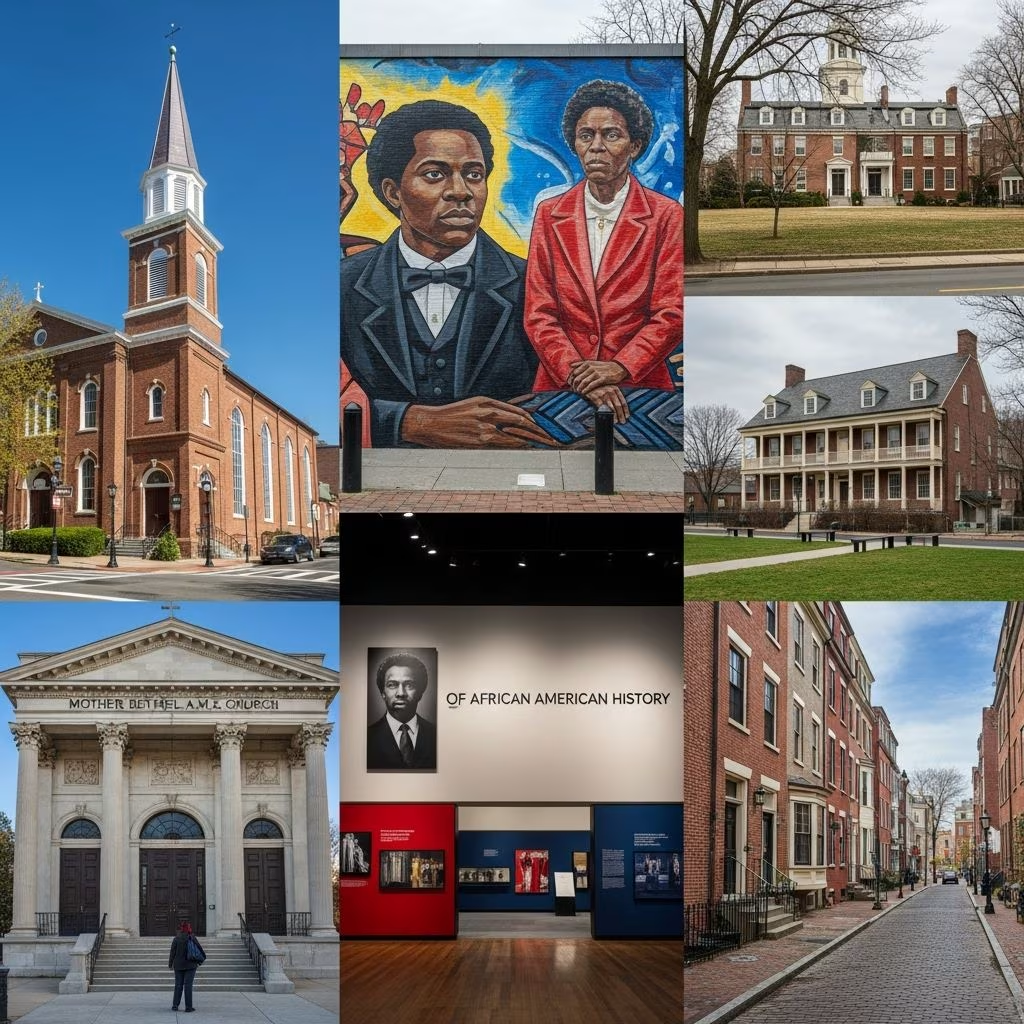
Nestled in the Historic District at Seventh and Arch Streets, this institution opened in 1976 as the first major city-funded museum dedicated to African American culture. Its galleries delve into the African Diaspora, local Black Philadelphia stories, and contemporary narratives, featuring artifacts from the abolitionist era to civil rights memorabilia like Black Panther fliers and family scrapbooks.
Outside, the striking Whispering Bells sculpture honors Crispus Attucks, the first casualty of the Revolutionary War—a formerly enslaved man killed in the Boston Massacre. Practical details include audio-guided tours, admission at $14 for adults (with discounts), and proximity to Independence National Historic Park.
This Old City museum highlights Black patriots through its “Finding Freedom” exhibition, exploring enslaved individuals’ roles during the Revolution. It contrasts America’s liberty quest with the persistence of slavery, offering a nuanced view of the era.
Featuring rare items like Dred Scott’s freedom petition, Frederick Douglass’s inkwell, and original amendment copies, this gallery narrates the nation’s ‘second founding’ post-Civil War, emphasizing constitutional changes that advanced Black rights.
Established on the oldest Black-owned land in the U.S., Mother Bethel in Society Hill is the mother church of the AME denomination, founded by Bishop Richard Allen, an ex-slave turned abolitionist leader. The site includes a museum with original pews, a crypt holding Allen and his wife’s tombs, and artifacts from the 1600s, such as ballot boxes used in early Black voting efforts.
Allen protested discrimination by forming this independent congregation in 1794, laying groundwork for Black self-determination in worship and community.
In Germantown, this 1768 Quaker-built home served as a key Underground Railroad station for generations. Owned by abolitionist John P. Johnson, it sheltered freedom seekers alongside free and enslaved Black collaborators. Today, guided tours (Thursday-Saturday walk-ins, weekdays by appointment) recount family stories, escape routes, and events like Juneteenth celebrations.
This site preserves stories of enslaved people who sought refuge here, complementing Germantown’s network.
Historic Germantown clusters several must-visits. The Johnson House anchors efforts, joined by:
| Site | Significance | Location |
|---|---|---|
| Engine Company No. 11 | Philadelphia’s first all-Black firehouse on South Street. | South Street |
| Paul Robeson House & Museum | Honors the activist, singer, and scholar’s legacy. | West Philadelphia |
| National Marian Anderson Museum | Preserves the contralto’s contributions. | South Philadelphia |
The 1838 Black Metropolis Walking Tour immerses families in early Black Philadelphia, visiting President’s House, Liberty Bell, Independence Hall, Congress Hall, Congo Square (Washington Square), and Mother Bethel. Another route includes Benjamin Franklin Court and Elfreth’s Alley, blending national history with Black perspectives.
The African American Museum, near the Liberty Bell, provides a comprehensive overview.
Yes, Mother Bethel offers free entry to its church and museum; outdoor monuments like Whispering Bells are always accessible.
2–4 hours for core sites; full day with Germantown. Guided walks: 2 hours.
Walking tours and Johnson House tours suit all ages, with interactive elements.
Check websites for rotations; Revolution Museum’s Finding Freedom is ongoing.
Philadelphia’s Black history sites not only recount the past but actively educate through programs, ensuring these narratives endure. Visitors leave with deeper appreciation for the city’s multifaceted founding story, where freedom’s ideals were both proclaimed and fiercely contested.
