

 Travel Essentials
 Travel Essentials

Explore Phnom Penh's royal palaces, sacred wats, bustling markets, and poignant historical sites in this comprehensive guide to Cambodia's captivating capital.
 Travel Essentials
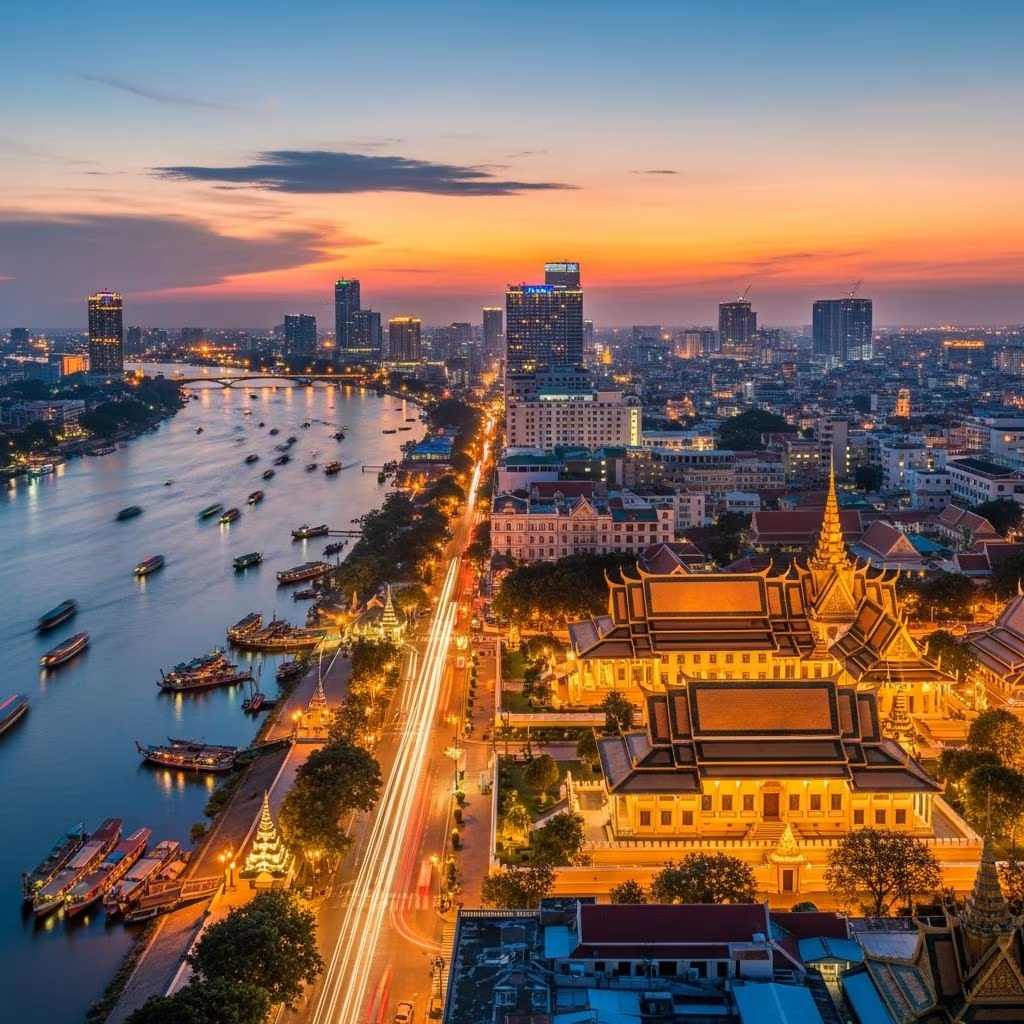
Phnom Penh, the pulsing core of Cambodia, blends timeless traditions with contemporary buzz. Home to about 1.5 million residents, this riverside city offers a compact layout perfect for exploration on foot or by tuk-tuk, revealing layers of royal splendor, spiritual sanctuaries, lively bazaars, and reflections on a complex past.
Landing in Phnom Penh feels like stepping into a living mosaic. The city sprawls along the Tonle Sap and Mekong rivers, with Pochentong International Airport just 10 kilometers from downtown. Taxis and ride-hailing apps provide quick transfers, while budget travelers opt for shared shuttles.
The downtown area radiates a provincial charm despite its status. Streets like Preah Ang Makhak Vann offer prime spots for lodging, mere steps from key landmarks. Guesthouses here balance affordability with convenience, ideal for immersing in local rhythms. Expect humid tropical weather year-round; the dry season from November to April suits extended wanderings best.
No visit skips the Royal Palace, a shimmering symbol of Khmer sovereignty. Constructed in 1866, this sprawling compound gleams with silver floors, golden spires, and emerald Buddha icons. Daily hours split into morning (8 a.m.-11 a.m.) and afternoon (2 p.m.-5 p.m.) sessions to beat the heat.
Dress codes enforce respect: shoulders and knees must stay covered. Lightweight scarves prove handy for impromptu compliance. The palace grounds host the Silver Pagoda, housing a 14th-century crystal Buddha, drawing pilgrims and photographers alike.
Phnom Penh’s wats dot the landscape, each whispering tales of devotion. Start atop Wat Phnom, the city’s namesake hillock rising 27 meters. Erected in 1372, this hilltop sanctuary buzzes with monkeys, incense, and fortune-tellers. Climb for panoramic views near the cruise terminal.
Wat Ounalom commands reverence as Cambodia’s Buddhist epicenter, founded in 1443. Tucked near the Royal Palace, its vihara shelters ancient relics and a hair from the Buddha himself. Monks chant at dawn, inviting quiet contemplation.
Lesser-known Wat Botum enchants with eclectic stupas beside a leafy park. Dating to 1442, it serves as a resting place for notables, its architecture a tapestry of Khmer motifs. These sites underscore Buddhism’s grip on daily life.
The National Museum, shadowing the palace, safeguards Khmer artistry. Its galleries flaunt Angkor-era bronzes, sandstone carvings, and royal ceramics— a prelude to Siem Reap’s wonders. Open daily, it immerses visitors in 1,500 years of sculpture and epigraphy.
Evenings ignite with Cambodia Living Arts performances. Genocide survivor Arn Chorn-Pond launched this initiative in 1998 to revive classical dance, music, and theater. Shows blend grace and resilience, often under starlit skies.
Phnom Penh thrives in its bazaars. Psar Thmei, the Central Market, sprawls under a distinctive dome, hawking silks, spices, and souvenirs. Bargain hard amid the throng. Night markets along the riverside pulse with grilled skewers, handicrafts, and live tunes.
While vibrant, eastern streets past Norodom Boulevard reveal grit: poverty lingers, sanitation lags. Yet, these zones host backpacker havens and cheap eats, fueling authentic encounters.
Food stalls brim with lok lak (peppered beef), amok (coconut fish curry), and nom banh chok (rice noodles). Riverside eateries serve fresh Mekong catches. For upscale twists, hotels offer fusion plates. Street food demands caution—opt for busy spots to minimize risks.
| Dish | Description | Best Spots |
|---|---|---|
| Amok | Steamed fish in creamy curry | Riverside cafes |
| Lok Lak | Stir-fried beef with gravy | Street vendors |
| Num Pang | Cambodian banh mi sandwiches | Markets |
Beyond beauty, Phnom Penh confronts its Khmer Rouge scars. Sites like Tuol Sleng and Killing Fields, reachable by day trips, demand somber reflection. These memorials educate on resilience amid tragedy. Balance with joyful pursuits for a holistic view.
Mobility relies on tuk-tuks (negotiate fares) or moto-dups. ATMs abound downtown; USD serves widely. SIM cards from airports enable cheap data. Respect customs: remove shoes at temples, avoid touching heads.
Preah Ang Makhak Vann Street shines for proximity to sights. Riverside booms with luxury, while backpacker hubs cluster east. Budget from $10/night, luxe up to $200.
| Area | Vibe | Price Range |
|---|---|---|
| Riverside | Lively nightlife | $$-$$$ |
| Preah Ang Makhak Vann | Central, walkable | $-$$ |
| East of Norodom | Budget, gritty | $ |
Venture to Oudong’s hill temples or Koh Dach’s silk weavers. Mekong islands offer rural escapes by boat.
Dry season from November to April offers mild weather ideal for sightseeing.
Yes, main areas are safe; use caution in quieter spots after dark.
Tuk-tuks and Grab rides are efficient and affordable.
Cover shoulders and knees; scarves help for flexibility.
Abundant in markets and restaurants, including veggie amok.
