

 Travel Essentials
 Travel Essentials

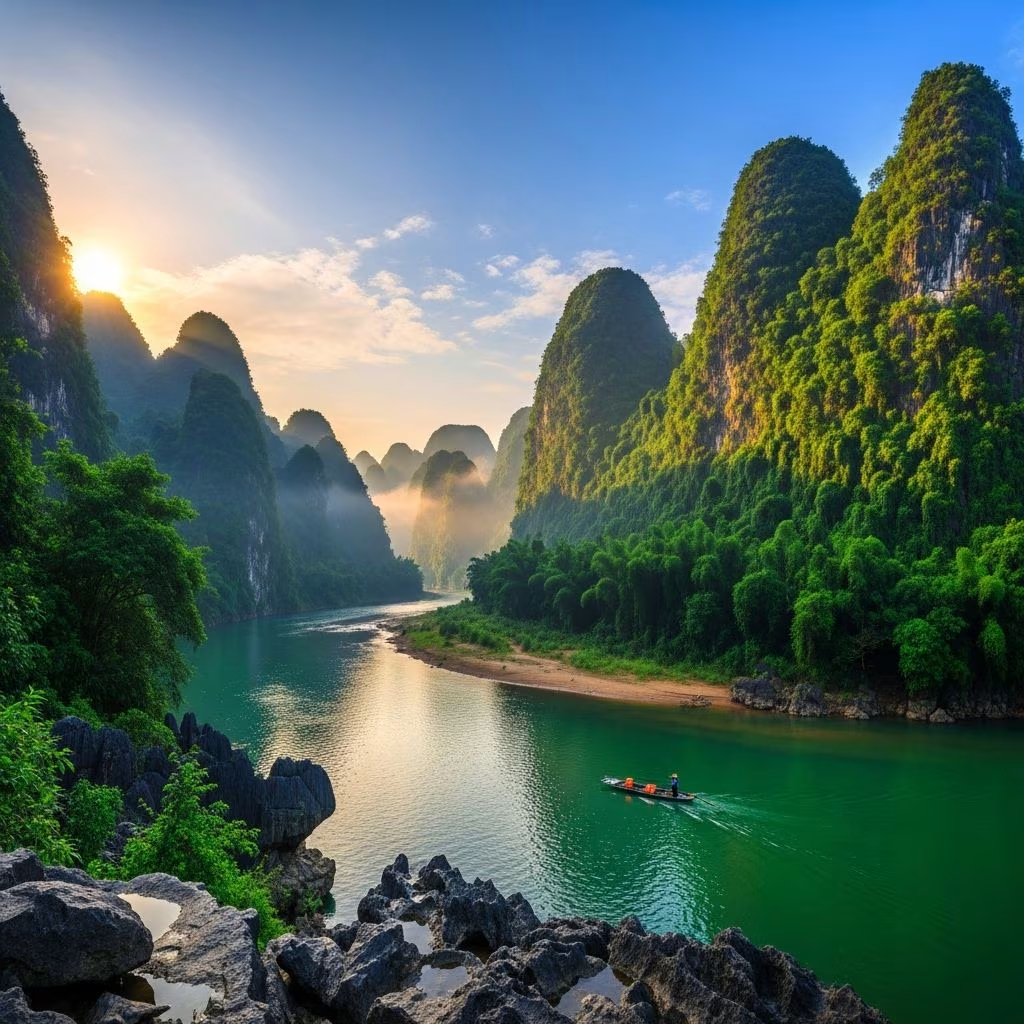
Explore Phong Nha-Ke Bang National Park's 400-million-year-old karst terrain, underground rivers, ancient cave systems, and immersive natural experiences in northern Vietnam.
 Travel Essentials
Nestled in northern Vietnam, approximately 500 kilometers south of Hanoi, lies one of the world’s most geologically significant and visually stunning destinations: Phong Nha-Ke Bang National Park. This UNESCO World Heritage site represents a geological marvel—a landscape formed over 400 million years ago that contains Asia’s oldest large-scale karst system. Beyond its scientific importance, the park offers visitors an unparalleled adventure destination where ancient geology meets vibrant biodiversity and accessible outdoor recreation.
The foundation of Phong Nha-Ke Bang’s appeal lies in its remarkable geological heritage. The park’s distinctive landscape emerged from processes spanning hundreds of millions of years, creating a terrain of towering limestone formations and subterranean networks rarely seen anywhere on Earth. What makes this region particularly extraordinary is not merely its age, but the sheer scale and complexity of its underground architecture.
Beneath the jungle-covered cliffs lies an extensive network exceeding 220 kilometers of cave systems and underground rivers, many of which hold records for their dimensions and natural beauty. This underground realm represents one of nature’s most impressive engineering projects, shaped entirely by water percolating through limestone over eons. The result is a landscape where surface geography and subterranean wonders exist in perfect symbiosis, each revealing different facets of natural history.
The park’s significance extends far beyond geology into the realm of conservation and biodiversity. The unique karst environment has created ecological niches that support rare plant species and animal populations found nowhere else in the world. This makes Phong Nha-Ke Bang not merely a tourist destination but a globally important sanctuary for species preservation and scientific research.
The combination of dense jungle canopy, limestone outcrops, cave ecosystems, and river corridors creates distinct habitat zones. Each zone supports different flora and fauna adapted specifically to these conditions. Wildlife enthusiasts visiting the park gain access to ecosystems that represent millions of years of specialized evolutionary adaptation.
The cave exploration experience forms the cornerstone of most visitor itineraries, and with good reason. The park offers numerous cave systems ranging from easily accessible introductory experiences to challenging expeditions requiring specialized skills and equipment.
Phong Nha Cave stands as perhaps the most accessible entry point for cave exploration and represents an excellent starting point regardless of experience level. The journey to reach this cave itself becomes part of the experience, as visitors typically travel by boat along the Son River, often referred to as Asia’s longest underground river. This initial boat ride provides a gentle introduction to the aquatic environment that shaped the caverns themselves.
Once inside, visitors encounter the remarkable geological formations that define the cave’s interior. The cave features passages that reveal different geological periods and formation processes. Visitors can explore subsidiary caverns including Bi Ky Cave, Tien Cave, and Cung Dinh Cave as part of the standard tour experience. The entire visit typically consumes several hours, making it an ideal half-day activity easily arranged through hotels and tour operators.
Paradise Cave offers a distinctly different cave experience, emphasizing accessibility and comprehensive exploration through modern infrastructure. A wooden walkway approximately one kilometer in length threads through the cave, allowing visitors to observe the stunning stalactite and stalagmite formations from multiple angles and elevations. The walkway design enables safe exploration while maintaining minimal environmental impact on the delicate cave ecosystem.
The installation of these walkways represents a thoughtful balance between conservation and visitor access. Rather than scrambling across cave floors, potentially damaging formations, visitors move along predetermined routes that provide optimal viewing opportunities. For families traveling with children, Paradise Cave presents an especially attractive option, as the managed walkway system accommodates varying fitness levels. Entry costs approximately VND 250,000 (roughly US$11), making it an affordable addition to any visitor’s itinerary.
For visitors seeking more intense physical and emotional experiences, Dark Cave (Hang Toi) delivers exactly that challenge. This cave distinguishes itself through requiring adventurous participation beyond passive observation. Access to the cave entrance involves a zipline flight over water, immediately establishing this as an elevated-difficulty experience. Once participants reach the cave entrance, they enter an environment of complete darkness—hence the name—and navigate through muddy passageways that demand physical agility and comfort in confined spaces.
The combination of darkness, mud, tight passages, and disorientation creates a memorable experience fundamentally different from the structured cave tours. Return from Dark Cave involves a short boat ride back to the designated jetty. This cave appeals to visitors seeking to push personal boundaries and gain deeper appreciation for the cave environment’s challenges and mysteries.
The extensive river and waterfall system provides recreational opportunities distinct from cave exploration. The Son River itself, with its gentle current and scenic surroundings, invites leisurely kayaking experiences that often commence near Phong Nha Cave itself. This combination approach—cave exploration followed by kayaking—allows visitors to experience both the cave interiors and the river systems that created them.
Numerous streams and waterfalls enhance the water-based activity options. Locations including Gio Waterfall, Me Loan Waterfall, Mooc Spring, and Tra Ang Stream provide opportunities for kayaking, swimming, and simply soaking in the tranquility of the park’s aquatic environment. These secondary water features often receive fewer visitors than the primary cave systems, allowing those seeking solitude and intimacy with nature to discover their own special corners of the park.
For visitors preferring terrestrial exploration, the park’s hiking infrastructure offers access to the lush landscape in ways cave touring cannot provide. Organized hiking tours, guided by local experts familiar with both mapped and unmapped trails, represent the optimal approach to jungle trekking. These guides provide context about local flora, fauna, and ecological relationships that solitary hikers might miss.
Specialized hiking experiences include night tours for wildlife observation and multi-day eco-tourism packages that incorporate visits to animal rescue and rehabilitation centers. The renowned Jungle Boss outfitting company maintains a strong reputation for professional, ethically-conducted hiking tours. Trekking expeditions can extend to locations such as the Ho Chi Minh Trail, abandoned valleys, and the Hung Thoong Cave system, each providing distinct experiences within the broader park environment.
The park’s paved road infrastructure accommodates cycling enthusiasts, though proper mountain bikes, maps, and abundant water supply remain essential. Local guides offering cycling tours introduce cyclists to unmapped paths and enable meaningful interaction with farming communities and village residents, enriching the overall cultural and natural experience.
Motorbike tours present an alternative for visitors preferring to observe scenery without physical exertion, allowing participants to cover greater distances and experience the landscape from different vantage points.
The optimal visiting window extends from April through August, when dry conditions and pleasant temperatures support most outdoor activities. This period minimizes weather disruptions and flooding potential, ensuring reliable access to caves, trails, and water-based activities. Planning visits outside this window remains possible but requires flexibility regarding potential rain and muddy conditions.
For travelers originating in Hanoi, overnight sleeper buses (VND 300,000) depart daily, requiring approximately nine hours travel time. This option allows efficient use of travel days, arriving refreshed and ready for exploration. Alternative direct bus services from Hue (VND 150,000) and Danang (VND 200,000) provide entry points for visitors touring other regions.
Once in the Phong Nha area, local buses connect Dong Hoi to Phong Nha for as little as VND 35,000 per seat, operating hourly service between 5am and 5pm (excluding noon), with journey times between 45-90 minutes. Hotel accommodations and travel agencies typically handle ticket arrangements for the day before departure, simplifying logistics for independent travelers.
Day One: Arrive via sleeper bus; explore Phong Nha Cave via boat tour; visit subsidiary caverns (Bi Ky, Tien, Cung Dinh); return to accommodation by evening.
Day Two: Begin with Paradise Cave exploration via wooden walkway; spend afternoon on Son River kayaking; conclude with relaxation at natural springs or waterfalls.
Day Three: Undertake guided hiking or trekking tour to wilderness areas, wildlife rehabilitation centers, or specialized cave systems; return for evening relaxation.
Day Four: Optional cycling tour on park roads with local guide, visiting farming communities; alternatively, adventure-focused visitors tackle Dark Cave challenge.
The park successfully accommodates diverse visitor profiles. Families with children find Paradise Cave and Phong Nha Cave accessible and engaging. Thrill-seekers discover adequate challenges through Dark Cave adventures and specialized trekking expeditions. Accessibility for mobility-impaired visitors remains limited, as cave exploration and jungle hiking inherently involve challenging terrain, though Paradise Cave’s walkway system provides better accessibility than other cave experiences.
Visiting Phong Nha-Ke Bang as a responsible traveler means respecting the ecosystem’s fragility. Staying on designated trails, avoiding disturbance of cave formations, proper waste management, and supporting local guides and businesses directly contributes to conservation. The park’s designation as a UNESCO World Heritage site reflects its irreplaceable environmental value; visitor behavior directly impacts preservation for future generations.
Phong Nha-Ke Bang National Park occupies a unique position in global travel destinations. Few locations offer the combination of world-class geological significance, biodiversity importance, accessibility for various activity levels, and authentic cultural connections. The park represents nature at an impressive scale without requiring extreme athleticism or specialized mountaineering skills for meaningful engagement.
Visitors consistently describe Phong Nha-Ke Bang as an unexpected highlight of Vietnamese travel, a place where ancient geological processes become tangible, where adventure adapts to individual preferences, and where the boundary between natural wonder and personal challenge becomes beautifully blurred. Whether seeking geological education, adventure thrills, wildlife encounters, or simply peaceful immersion in pristine nature, this karst landscape delivers transformative experiences.
