

 Travel Essentials
 Travel Essentials

Pakistan International Airlines faces repeated smuggling incidents with crew members caught importing high-value mobile phones, leading to terminations and policy enforcement.
 Travel Essentials
Pakistan International Airlines (PIA) has confronted a persistent operational challenge in recent years, as multiple crew members have been apprehended attempting to import high-value mobile phones into the country. These incidents, detected through customs operations at various international airports, have prompted the national carrier to implement stringent disciplinary measures and reaffirm its commitment to regulatory compliance. The pattern of violations reveals vulnerabilities in supply chain integrity and raises questions about oversight mechanisms within the aviation industry.
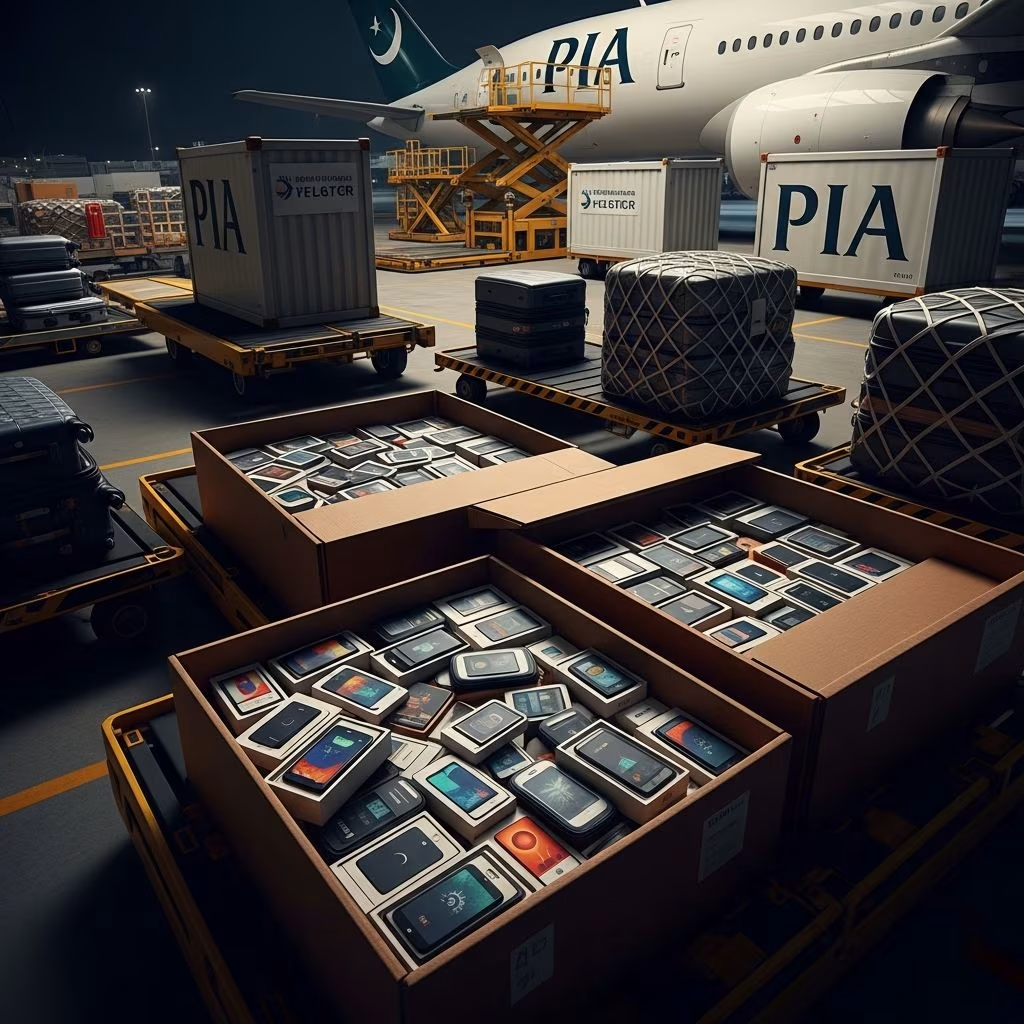
Beginning in 2024 and extending through early 2025, Pakistan’s customs authorities identified multiple smuggling attempts involving PIA personnel. The scale of these operations indicates coordinated efforts to exploit air crew privileges and international travel exemptions. In one significant instance, customs officials recovered 78 high-value smartphones during a routine inspection at Multan International Airport, including 54 iPhone devices representing substantial retail value. The confiscated merchandise included the latest iPhone 16 Pro models, suggesting deliberate targeting of premium market segments.
These recovery figures underscore the systematic nature of the smuggling operations. Rather than isolated incidents of individual indiscretion, the patterns indicate potential coordination among crew members across different flight routes and destinations. Multiple incidents occurred on international routes, including flights originating from Dubai, Toronto, and Abu Dhabi, suggesting that crew members leveraged their access to international hubs to acquire contraband for importation.
The crew members implicated in smuggling activities occupied various positions within the airline’s hierarchy. Air hostesses, flight stewards, and senior crew members all appeared among those apprehended by customs authorities. This cross-sectional involvement across different crew classifications suggests that smuggling attempts were not confined to junior staff but involved experienced personnel with extensive operational knowledge and established airport access protocols.
In October 2024, customs authorities at Lahore’s Allama Iqbal International Airport apprehended two crew members following their arrival on flight PK-798 from Toronto. The female crew member, an air hostess from Multan, had five mobile phones recovered from her possession, while a senior flight steward from Lahore was found with an additional five devices. Both individuals subsequently underwent formal inquiries, during which they were offered opportunities to respond to charges, though their explanations failed to justify the possession of contraband merchandise.
The most significant smuggling operation detected involved five crew members suspended on January 22, 2025, following their arrival on flight PK-222 from Dubai to Multan. Customs authorities executed what sources describe as a routine inspection that revealed substantial quantities of expensive mobile phones. The incident occurred during heightened scrutiny at Multan International Airport, where officials acting on prior intelligence intercepted the crew upon landing.
The seizure operation revealed sophisticated compartmentalization of contraband. Authorities discovered 24 iPhones distributed among two air hostesses, while an additional 54 high-value devices were recovered from male crew members who were subsequently summoned from their accommodations. This distribution pattern suggests deliberate strategies to avoid detection, with contraband strategically divided among multiple individuals to reduce individual detection risks.
Following this incident, PIA leadership issued show cause notices to all five suspended crew members, initiating formal disciplinary procedures under the airline’s established protocols. The notices required written responses within specified timeframes, after which PIA’s administration would determine appropriate penalties consistent with company policies and relevant regulations.
Beyond the major incidents at Multan and Lahore, additional smuggling attempts surfaced, indicating an ongoing pattern rather than isolated occurrences. In late January 2025, customs officials at Lahore airport seized smartphones from an air hostess arriving on flight PK-264 from Abu Dhabi. This crew member received immediate suspension and a show cause notice, following the established protocol for suspected contraband importation.
The recurring nature of these incidents—spanning multiple months, various international routes, and numerous crew members—demonstrates systemic vulnerabilities. The geographic diversity of source cities (Dubai, Toronto, Abu Dhabi) and destination airports (Multan, Lahore) indicates that smuggling networks exploited different terminal facilities and possibly coordinated their operations to distribute risk across multiple locations.
Pakistan’s customs authorities employed both routine screening procedures and targeted intelligence operations to detect smuggling activities. While some seizures occurred during standard baggage inspections at arrival terminals, others resulted from prior intelligence that prompted focused security operations. The effectiveness of these detection methods varied depending on the airport facility, staffing levels, and technological resources available for screening passenger and crew baggage.
Routine inspections at Multan International Airport proved particularly productive in identifying contraband, suggesting either higher-than-average staff diligence at this facility or greater vulnerability in crew discipline on certain routes. The intelligence-driven operations that preceded some seizures indicate coordination between customs agencies and airport security divisions to intercept suspected smuggling activities.
PIA implemented a formal disciplinary process for apprehended crew members that included show cause notices, written response opportunities, and formal inquiry proceedings. This procedural framework ensured that personnel faced allegations through established administrative channels before final determinations regarding employment status. However, the airline pursued dismissal for individuals where investigations confirmed guilt beyond reasonable administrative doubt.
In instances where evidence proved conclusive, PIA terminated employment immediately. The two crew members dismissed in January 2025 following the Toronto incident received formal dismissal letters that required surrender of PIA identification cards, family access credentials, and airport security passes—effectively severing all organizational and facility access. This comprehensive personnel separation aimed to prevent any potential reemployment or facility access that might enable future smuggling attempts.
PIA’s leadership publicly committed to zero-tolerance enforcement against staff misconduct, with spokesperson Abdullah Khan explicitly stating this position to media outlets. The airline’s administration recognized that permitting smuggling incidents to proceed without serious consequences would undermine regulatory compliance and encourage additional violations among other personnel. This policy framework extended to all categories of staff misconduct, not exclusively smuggling activities.
The airline’s human resources division coordinated disciplinary procedures, with the Chief Human Resource Officer making final determinations regarding employment consequences. This centralized authority ensured consistent application of policies across all incidents and prevented individual managers from showing leniency that might encourage future violations.
The value of seized merchandise represented significant financial loss to smuggling networks and demonstrated the commercial motivation driving these operations. iPhone devices, particularly premium models such as the iPhone 16 Pro, command substantially higher prices in Pakistani markets compared to international retail pricing due to import duties and taxation. The price differential created strong financial incentives for crew members to exploit their international access and cargo privileges.
The seizure of 78 devices in a single operation represented potential retail value exceeding several million rupees, indicating both the scale of smuggling networks and their significance as organized commercial enterprises rather than opportunistic individual misconduct. Crew members received compensation from smuggling organizations for successfully importing contraband, creating personal financial incentives that sometimes outweighed employment risks.
These smuggling incidents damaged PIA’s operational reputation and created additional scrutiny for the airline’s security protocols. Customs authorities and regulatory agencies questioned whether PIA adequately screened personnel or implemented sufficient internal controls to prevent contraband importation. The repetition of incidents across multiple months suggested that initial disciplinary actions did not effectively deter other crew members from participating in smuggling networks.
International aviation partners and regulatory authorities monitored PIA’s response to these violations, as they reflected on the airline’s commitment to compliance and oversight. Continued incidents could result in enhanced screening procedures for all PIA personnel, increased customs inspections of PIA flights, or regulatory sanctions that would impose operational constraints on the carrier.
PIA was not unique in confronting crew-based smuggling operations. International aviation security reports documented similar incidents involving personnel from multiple carriers attempting to import high-value merchandise through exploitation of air crew privileges. However, the concentration of such incidents within a single airline over a compressed timeframe raised specific concerns about PIA’s institutional controls and personnel screening processes.
| Date | Route | Items Seized | Personnel Involved | Action Taken |
|---|---|---|---|---|
| October 2024 | Toronto to Lahore (PK-798) | 10 mobile phones | 1 air hostess, 1 steward | Dismissal |
| January 22, 2025 | Dubai to Multan (PK-222) | 78 smartphones (54 iPhones) | 5 crew members (2 hostesses, 3 stewards) | Suspension, show cause |
| Late January 2025 | Abu Dhabi to Lahore (PK-264) | Multiple smartphones | 1 air hostess | Suspension, show cause |
These incidents exposed several structural vulnerabilities within aviation security frameworks. Crew members possessed legitimate reasons for international travel and customs exemptions designed for operational necessities, creating opportunities for exploitation. Enhanced screening protocols for crew baggage required careful calibration to maintain operational efficiency while preventing contraband importation.
The compartmentalization of contraband among multiple crew members demonstrated sophisticated understanding of detection methodologies and deliberate attempts to circumvent security procedures. Smuggling networks clearly understood customs inspection protocols and strategically distributed contraband to reduce individual detection probabilities.
PIA’s leadership committed to implementing enhanced internal controls, including strengthened vetting procedures for crew members, periodic integrity assessments, and increased security awareness training. The airline coordinated with customs authorities to establish communication channels for intelligence sharing and targeted inspection scheduling. These measures aimed to increase detection risks and reduce smuggling network effectiveness.
The airline also implemented policies requiring crew members to report suspicious activities or requests from colleagues, creating peer accountability mechanisms within operational teams. This approach recognized that active involvement by multiple crew members required coordination that colleagues might detect through unusual communications or behavioral patterns.
The pattern of smuggling incidents at PIA reflected broader tensions within international aviation between maintaining operational efficiency and ensuring regulatory compliance. While crew members required reasonable access to international facilities and customs accommodation for legitimate operational purposes, these privileges created opportunities for misconduct. PIA’s zero-tolerance enforcement policy represented the airline’s commitment to preventing future violations while maintaining passenger safety and regulatory standing within Pakistan’s aviation authority frameworks.
