

 Travel Essentials
 Travel Essentials

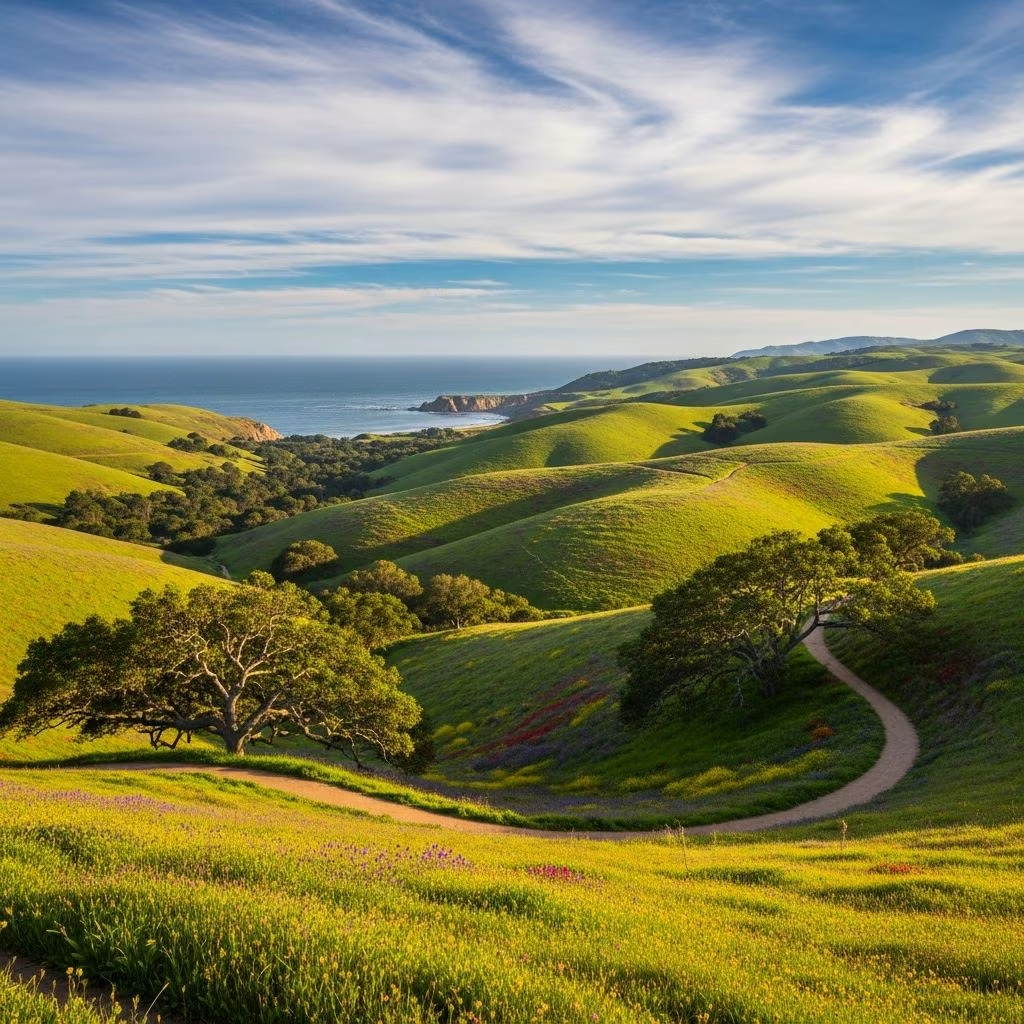
Explore 880 acres of protected coastal habitat, 11+ miles of trails, and panoramic Pacific views at Pismo Preserve.
 Travel Essentials
Nestled along California’s Central Coast, the Pismo Preserve stands as a remarkable testament to successful land conservation and public land stewardship. This expansive natural area encompasses approximately 880 acres of pristine landscape, offering visitors an unparalleled opportunity to experience diverse ecosystems and panoramic coastal vistas. The preserve has rapidly become a beloved destination for outdoor enthusiasts seeking authentic wilderness experiences without venturing far from populated areas.
The Pismo Preserve represents a substantial conservation achievement spanning roughly 880 to 900 acres of protected land in San Luis Obispo County. This vast expanse encompasses multiple distinct ecological zones, from coastal ridgelines descending to ocean-adjacent terrain. The property reaches elevations exceeding 900 feet above sea level, creating dramatic topographical variations that reward explorers with ever-changing perspectives.
The Land Conservancy of San Luis Obispo County, a nonprofit 501(c)(3) organization, acquired the preserve in 2014 and continues to manage it today. This transition from private ranch land to public conservation area represented a pivotal moment for regional land protection efforts. The acquisition process involved collaborative partnerships between governmental agencies, private entities, and conservation organizations, demonstrating the power of coordinated stewardship initiatives.
The preserve’s trail network currently spans over 11 miles of interconnected pathways, combining single-track trails with restored ranch roads and livestock routes. These existing routes provide immediately accessible recreational opportunities for diverse user groups. Future expansion plans envision the addition of approximately 3 miles of new trail development, bringing the total network to approximately 14 miles.
Trail accessibility represents a priority for preserve management. The Land Conservancy has committed to developing an Americans with Disabilities Act-accessible trail, ensuring that individuals with mobility limitations can participate in the preserve experience. This inclusive approach reflects contemporary outdoor recreation standards emphasizing universal accessibility.
The existing trail infrastructure accommodates multiple recreational pursuits:
The Pismo Preserve encompasses remarkably diverse ecological communities within its 880-acre footprint. Dramatic gnarled oak woodlands dominate the northern faces and canyon systems, creating dense canopy coverage and cooler microclimates. These ancient oak groves provide critical habitat for numerous species dependent on woodland ecosystems.
Sweeping grasslands characterize other sections of the preserve, particularly across ridgeline areas and more open terrain. These grassland communities support different plant and animal assemblages than wooded zones, contributing to overall ecological diversity. Coastal chaparral vegetation covers additional areas, featuring drought-adapted shrubs and small trees adapted to the region’s Mediterranean climate patterns.
The preserve protects multiple natural water sources including springs distributed across hillsides, which provide essential water resources for birds, mammals, insects, and plant communities year-round. These water features sustain biodiversity that would otherwise struggle during dry seasons. Additionally, the preserve functions as a wildlife corridor, enabling animals to traverse between inland habitats and coastal areas. This connectivity maintains genetic diversity and supports species migration patterns essential for long-term population viability.
Perhaps the most celebrated feature of the Pismo Preserve involves its extraordinary visual experiences. Visitors who reach the preserve’s elevated ridgelines encounter 360-degree panoramic views encompassing vast expanses of the Pacific Ocean and surrounding landscape. Once coastal fog clears—typically by mid-morning during summer months—these vistas reveal spectacular seascapes stretching from the Irish Hills Natural Reserve to the north all the way south to Point Sal State Beach.
Several trail segments specifically highlight these viewpoints. The Panhandle Trail and Peekaboo Loop routes ascend to the preserve’s highest ridgelines, positioning hikers for optimal vista appreciation. From these vantage points, visitors can observe the distinctive 1,200-foot-long Pismo Beach Pier in the distance, a recognizable landmark anchoring the coastal panorama.
The preserve’s coastal location makes it an exceptional location for marine mammal observation. During migration seasons, whales pass through waters immediately offshore from the preserve, making certain elevated lookout points ideal for whale-watching activities. This combination of terrestrial and marine viewing opportunities creates multifaceted nature appreciation experiences.
The Pismo Preserve’s landscape carries deep historical significance reflecting California’s complex land-use evolution. Before its conservation designation, the property functioned as grazing grounds for coastal cattle ranches operating across generations. This pastoral heritage left visible imprints on the landscape, including the ranch roads and livestock trails that now form the foundation of the preserve’s recreational trail system.
The land itself traces its lineage to Rancho Pismo, a Mexican land grant dating to California’s territorial period. This historical thread connects modern conservation efforts to centuries of land stewardship and cultural occupation. Contemporary management practices honor this heritage while transforming the landscape’s primary purpose toward public recreation and wildlife protection.
Effective preserve management requires sustained commitment to habitat restoration, trail maintenance, and facility upkeep. The Land Conservancy coordinates conservation efforts across the preserve, addressing challenges including weed management, erosion control, and invasive species suppression. Climate change and natural erosion represent ongoing threats to coastal conservation areas, necessitating proactive management strategies to maintain ecological integrity.
The preserve protects water quality within Pismo Creek through land management practices that prevent runoff contamination and maintain riparian vegetation. These watershed protection efforts extend conservation benefits beyond the preserve’s boundaries to downstream communities and ecosystems.
The Pismo Preserve welcomes visitors year-round, offering reliable access via Highway 101 with designated trailhead parking facilities. Recent operational changes have introduced parking fees designed to support ongoing maintenance and facility improvements. As of October 2025, the Land Conservancy implemented a structured fee system charging $5 per day or $50 for annual passes.
These parking revenue streams directly support preserve operations, funding facility maintenance including restroom cleanliness, weed abatement, and trail upkeep. Early adoption rates demonstrated strong community support, with approximately 900 annual passes sold within the first three months of implementation, generating over $45,000 for preserve stewardship.
The preserve infrastructure supports comfortable visitor experiences through strategically positioned amenities. Parking areas accommodate moderate visitor volumes, with expansion potential for increased capacity during peak seasons. Restroom facilities provide essential services, and future development plans include additional infrastructure supporting the projected visitor capacity of approximately 3,000 monthly visitors.
The transition from private ranch to public preserve involved phased infrastructure development. The Land Conservancy invested substantial resources transforming raw property into visitor-ready recreational landscape. Initial project estimates indicated completion timelines extending into 2018, with projected costs of approximately $4.8 million for full park amenity buildout. These expenses supplemented the $12 million already invested in acquiring the property in 2014, demonstrating significant financial commitment to preservation and public access development.
Development priorities emphasized accessibility and visitor experience quality. Parking infrastructure, restroom facilities, and trail signage received particular attention in early phases. The ADA-accessible trail represents a significant investment reflecting inclusive recreation principles.
The Pismo Preserve offers distinct experiences across different seasons. Spring months bring wildflower displays and increased animal activity as breeding seasons commence. Summer conditions feature reliable fog clearing by morning, revealing the most dramatic ocean vistas. Fall offers comfortable hiking temperatures and generally clear weather patterns. Winter visitors experience solitude and dramatic light conditions, though coastal fog remains more persistent.
Early morning visits typically provide optimal viewing conditions, as fog dispersal generally occurs between mid-morning and early afternoon. Trail difficulty varies from gentle ranch road sections suitable for families and less experienced hikers to more challenging single-track segments requiring greater fitness levels.
The Pismo Preserve functions as a cornerstone within a broader network of protected coastal properties along the Central Coast. Complementary conservation projects including Kathleen’s Canyon Overlook, Paradise Beach North, and adjacent private lands operated under conservation easements create an interconnected protection strategy addressing climate change and erosion challenges.
This landscape-scale approach recognizes that ecosystem protection requires coordination across multiple properties and jurisdictions. The dedicated stewardship professionals managing these various properties ensure consistent conservation standards and compatible management practices.
Essential Information for Visitors
| Aspect | Details |
|---|---|
| Location | 80 Mattie Road, Pismo Beach, CA 93449 |
| Total Acreage | Approximately 880 acres |
| Trail Miles | Currently 11 miles (14 miles planned) |
| Elevation Range | Sea level to over 900 feet |
| Parking Fee | $5 daily or $50 annual pass |
| Permitted Activities | Hiking, mountain biking, horseback riding, wildlife observation |
Contact the Land Conservancy of San Luis Obispo County directly for current pet policies, as regulations may vary by season and trail designation.
Early morning visits from June through September typically offer the clearest conditions after coastal fog clears by mid-morning.
The preserve offers varied difficulty levels. Ranch road sections accommodate beginners, while single-track trails suit more experienced hikers.
Contact the Land Conservancy for current status on accessible trail development and completion dates.
Yes, the preserve welcomes equestrians and mountain bikers on designated routes suitable for these activities.
The Pismo Preserve represents successful collaboration between conservation organizations, governmental agencies, and private stakeholders creating accessible public recreation space while protecting critical coastal ecosystems. Its combination of ecological significance, recreational opportunity, and visual magnificence makes it an invaluable addition to California’s public lands, ensuring that future generations can experience pristine coastal wilderness and ocean vistas from the Irish Hills to Point Sal.
