

 Travel Essentials
 Travel Essentials

Learn what polar coaster winters are, why weather swings so fast, and how to prepare your home, travel plans, and budgets.
 Travel Essentials
Weather patterns across North America have become increasingly unpredictable in recent years, with meteorologists and agricultural forecasters documenting significant fluctuations in seasonal conditions. One phenomenon that has gained considerable attention is the concept of the polar coaster winter, a weather pattern characterized by dramatic swings between extreme cold and relatively mild conditions within the same season. Understanding this pattern has become essential for travelers, homeowners, and anyone planning activities during the colder months.
A polar coaster winter represents a departure from traditional seasonal weather patterns where temperatures remain relatively consistent throughout the season. Instead of experiencing steady cold or gradual temperature transitions, regions affected by polar coaster conditions encounter rapid and sometimes extreme oscillations between frigid Arctic air and warmer-than-average temperatures. These fluctuations can occur over days or weeks, creating a volatile meteorological environment that challenges conventional weather prediction models.
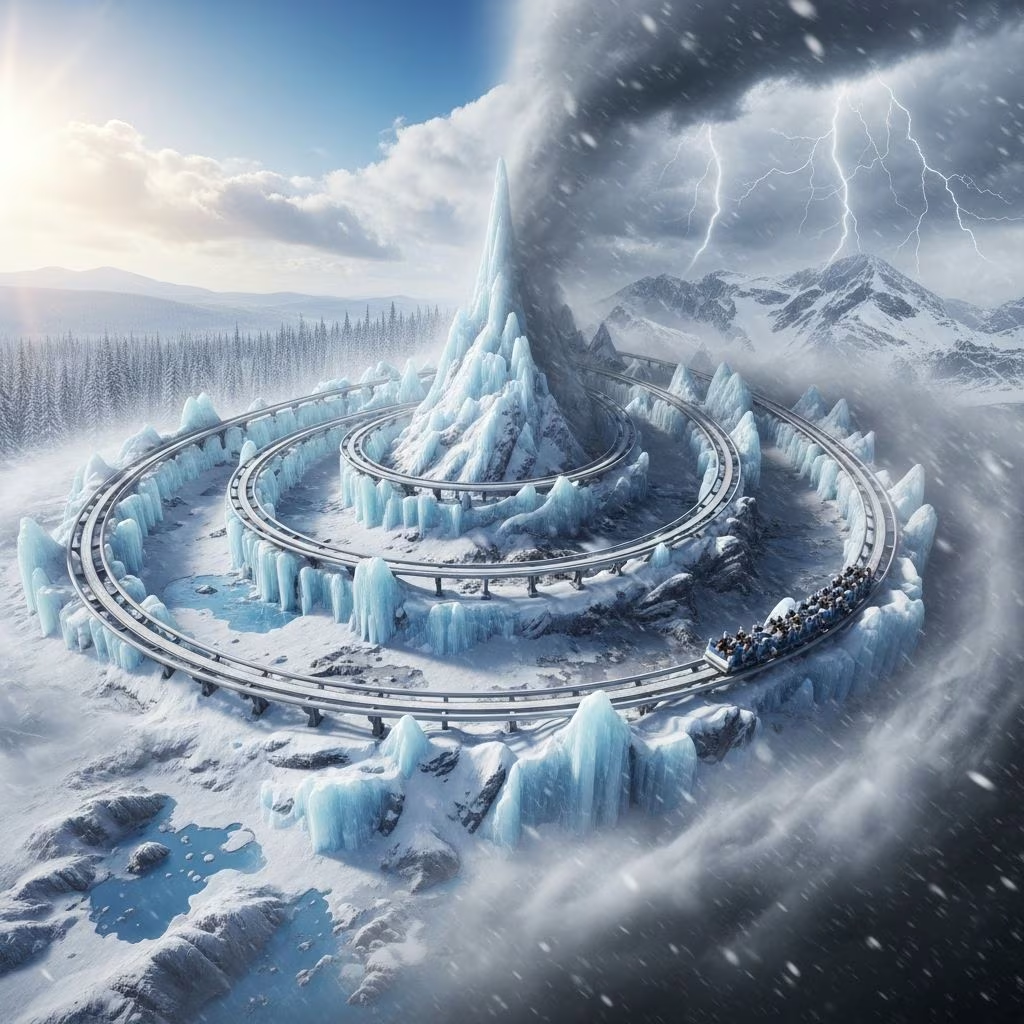
The terminology itself suggests the experience of riding a coaster—the rapid ups and downs that characterize amusement park attractions mirror the temperature swings that define this weather phenomenon. These patterns typically bring:
Meteorologists attribute polar coaster patterns to disruptions in the jet stream, the fast-moving air current that influences weather systems across mid-latitudes. When the jet stream becomes particularly wavy or unstable, it allows cold Arctic air to surge southward more frequently than typical winters. Simultaneously, warm air masses can push northward, creating the distinctive temperature oscillations characteristic of polar coaster conditions.
The interaction between high-pressure systems over polar regions and low-pressure systems tracking across populated areas creates the dynamic conditions that define these winters. Unlike more stable seasonal patterns where weather systems move predictably, polar coaster conditions feature multiple competing weather systems that generate competing atmospheric influences. This atmospheric complexity makes forecasting challenging, as traditional seasonal models may not accurately capture the frequency and intensity of temperature swings.
Travelers planning winter vacations face unique challenges when polar coaster conditions develop. The unpredictability of weather patterns can affect transportation reliability, visibility conditions, and the overall safety of outdoor activities. Airlines may experience more frequent delays or cancellations due to severe weather events, and road conditions can deteriorate rapidly as precipitation alternates with thaw-freeze cycles.
For those planning trips to snow-dependent destinations, polar coaster winters present a paradox. While these patterns often bring substantial precipitation, the frequent warming periods can reduce snow quality and accumulation at lower elevations. Ski resorts and winter sports destinations must adapt their operations to accommodate the irregular conditions, sometimes requiring additional snow-making efforts during warm phases to maintain skiing conditions.
International travelers should consider the following adjustments when planning winter journeys:
Residential property maintenance becomes significantly more demanding during polar coaster winters. The freeze-thaw cycles that characterize these patterns accelerate deterioration of building materials, roofing systems, and infrastructure. Homeowners must prepare their properties differently than they would for conventional winters, accounting for the stress placed on structures by rapid temperature fluctuations.
Essential preparation measures include:
Property damage from polar coaster winters often exceeds damage from conventional severe winters because the repeated cycles stress materials beyond their design parameters. Homeowners should prioritize preventive maintenance and inspection protocols to identify and address vulnerabilities before winter conditions develop.
The erratic nature of polar coaster winters complicates energy consumption patterns. Unlike predictable winters where heating demands follow established patterns, volatile temperature swings create unpredictable energy demands. Periods of extreme cold drive heating systems to maximum capacity, while subsequent warm spells reduce demand dramatically. This volatility can strain regional power grids and inflate utility costs for consumers.
Households experiencing polar coaster winters may see significantly higher heating bills due to the repeated cycling of heating systems. Additionally, the unpredictable nature of these patterns makes it difficult for utility companies to anticipate demand, potentially leading to supply chain disruptions for heating fuel. Homeowners should consider energy management strategies such as programmable thermostats and weatherization improvements to maintain efficiency despite the volatile conditions.
Farmers and agricultural operations face substantial challenges from polar coaster weather patterns. The freeze-thaw cycles can damage crops, reduce soil stability, and create unpredictable growing conditions for spring planting. Livestock operations must adapt to the variable conditions, requiring more frequent adjustments to shelter and feeding strategies.
Beyond the farm sector, polar coaster winters affect broader economic activity. Construction projects, outdoor maintenance work, and transportation-dependent industries all experience disruptions from the volatile conditions. Businesses dependent on predictable seasonal patterns must develop contingency plans to maintain operations despite the weather volatility.
Winter sports enthusiasts and outdoor recreation planners must recalibrate their expectations during polar coaster winters. The variable conditions create both opportunities and challenges for different activities. Downhill skiing may suffer from inconsistent snow quality, while cross-country skiing conditions may fluctuate dramatically between seasons and even within individual weeks.
Recreation facilities and outdoor activity providers typically adjust their operations by:
Meteorologists and seasonal forecasters acknowledge that polar coaster patterns present significant forecasting challenges. Traditional long-range models designed around historical weather patterns may not accurately capture the frequency and magnitude of temperature oscillations. This limitation underscores the importance of monitoring intermediate-range forecasts rather than relying solely on seasonal predictions.
Forecasting agencies continue to refine their models to better capture the dynamics of polar coaster conditions. Improved satellite technology, enhanced computer processing power, and better understanding of atmospheric dynamics contribute to incremental improvements in prediction accuracy. However, the inherent chaotic nature of highly unstable atmospheric conditions means that perfect forecasting remains impossible.
Successfully navigating polar coaster winters requires mental flexibility and adaptive planning strategies. Rather than adhering rigidly to predetermined winter activity schedules, individuals should develop multiple contingency plans that accommodate various weather scenarios. This approach reduces frustration and maximizes the opportunity to enjoy winter activities despite unpredictable conditions.
Effective adaptation strategies include maintaining updated weather monitoring habits, adjusting expectations based on forecasts rather than historical norms, and developing indoor alternatives for outdoor activities. Communities often benefit from enhanced communication systems that keep residents informed about rapidly changing conditions and necessary precautions.
Climate scientists continue studying whether polar coaster patterns represent a new normal or temporary deviation from established climate trends. Understanding the relationship between broader climate change patterns and regional weather volatility helps communities develop better long-term planning strategies. As weather patterns continue evolving, society’s ability to adapt and prepare for variable conditions becomes increasingly valuable.
Seasonal forecasts from meteorological agencies typically issue predictions 3-6 months in advance. Monitoring extended forecasts from national weather services and agricultural almanacs can provide early indications of expected winter patterns.
Focus first on roof integrity, gutter systems, and foundation protection. These areas experience the most stress from repeated freeze-thaw cycles characteristic of polar coaster conditions.
Weather pattern frequency is an active area of meteorological research. While documentation of these events has improved, determining long-term frequency trends requires more historical data and continued scientific analysis.
Consider comprehensive coverage that specifically addresses weather-related delays, cancellations, and emergency assistance. Review policy details to ensure adequate protection for weather-dependent disruptions.
