

 Travel Essentials
 Travel Essentials

Explore Pompeii's rich history, major attractions, practical visiting tips, and the profound legacy of this Roman city preserved by Vesuvius' wrath.
 Travel Essentials
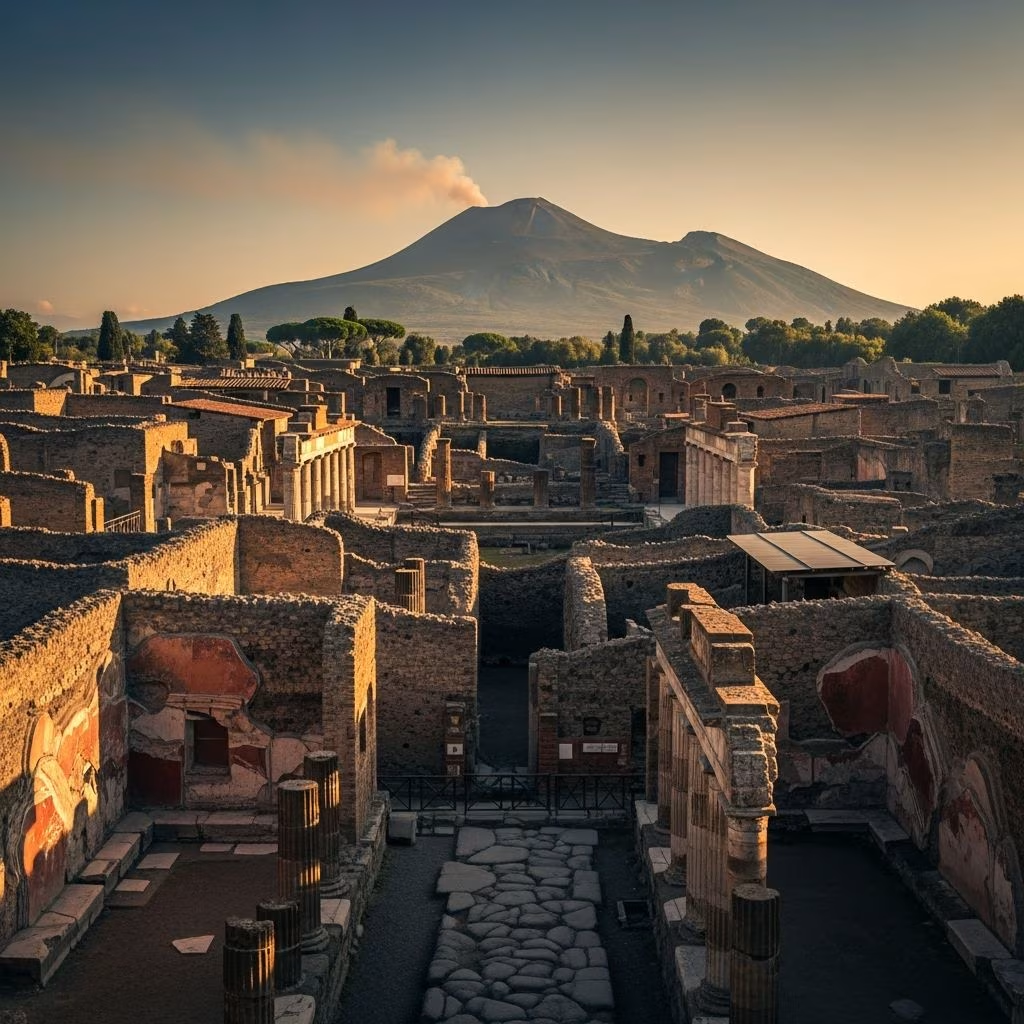
Pompeii stands as one of the most remarkable archaeological treasures in the world, offering a vivid snapshot of ancient Roman life preserved under layers of volcanic ash. Buried by the eruption of Mount Vesuvius in AD 79, this once-thriving city near Naples, Italy, provides unparalleled insights into daily existence, architecture, and culture from over 2,000 years ago.
The story of Pompeii begins long before its Roman prominence. Initial settlements trace back to the 8th or 9th century BC, established by the Oscans, an indigenous Italic people from central Italy. These early villages formed on lava terraces from prior volcanic activity, creating a fertile base for growth.
By the 6th century BC, Greek influences permeated the area, evident in structures like the Doric temple in the Triangular Forum. Pompeii fell under Etruscan control around 525 BC but regained independence after the Battle of Cumae in 474 BC. Greek cultural imprints lingered, shaping art, trade, and urban planning.
Samnite expansion in the 5th century BC marked further development, followed by Roman conquest in 89 BC during the Social War. Under Roman rule, Pompeii flourished as a key port on the Sarnus River, facilitating trade in wine, olive oil, and goods from Campania’s hinterlands. Wealth from Rome’s eastern campaigns funded grand public works, including theaters, temples, and baths.
On October 24, AD 79, Mount Vesuvius unleashed a cataclysmic eruption, blanketing Pompeii in 4 to 6 meters of pumice, ash, and pyroclastic flows. Eyewitness accounts from Pliny the Younger describe a massive column of debris rising 12 miles high, followed by 18 hours of fallout that collapsed roofs but spared many walls.
The city, home to about 11,000-20,000 residents, was entombed rapidly. Subsequent surges of hot gases and debris added layers, preserving organic materials like wood, food, and even human forms through plaster casts. Rediscovery began in 1748, with ongoing excavations revealing over two-thirds of the 66-hectare site.
Pompeii’s ruins encompass forums, homes, public spaces, and amenities that illuminate Roman society. Key sites include:
These structures, adorned with frescoes, mosaics, and graffiti, depict everything from mythology to election slogans, painting a lively portrait of urban life.
Beyond monuments, Pompeii reveals intimate details of existence. Streets featured stepping stones for pedestrians avoiding wastewater, while fast-food taverns (thermopolia) served hot meals from counters with embedded jars. Bakeries with carbonized loaves and brothels with explicit art underscore commerce and leisure.
Art and religion permeated homes and temples. Frescoes in vivid Pompeian red illustrated gods, myths, and domestic scenes. Gardens, identified via root casts, grew produce and ornamental plants, evidencing sophisticated horticulture. Social strata ranged from wealthy villa owners to slaves, with evidence of multicultural influences from across the empire.
| Aspect of Life | Examples from Pompeii | Insights Gained |
|---|---|---|
| Commerce | Shops, markets, wine presses | Thriving export of garum sauce, wine |
| Entertainment | Amphitheater, theaters | Gladiators, plays for masses |
| Hygiene | Baths, aqueducts | Public and private sanitation |
| Art | Frescoes, mosaics | Mythology, daily scenes |
Access Pompeii via train from Naples (Circumvesuviana line, 30-40 minutes) or car (A3 highway). The main entrance at Piazza Anfiteatro opens daily 9 AM-7 PM (last entry 5:30 PM), with tickets €18 (includes Herculaneum surcharge). Opt for a guided tour or audio guide for context; allow 3-5 hours.
Best Times: Spring (April-June) or fall for mild weather and fewer crowds. Summers hit 30°C+; winters mild but rainy. Book online to skip lines, especially for special exhibits like plaster casts.
Tips for Exploration:
Avoid peak midday heat; start early. Accessibility is limited, but wheelchair paths exist at main entrances.
Despite UNESCO status since 1997, Pompeii faces collapse risks from weathering, tourism, and quakes. Recent initiatives include the Great Pompeii Project (EU-funded), stabilizing structures and digitizing artifacts. Ongoing digs uncover new finds, like 2023 banquet hall frescoes.
Climate change exacerbates degradation; conservators use advanced tech like 3D scanning. Visitor caps and restoration prioritize sustainability.
Pompeii transcends ruins—it’s a time capsule evoking the fragility of civilization. Touching 2,000-year-old walls or viewing casts humanizes history, blending awe with reflection on nature’s power. Essential for history buffs, it’s equally mesmerizing for families, offering interactive lessons in antiquity.
3-5 hours for highlights; full day for thorough exploration.
Yes—interactive elements like casts and mosaics engage young minds.
No, but shuttles connect; hike takes 30 minutes up.
Herculaneum is smaller, better-preserved organics due to deeper mud burial.
Limited; picnic or eat at entrances.
