

 Travel Essentials
 Travel Essentials

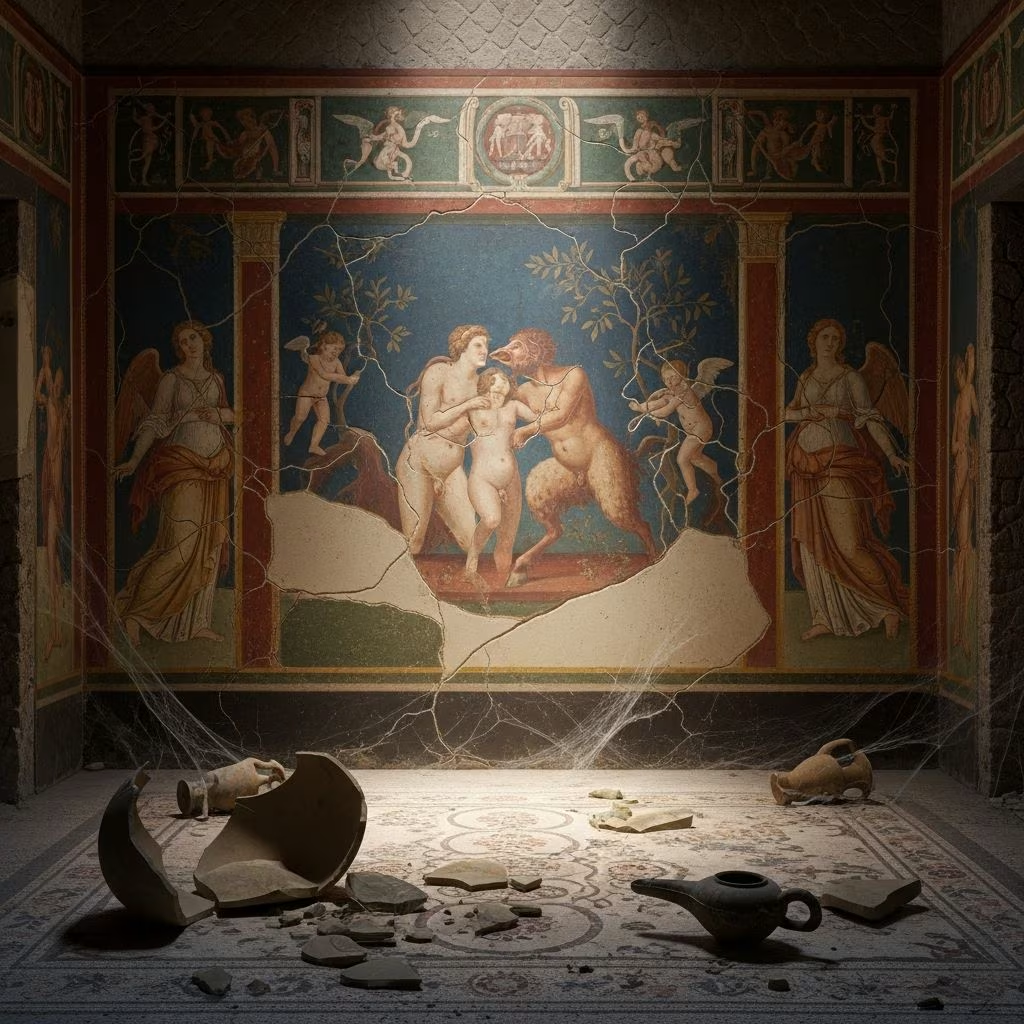
Pompeii’s erotic frescoes reveal a Roman world where sensual art, fertility symbols, and everyday life were openly intertwined.
 Travel Essentials
The ancient city of Pompeii, frozen in time by the catastrophic eruption of Mount Vesuvius in 79 CE, offers a unique window into Roman life. Among its most striking discoveries are the **erotic frescoes** and artifacts that adorned homes, brothels, and public spaces, depicting explicit sexual acts with unapologetic boldness. These works challenge modern preconceptions about ancient morality, showing a society where sensuality was woven into everyday art and architecture.
When Mount Vesuvius erupted, it buried Pompeii and nearby Herculaneum under layers of ash and pumice, sealing away a vibrant urban culture. Excavations beginning in the 18th century unearthed not just grand villas and temples but also a profusion of sexual imagery. **Frescoes** showing couples in various positions, oversized phallic symbols, and mythical scenes of seduction covered walls from private residences to commercial establishments. This art was so pervasive that it shocked early archaeologists, leading to its segregation from public view for nearly two centuries.
The preservation was near-perfect due to the anaerobic conditions created by the volcanic debris, which prevented decay. Statues, mosaics, and paintings survived intact, providing historians with direct evidence of Roman attitudes toward sexuality. Unlike later Christian-influenced eras, Romans viewed such imagery as celebratory rather than obscene, often associating it with fertility, prosperity, and pleasure.
Pompeii’s erotic art appears in diverse locations, from elite homes to working-class brothels, indicating its broad cultural acceptance.
These sites demonstrate that erotic art was not limited to sex trade venues but permeated high society, appearing in peristyle gardens, kitchens, and even enslaved quarters repurposed for intimate encounters.
Roman erotic frescoes often drew from mythology, featuring gods like Leda seduced by Zeus as a swan or Priapus with exaggerated anatomy. A famous bedroom fresco shows Leda’s inviting gaze and nude form, symbolizing mutual sensuality and luxury—evident in details like her ornate sandal.
Phallic imagery dominated, with oversized penises on doorposts (phallic lararia) warding off evil and ensuring fertility. In brothels, such symbols promised virility and satisfaction. Scholars note these weren’t pornographic in the modern sense but rhetorical devices promoting pleasure, status, and social harmony.
| Common Motifs | Symbolism | Example Location |
|---|---|---|
| Mythical couplings | Fertility and divine pleasure | Private villas |
| Phallic scales | Wealth and potency | House of the Vettii |
| Group scenes | Social indulgence | Lupanar brothel |
| Nude figures | Beauty and invitation | Suburban Baths |
This table highlights how motifs varied by context, from apotropaic (evil-repelling) in public areas to intimate in homes.
Upon discovery, the explicit nature of Pompeii’s art clashed with 19th-century prudishness. Archaeologists at the Museo Archeologico Nazionale di Napoli hid thousands of pieces in a ‘Secret Cabinet’ (Gabinetto Segreto), accessible only to select scholars or bribing men until 2000.
This censorship stemmed from rising Christian morality, which deemed sex shameful—a stark contrast to Roman openness. As one expert noted, ‘This was another time… sex was not something to consume just in a private space.’ The locked-away art included frescoes of orgies, fellatio, and cunnilingus, fueling debates on Roman ‘decadence’ that persist today.
Recent scholarship reframes this art as evidence of normalized sexuality. Exhibitions like ‘Art and Sensuality in the Houses of Pompeii’ showcase these works openly, arguing they decorated not just brothels but family homes, challenging brothel-only assumptions.
Restorations, such as the House of the Vettii, reveal technical mastery: vibrant colors from mineral pigments endured centuries. Experts like Massimo Osanna emphasize contextual viewing—erotica as hospitality enhancers, signaling a host’s sophistication.
Today, visitors access most sites, though some require reservations. Guided tours contextualize the art, dispelling myths of Roman perversion.
Planning a trip to Pompeii? Here’s how to experience its erotic heritage responsibly.
Combine with a Vesuvius hike for full historical immersion.
No, it appeared in private homes and baths too, indicating widespread acceptance.
19th-century officials found it obscene, locking it away until 2000.
Yes, most are on-site or in Naples museum; some sites require guides.
They symbolized protection, fertility, and prosperity.
Parts are, but erotic zones may not suit young children; check maps.
Pompeii’s erotic legacy influences art history, sparking discussions on sexuality across eras. It underscores how cultural norms evolve—Romans celebrated the body, while Victorians suppressed it. Modern views appreciate it as a testament to human desire’s universality.
Preservation efforts continue, with digital scans ensuring future access. This art reminds us that ancient Pompeii was a place of unbridled vitality, where sensuality enhanced life.
