

 Travel Essentials
 Travel Essentials

Explore Pompeii’s hidden erotic art, from brothel frescoes to villa symbols, and learn how Romans used sensual imagery in daily life.
 Travel Essentials
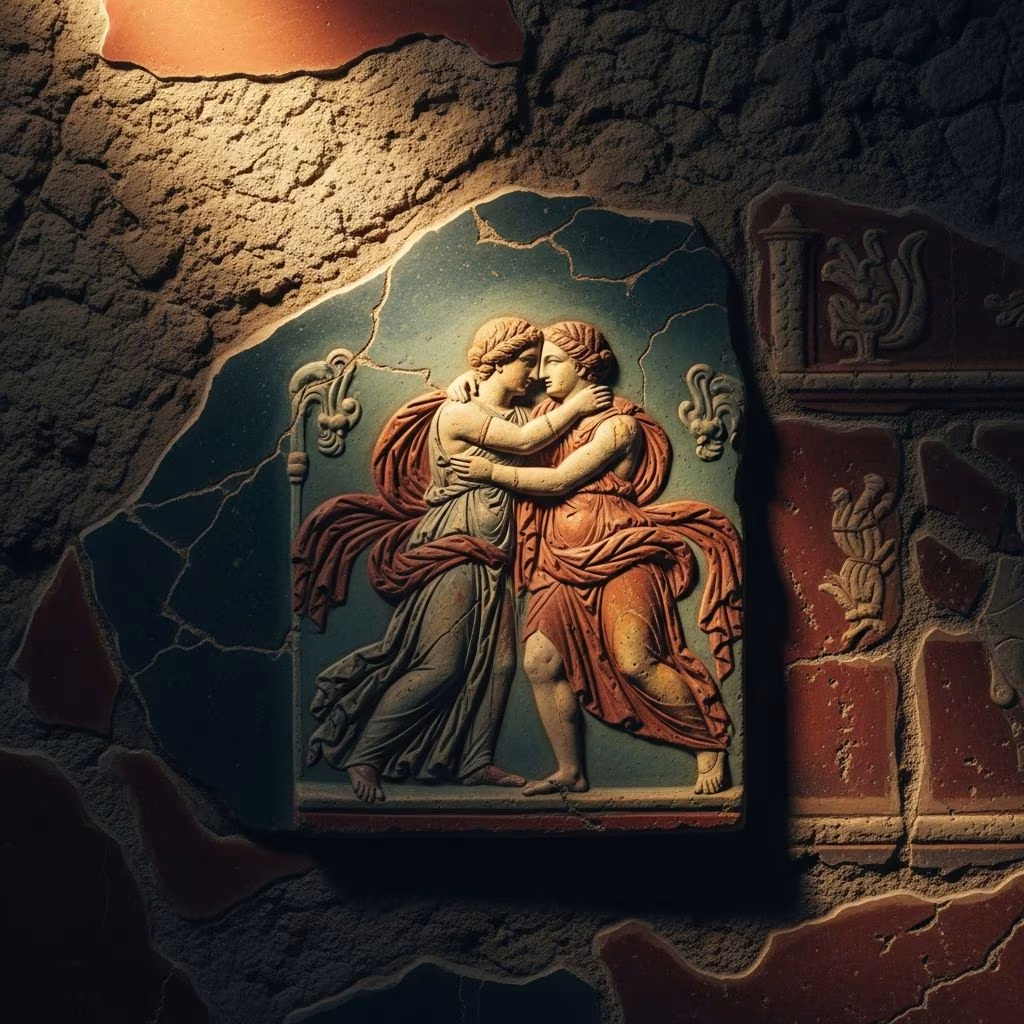
Buried under volcanic ash in 79 CE, the ancient city of Pompeii safeguards a provocative collection of erotic art that challenges modern preconceptions of Roman morality. These vivid frescoes, statues, and graffiti depict explicit sexual scenes, fertility symbols, and mythological encounters, offering a window into a society where sensuality permeated daily life.
The catastrophic eruption of Mount Vesuvius in 79 CE entombed Pompeii and nearby Herculaneum, creating an anaerobic environment that preserved organic materials and artwork remarkably well. Excavations beginning in the 18th century uncovered not just grand villas and public spaces but an abundance of erotic imagery—frescoes showing copulating figures, oversized phalluses as protective talismans, and nude deities in intimate poses.
Unlike many ancient sites ravaged by time or iconoclastic zeal, Pompeii’s sealed fate protected these works from destruction. Prosperous households featured bedroom walls adorned with fertility myths, while public areas displayed bold sexual motifs, reflecting a culture that integrated eroticism into architecture and decoration.
When archaeologists unearthed Pompeii’s sensual treasures in the 18th and 19th centuries, they confronted imagery that clashed with Victorian sensibilities. Frescoes of orgies, fellatio, and various intercourse positions lined brothel walls and private cubicles, prompting officials to deem them obscene.
A ‘secret cabinet’ was established at the Museo Archeologico Nazionale in Naples, where explicit artifacts were locked away. Accessible only to select scholars or bribing visitors until 2000, this room housed sculptures of well-endowed gods and phallic amulets, hidden for nearly two centuries due to shifting Christian views on sexuality that labeled such art shameful.
The most infamous site is the Lupanar, Pompeii’s primary brothel with ten cramped cubicles across two floors, each featuring a stone bed and explicit frescoes above. These murals, depicting diverse sexual positions, likely served as menus for clients, guiding fantasies and services in this bustling pleasure house.
Accessible via a narrow entrance off a busy street, the Lupanar included a balcony and latrine, catering to quick encounters. Graffiti etched by patrons—boasts of conquests or lover’s complaints—adds raw, personal testimony to the frescoes’ commercial intent.
| Location | Features | Erotic Elements |
|---|---|---|
| Lupanar Brothel | 10 rooms, stone beds, 2 floors | Frescoes of positions, graffiti |
| Suburban Baths | Dressing room halls | Explicit sex scenes on walls |
| House of Vettii | Private villa | Priapus weighing phallus |
Contrary to assumptions that erotic art confined itself to brothels, affluent homes like the House of the Vettii showcased it prominently. Reopened after 20 years of restoration, this villa features Priapus, the fertility god, balancing his exaggerated phallus against gold coins—a symbol of prosperity and virility.
Bedrooms displayed scenes like Leda and the swan, where a nude figure invites the viewer with overt sensuality, luxurious sandals accentuating erotic tension. These were not mere titillation but conveyed status, warding evil, and invoking abundance in intimate settings.
Other homes had peristyle gardens with pygmy frescoes engaging in playful erotica, blending humor and desire. Scholars now recognize that domestic eroticism normalized sex within marriage and family life, far from the brothel-only narrative.
Pompeii’s Suburban Baths, outside city walls, featured a long entrance hall leading to dressing rooms plastered with vivid sex scenes. Unlike brothels, baths were social hubs for hygiene and conversation, making this erotica notable for its public boldness.
Phallic symbols adorned doorways and streets as apotropaics, protecting against misfortune. This pervasive imagery underscores a society where sex was not shrouded in privacy but celebrated openly, from elite triclinia (dining rooms) with Bacchic revels to utilitarian latrines.
Roman erotic art drew heavily from Greek myths, reinterpreting gods like Dionysus in orgiastic poses or satyrs with nymphs. Frescoes captured cunnilingus, group encounters, and dominant-submissive dynamics, often with jewelry-like precision in accessories highlighting sensuality.
In the House of Vettii, enslaved quarters hid additional murals behind iron doors, suggesting discreet use as a mini-brothel. These layered meanings—artistic, symbolic, functional—reveal eroticism’s multifaceted role.
Today’s “Art and Sensuality in the Houses of Pompeii” exhibition at the Archaeological Park integrates secret cabinet pieces with new finds, proving erotic art’s ubiquity. Director Massimo Osanna noted its explicit yet societal normalcy: “Sex was not private consumption.”
Visitors can now contextualize these works, distinguishing brothel commerce from domestic symbolism. Restoration efforts, like at the House of Vettii, ensure preservation for future study.
19th-century excavators, influenced by Christian prudery, locked it in a secret Naples museum cabinet until 2000, viewing it as obscene.
No, many adorned private villas and baths, indicating normalized domestic sensuality.
Fertility, prosperity, and protection; his phallus weighed against coins in the House of Vettii signifies wealth.
Yes, it’s a highlight of Pompeii tours, with preserved frescoes and beds.
Openly celebratory, using art for warding evil and status, unlike modern privacy norms.
Ongoing restorations and ethical tourism ensure these artifacts educate on Roman life’s unfiltered vibrancy. Pompeii’s erotic legacy bridges antiquity and modernity, reminding us of diverse human expressions of desire.
