

 Travel Essentials
 Travel Essentials

Explore Pompeii’s surprising erotic art, from brothels to villas, and see how these preserved works reveal Roman life, sex, and symbolism.
 Travel Essentials
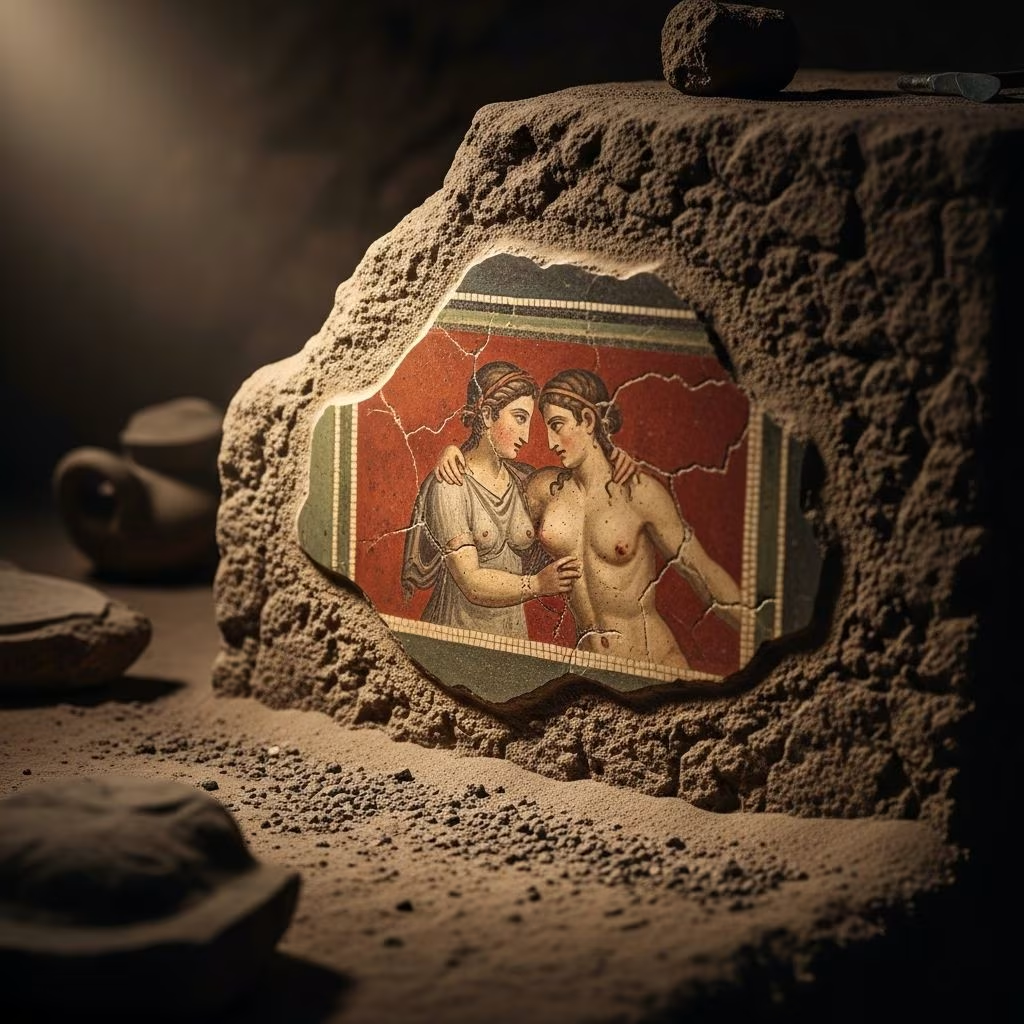
Buried under volcanic ash in 79 CE, the ancient city of Pompeii safeguards a provocative collection of erotic art that offers profound insights into Roman daily life and attitudes toward intimacy. These vivid frescoes, sculptures, and graffiti, found in homes, brothels, and public spaces, depict explicit sexual acts with unapologetic boldness, challenging modern misconceptions about ancient morality.
The catastrophic eruption of Mount Vesuvius not only destroyed Pompeii and nearby Herculaneum but also sealed their secrets in time, protecting fragile artworks from decay and destruction. Excavations beginning in the 18th century unearthed buildings adorned with sexual imagery everywhere—from grand villas to modest taverns—revealing a society where eroticism permeated public and private spheres.
Unlike later eras dominated by religious austerity, pre-Christian Romans integrated sensuality into art without shame. Phallic symbols warded off evil, while nude figures celebrated fertility and abundance. This preservation allowed archaeologists to reconstruct a vivid picture of Roman erotic culture, untouched by medieval iconoclasm.
When Bourbon kings and later Italian authorities dug up Pompeii, the abundance of explicit art caused outrage. Frescoes showing copulating couples, oversized genitalia, and mythical seductions clashed with Victorian sensibilities, prompting officials to sequester thousands of artifacts in Naples’ Archaeological Museum’s ‘Secret Cabinet.’
Access was restricted to scholars and, scandalously, bribable male visitors until 2000. This censorship stemmed from emerging Christian views of sex as sinful, a stark contrast to Roman openness. Only recently have these works been fully displayed, as in Pompeii’s ‘Art and Sensuality’ exhibition.
Erotic imagery wasn’t confined to seedy corners; it adorned elite homes and public baths too. The **Lupanar**, Pompeii’s most notorious brothel, featured ten cramped cubicles with stone beds and walls painted with over a dozen explicit scenes advertising services.
Beyond the Lupanar, the Suburban Baths displayed erotic panels in dressing rooms, unusual for non-brothel spaces, suggesting baths fostered casual flirtations. Private residences like the House of the Vettii boasted Priapus frescoes symbolizing wealth— the god weighing his phallus against gold—recently restored after 20 years.
Pompeii’s erotic art blends mythology, humor, and raw desire. Common motifs include:
| Motif | Location | Meaning |
|---|---|---|
| Leda and the Swan | Bedroom walls | Sensual invitation, blending myth with eroticism |
| Priapus with Scales | House of Vettii | Prosperity and virility |
| Copulating Couples | Brothels, homes | Everyday pleasures, status display |
| Phallic Lamps & Statues | Households | Protection against misfortune |
These weren’t mere pornography; scholars argue they conveyed social messages. Larger phalluses denoted power, while domestic scenes normalized sex as part of elite life.
Modern views often paint Romans as prudish, but Pompeii proves otherwise. Sex was public, celebratory, and hierarchical—men dominated, women and slaves served. Yet, art shows mutual enjoyment, challenging stereotypes.
In peristyle gardens, pygmy orgies mocked outsiders, while jewelry and furniture echoed erotic themes, embedding sensuality in material culture. Christianity’s rise post-79 CE shifted norms, making Pompeii’s art seem obscene to later generations.
Today, visitors explore restored sites like the House of Vettii, reopened in 2023 with its infamous Priapus fresco intact. The Naples museum’s Secret Room is open to all, displaying over 200 pieces. Guided tours highlight context, avoiding sensationalism.
Exhibitions like ‘Art and Sensuality in Pompeii Houses’ contextualize finds, proving erotic art was ubiquitous, not marginal. Digital reconstructions and VR tours make these treasures accessible worldwide.
Debates persist: Were all erotic rooms brothels? Recent views say no—many were elite triclinia for intimate dinners. Graffiti analysis reveals diverse sexual practices, including same-sex encounters, broadening our understanding.
Restoration battles soot and time, but techniques preserve pigments vividly. Ethical displays now educate on consent and context, distancing from exploitation narratives.
19th-century excavators, influenced by Christian morality, deemed it obscene and locked it in a secret museum room until 2000.
No, but it’s the best-preserved with explicit frescoes; others existed, often identified by erotic signage.
Yes, at Pompeii sites and Naples’ Archaeological Museum; some require adult supervision or special tickets.
Fasci (bundles of phalluses) and Priapus figures symbolized protection, fertility, and prosperity, not just sex.
It shows sex as open, celebratory, and integrated into life, far from modern prudery.
