

 Travel Essentials
 Travel Essentials

Discover how Pompeii’s preserved erotic art reveals Roman sexuality, from brothels and villas to symbols of fertility, power, and protection.
 Travel Essentials
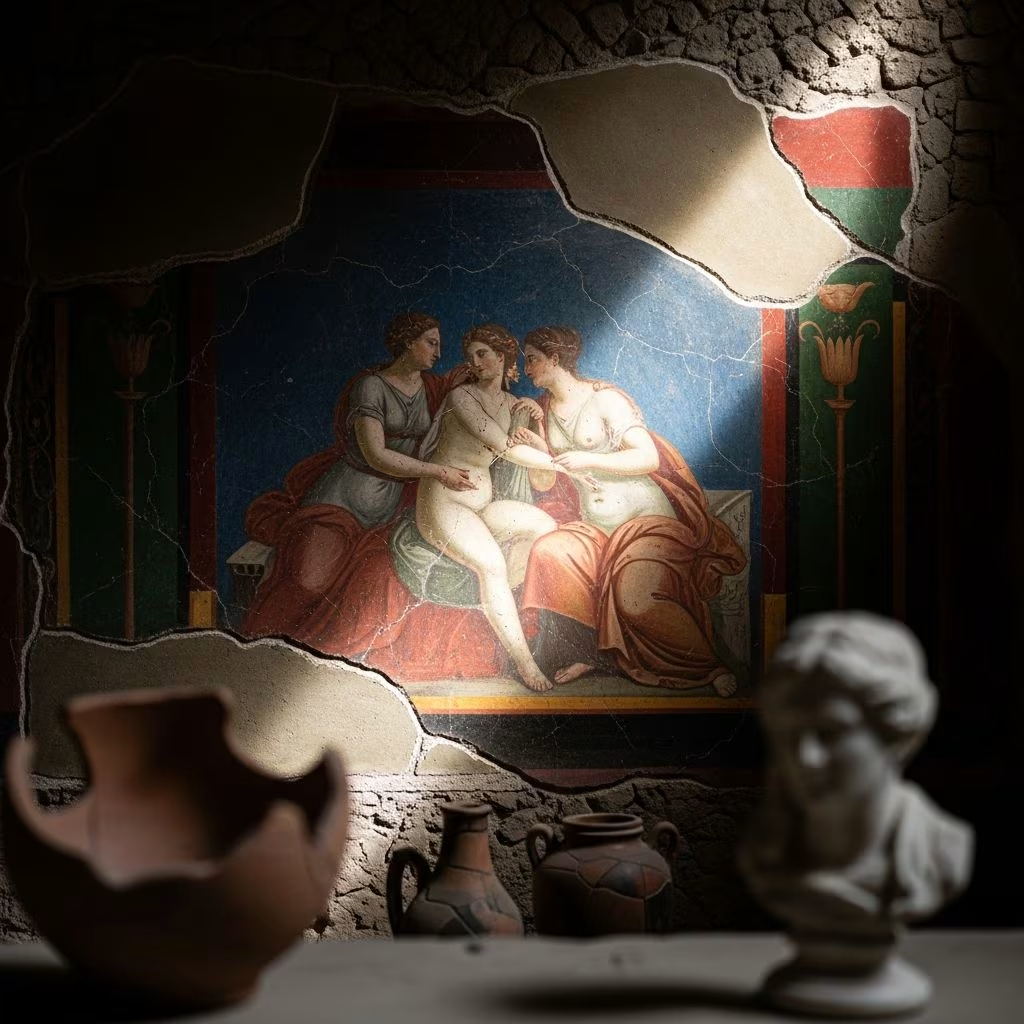
Buried beneath layers of volcanic ash in 79 CE, the ancient Roman cities of Pompeii and Herculaneum preserved a startling array of **erotic art** that challenges modern preconceptions about sexuality in antiquity. These vivid frescoes, sculptures, and graffiti depict explicit sexual acts, mythological seductions, and phallic symbols with unabashed directness, reflecting a society where sensuality permeated public and private life.
The catastrophic eruption of Mount Vesuvius not only destroyed these thriving resort towns but also sealed their artistic secrets in time. Excavations beginning in the 18th century unearthed homes, baths, and brothels adorned with imagery that shocked early archaeologists. Unlike the sanitized narratives of classical art in textbooks, Pompeii’s **erotic frescoes** covered walls in private villas, public spaces, and commercial venues, suggesting sex was celebrated rather than concealed.
Archaeologists found phallic amulets on doorways for protection, oversized genitalia in gardens, and copulating figures in dining rooms. This ubiquity indicates eroticism was woven into daily Roman culture, serving apotropaic (evil-warding), decorative, and provocative purposes.
When Bourbon kings sponsored digs in the 1700s, the explicit nature of discoveries prompted immediate censorship. By the 19th century, as Victorian morality dominated Europe, Italian authorities deemed the art obscene. Artifacts were sequestered in the **Secret Cabinet** (Gabinetto Segreto) at the Museo Archeologico Nazionale in Naples, accessible only to select scholars or bribable elites until 2000.
This ‘secret room’ housed over 200 items, including statues of satyrs and priapi (fertility gods with exaggerated phalluses). The suppression stemmed from Christianity’s rising influence post-79 CE, which reframed sex as sinful—a view alien to pagan Romans. As one expert noted, ‘This was another time… sex was not something to consume just in a private space.’
No site embodies Pompeii’s eroticism more than the **Lupanar**, the city’s main brothel on Via dell’Abbondanza. This two-story structure featured 10 cramped cubicles (five per floor), stone beds, a balcony, and latrine. Walls boasted oversized frescoes above beds illustrating various positions—fellatio, group scenes, intercourse—likely as a ‘menu’ for illiterate clients or inspirational aids.
Recent analyses suggest lupanars were not squalid dens but regulated businesses, with erotic art enhancing the commercial allure.
Contrary to assumptions that erotic art marked only sex work sites, luxurious villas like the **House of the Vettii** prove otherwise. Reopened in 2023 after 20 years of restoration, this merchant home displays Priapus weighing his enormous phallus against gold coins—a prosperity symbol, not mere obscenity.
In the peristyle garden, pygmy frescoes hint at fertility rites. A kitchen-adjacent room, accessed via iron door, held more explicit scenes, possibly for enslaved staff’s use as a mini-brothel. Director Gabriel Zuchtriegel emphasizes: erotic decor graced domestic spaces, blurring lines between pleasure and home life.
Outside city walls, the **Suburban Baths** featured a vestibule lined with erotic panels: nude figures in embraces, explicit couplings. Unlike lupanars, baths were social hubs for bathing and conversation, not prostitution. These images likely titillated mixed-gender crowds, fostering flirtation in steamy atmospheres.
Preserved changing rooms show sequential scenes building narrative tension, from seduction to climax. Such placements normalized sensuality in communal settings.
| Myth/Figure | Description | Cultural Role |
|---|---|---|
| Leda and the Swan | Zeus as swan seduces/rapes Leda; 2018 bedroom find shows smiling nude Leda. | Sensual invitation; gaze implies mutual desire. |
| Priapus | God with oversized phallus weighed vs. coins (House of Vettii). | Wealth, fertility protector. |
| Satyrs & Maenads | Wild pursuits, orgiastic dances. | Dionysian ecstasy, apotropaic warding. |
| Phallic Symbols | Doorway tintinnabula (wind chimes), garden herms. | Ward off evil; promote virility. |
These motifs drew from Greek myths but Romanized for practical use. Frescoes often faced viewers directly, creating interactive eroticism.
Neighboring Herculaneum, buried deeper in pyroclastic mud, yielded similar treasures: brothel graffiti, phallic lamps, nude statues. Larger wall frescoes advertised services, mirroring Pompeii. Both sites confirm erotic art’s provincial normalcy, not elite eccentricity.
Today’s Pompeii Archaeological Park hosts shows like ‘Art and Sensuality in the Houses of Pompeii,’ displaying Secret Cabinet gems alongside new digs. The Leda fresco headlines, underscoring domestic sensuality. Visitor numbers surged post-reopening of sites like House of Vettii.
Scholars now view this art through lenses of gender, class, and power: did it empower or objectify? Evidence suggests Romans saw it as life-affirming.
No, it adorned elite homes, baths, and streets, indicating broad cultural acceptance.
19th-century prudishness locked items in Naples’ Secret Cabinet until 2000.
Yes, it’s a highlight of Pompeii tours; frescoes remain vivid.
Fertility, prosperity, and protection against misfortune.
Similar finds in Herculaneum and Ostia, but Pompeii’s preservation is unparalleled.
(Word count: 1678)
