

 Travel Essentials
 Travel Essentials

Pompeii’s ash-preserved frescoes and graffiti reveal how ancient Romans treated sex, fertility, and sensuality as part of everyday life.
 Travel Essentials
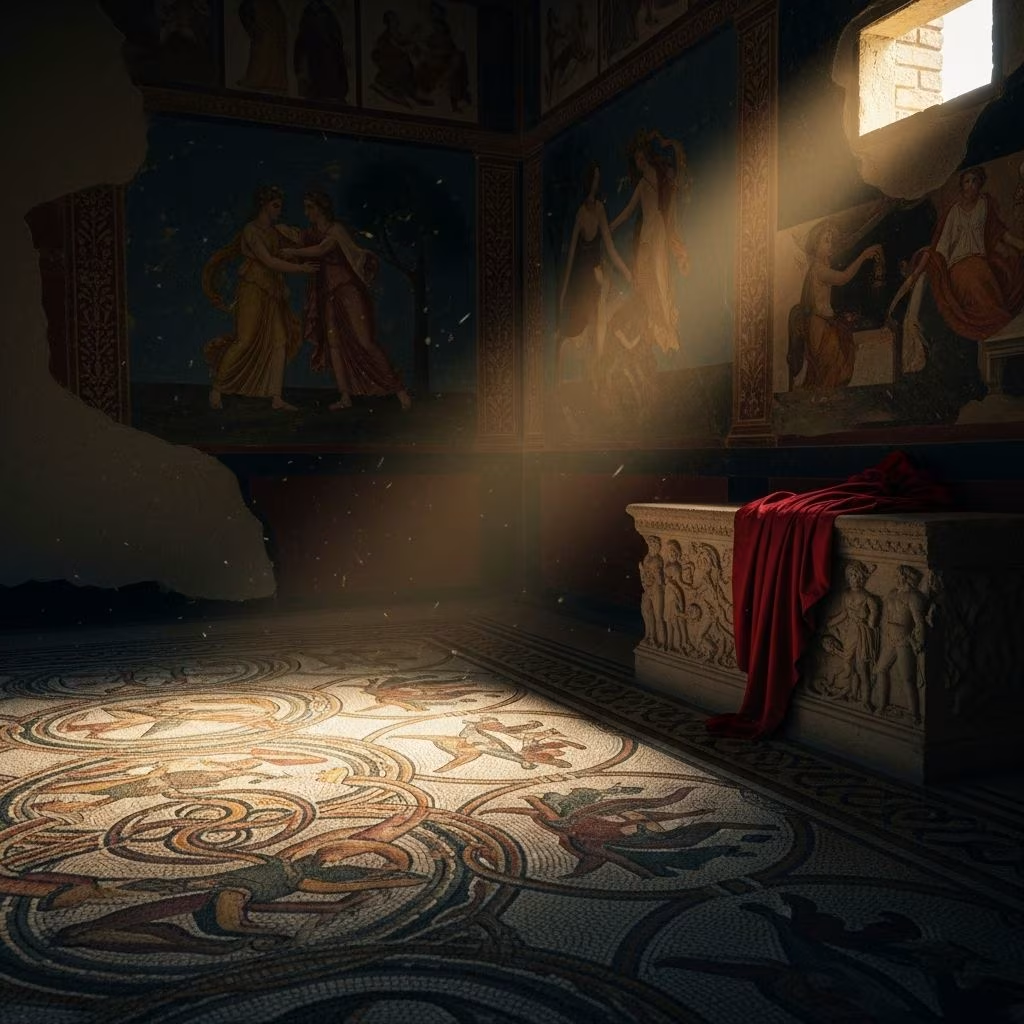
Buried by the catastrophic eruption of Mount Vesuvius in 79 CE, the Roman cities of Pompeii and Herculaneum offer a frozen glimpse into ancient life, including a surprising abundance of erotic artwork. These vivid frescoes, sculptures, and graffiti depict sexual acts openly, challenging modern preconceptions about Roman morality. Far from hidden vices, such imagery adorned public spaces, private residences, and commercial establishments, signaling a culture where sensuality was integrated into daily existence.
The eruption preserved an extraordinary array of artifacts under layers of ash and pumice, shielding them from the iconoclasm of later eras. Excavations beginning in the 18th century unearthed homes, temples, and baths decorated with explicit scenes of intercourse, mythology-infused nudes, and phallic symbols. This preservation allowed archaeologists to study Roman sexuality without the distortions of time or religious censorship that affected other classical sites.
In Herculaneum, similar discoveries included household items like lamps and jewelry etched with erotic motifs, suggesting sensuality permeated even personal objects. Pompeii’s scale, however, revealed the sheer volume: entire walls covered in copulating figures, from tender embraces to group encounters. These weren’t anomalies but hallmarks of a society that viewed eroticism as a natural, celebratory force.
The most notorious site is Pompeii’s Lupanar, a multi-room brothel with ten cramped cubicles arranged over two floors, each featuring a stone bed and lurid wall paintings. These frescoes illustrated various sexual positions—fellatio, cunnilingus, and penetration—likely serving as visual menus for clients, guiding their choices and fantasies. Graffiti scrawled by patrons added raw testimonials, boasting conquests or critiquing services.
Access via a narrow corridor from the main street, the Lupanar catered to quick transactions, with rooms barely large enough for two. Erotic art here wasn’t mere decoration; it created an immersive atmosphere, blurring lines between art and commerce. Similar setups existed in Herculaneum, where brothels featured oversized frescoes possibly advertising services to passersby.
Contrary to assumptions linking erotic art solely to vice districts, affluent homes like the House of the Vettii showcased it prominently. Recently reopened after 20 years of restoration, this villa boasts a fresco of Priapus—the fertility god—balancing his exaggerated phallus against gold coins on a scale, symbolizing wealth and virility. Such images graced entryways and peristyle gardens, welcoming guests with promises of prosperity laced with pleasure.
In the House of Vettii, a kitchen-adjacent room, accessible only via an iron door, holds more explicit panels, hinting at use by enslaved staff for discreet liaisons—perhaps a mini-brothel for the household. Other residences featured bedroom scenes like Leda and the Swan, where a nude woman gazes seductively amid luxurious details, evoking intimate viewer participation.
These placements suggest erotic art warded off misfortune (phalluses as apotropaic symbols) while celebrating the owners’ status. Roman elites displayed sensuality to affirm their sophistication, not shame.
Pompeii’s Suburban Baths, outside the city walls, surprised excavators with a dressing room lined in explicit frescoes. Unlike brothels, baths were social hubs for bathing, conversation, and relaxation—yet here, couples in various positions adorned the walls. This implies eroticism enhanced communal leisure, normalizing nudity and desire in mixed-gender settings.
Changing rooms funneled visitors past these images, setting a playful tone. Phallic motifs appeared in mosaics and statues, invoking protection and fertility. In Herculaneum’s baths, similar decorations reinforced that public sensuality was unremarkable.
| Location | Erotic Features | Context |
|---|---|---|
| Lupanar Brothel | Sexual position frescoes, graffiti | Commercial sex trade |
| House of Vettii | Priapus weighing phallus, bedroom nudes | Elite home, symbolic wealth |
| Suburban Baths | Coupling scenes in dressing area | Public social bathing |
Roman artists drew heavily from Greek myths to eroticize their frescoes. Priapus, Dionysus in revelry, and satyrs chasing nymphs populated walls, blending divine excess with human desire. Leda’s encounter with Zeus as a swan, for instance, highlighted mutual invitation through eye contact and pose.
These weren’t pornographic in the modern sense but artistic elevations of sex, linking mortals to gods. Pygmies in peristyle gardens engaged in orgies, adding whimsy to grandeur. Such motifs underscored fertility’s role in prosperity, especially in a trade-dependent port like Pompeii.
19th-century excavators, steeped in Christian prudery, recoiled at the finds. King Francis I of Naples ordered erotic items sequestered in the Museo Archeologico Nazionale’s ‘Secret Cabinet,’ accessible only to scholars or bribable elites until 2000. This mirrored rising moral panics, even criminalizing such images as ‘pornography’.
Christianity’s ascent post-79 CE had reframed sex as sinful, contrasting Rome’s openness. Priests and emperors once tolerated— even patronized—erotica, viewing phalluses as protective talismans.
Today’s scholars reject brothel-only labels for erotic rooms, arguing they graced respectable homes too. Exhibitions like Pompeii’s ‘Art and Sensuality in the Houses of Pompeii’ display these works openly, contextualizing them culturally. Director Massimo Osanna noted their explicitness conveyed luxury and direct engagement.
Restorations, such as the House of Vettii, revive faded vibrancy, revealing techniques like bright pigments and perspective for immersion. This shifts narratives from scandal to cultural insight.
Modern visitors access most sites freely, though some require reservations. Guided tours explain contexts, avoiding sensationalism. The Archaeological Park rotates exhibits, while Naples’ museum houses overflow artifacts.
No, it appears in private villas, baths, and streets, indicating widespread acceptance.
Victorian-era morals deemed it obscene, locking items away until 2000.
They symbolized protection, fertility, and good fortune, not just sex.
Yes, but some areas have age restrictions; contextual tours educate appropriately.
Remarkably so, thanks to ash burial; ongoing restorations combat decay.
Pompeii’s erotic art illuminates a society prizing pleasure publicly, where sex symbolized vitality amid life’s fragility—proven by Vesuvius. Balancing conservation with access ensures future generations grasp this unfiltered humanity. As excavations continue, more secrets emerge, enriching our understanding of ancient desires.
