

 Travel Essentials
 Travel Essentials

Explore Pontremoli's historic castles, stele statues, riverside walks, and local markets in this hidden Tuscan town along the Via Francigena.
 Travel Essentials
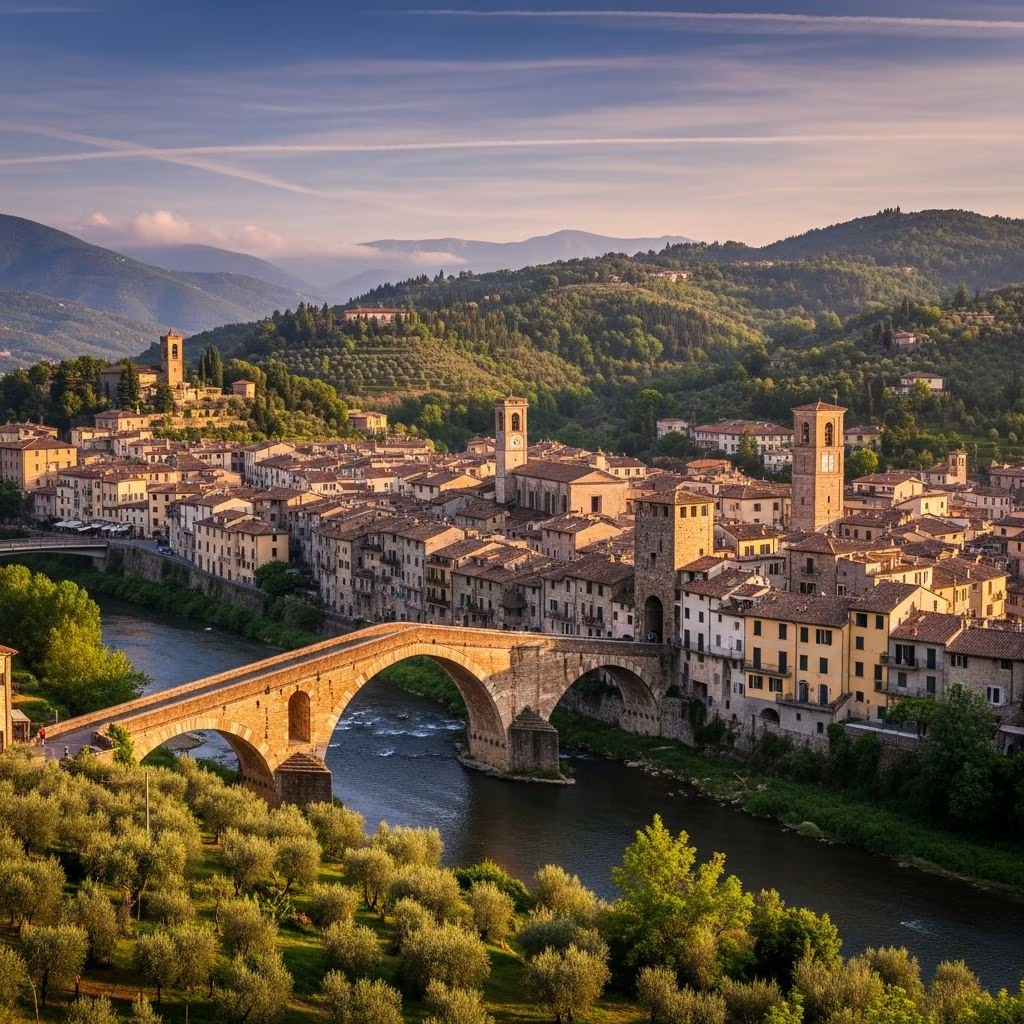
Pontremoli stands as Tuscany’s northernmost town, cradled in the Lunigiana region between the Magra and Verde rivers. This medieval settlement offers a blend of ancient history, architectural wonders, and natural beauty, making it a perfect off-the-beaten-path destination for travelers seeking authenticity.
Situated on a plain ringed by hills and mountains, Pontremoli’s location provided natural defenses through its rivers, which historically protected the old town. Believed by some historians to be the ancient Apua, capital of the Ligurian-Apuan people, the town has layers of prehistoric, Iron Age, and medieval heritage.
The Via Francigena pilgrimage route passes through, adding spiritual significance as a waypoint for centuries of travelers. Today, it remains a vibrant hub with noble palaces, churches, and monuments narrating its storied past.
Dominating the skyline is the Piagnaro Castle, perched atop a hill since 1253 and later fortified. Now housing the Museo delle Statue Stele, it showcases enigmatic stele statues—anthropomorphic figures dating back 7,000 years to pre-Etruscan times, with others from 600 BC. These sandstone carvings, symbols of Lunigiana’s prehistoric culture, make the museum a highlight, tourable in under 90 minutes.
The historic center unfolds along Via Garibaldi, the main artery splitting into Sommo Borgo (upper town) and Immoborgo (lower town). Starting from Ponte San Francesco di Sotto, an ancient bridge, visitors pass palazzi with noble facades, narrow alleys, and landmarks like Il Campanone tower from 1332, Piazza della Repubblica, and Piazza del Duomo.
Sommo Borgo features the oldest churches: San Geminiano and San Nicolò, the latter holding a 15th-16th century black crucifix. In Immoborgo, cross to the Magra’s left bank for Castelnuovo tower, a defensive remnant, and the Baroque church of Nostra Signora della Salute, built over flood ruins.
| Key Street Sections | Highlights |
|---|---|
| Sommo Borgo | Churches, piazzas, uphill charm |
| Immoborgo | Towers, gardens, sacristy labyrinth |
| Via Garibaldi | Palazzi, markets, daily life |
Don’t miss Porta Fiorentina’s garden with visible old walls, or San Pietro church’s 11th-12th century sandstone labyrinth in the sacristy—a pilgrimage symbol.
The 17th-century Cathedral (Duomo), designed by Alessandro Capra, boasts a Latin-cross layout and large dome. Nearby, Palazzo Vescovile’s neoclassical style houses the Diocesan Museum. Across the river, Villa Dosi Delfini exemplifies Pontremolese Baroque elegance.
Piazza della Repubblica hosts lively markets: Wednesdays for general goods, Saturdays seasonally, and the 3rd Sunday monthly for antiques—from farm tools to bark creches (presepi). Shop for regional specialties like cured meats and cheeses, reflecting Lunigiana’s food heritage.
Pontremoli shines with hearty cuisine. Testina di Vitello—slow-cooked veal head—is iconic, often served cold in sandwiches. Pair with local brewpub beers, Lambrusco sparkling reds, or olive oil from surrounding hills. Half a dozen top restaurants cater to visitors, emphasizing fresh, simple flavors.
Food markets brim with these delights, inviting tastings amid friendly locals.
Beyond town, hike Canyon Stretti di Giaredo’s dramatic gorges or Via Francigena paths through hills. Nearby villages offer panoramic trails blending culture and adventure.
Accessible by train or car via A15 highway. The compact center is walkable; park outside for ease.
Spring and fall avoid crowds; markets run year-round.
Stay in historic B&Bs or agriturismi for immersion.
Its Stele Statue Museum, medieval architecture, and position on the Via Francigena.
One full day covers essentials; two for hikes and villages.
No, it’s a locals’ town with authentic charm.
Testina, local wines, and market-fresh produce.
Yes, Canyon Giaredo and Francigena trails await.
