

 Travel Essentials
 Travel Essentials

Complete guide to Prague's public transport system including metro, trams, buses, and airport connections with practical tips for visitors.
 Travel Essentials
Prague’s reputation as one of Europe’s most accessible cities extends far beyond its stunning architecture and cultural attractions. The backbone of this accessibility lies in its sophisticated public transportation infrastructure, which seamlessly connects visitors and residents to every corner of the capital. Whether you’re arriving at the airport for the first time or planning a weekend exploring the city’s historic neighborhoods, understanding how to move through Prague efficiently can transform your experience from frustrating to seamless.
The Czech capital operates an integrated public transport network that functions as a unified system rather than disconnected components. This integration means that a single ticket type works across all modes of transport within designated zones, eliminating the confusion that often accompanies transportation in other European cities. The system’s reliability and affordability have made it a model for urban planning across the continent.
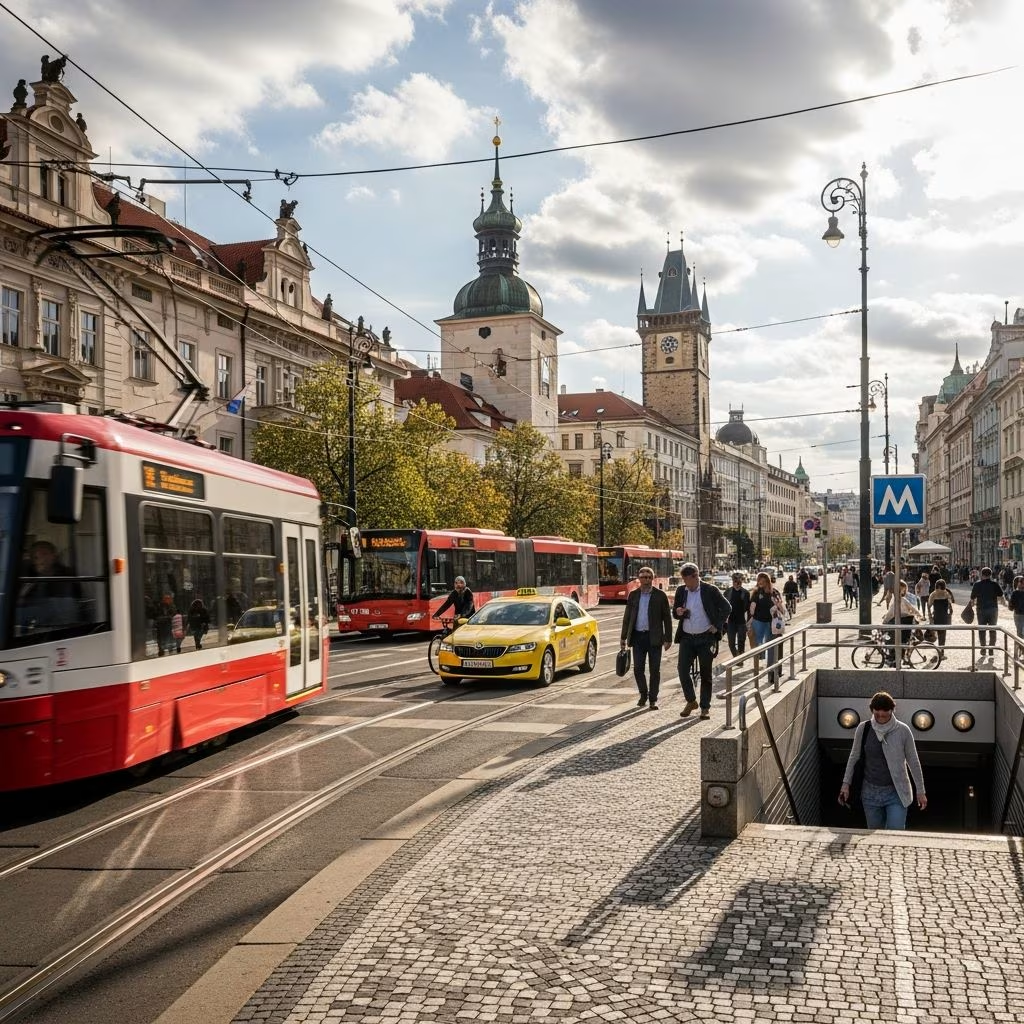
Prague’s public transportation network comprises several interconnected layers. The most visible components are the underground metro system, the extensive surface tram network, and a comprehensive bus system that extends into outlying districts. Beyond these primary modes, trains connect Prague to surrounding towns and regional destinations across the Czech Republic.
The Prague Metro represents the fastest and most efficient way to traverse longer distances across the city. The system operates daily from 5:00 AM to midnight, providing consistent service throughout the day and into the evening. Three color-coded lines form the foundation of this underground network, each serving distinct geographical areas and major attractions.
Metro Line A (Green) stretches from Depo Hostivař in the eastern suburbs to Nemocnice Motol in the western district, passing through numerous central locations. This line serves as a critical connector for travelers heading toward Prague Castle and other northern attractions.
Metro Line B (Yellow) runs from Černý Most in the north-central area to Zličín in the western suburbs. This line provides essential connections to major transportation hubs and shopping districts.
Metro Line C (Red) operates between Letňany in the north and Háje in the south, creating a vertical spine through the city. This line passes through the main railway station, making it invaluable for arriving travelers.
Three major transfer stations allow passengers to change between lines without exiting the system. Můstek station connects Lines A and B near the bottom of Wenceslas Square. Muzeum station facilitates transfers between Lines A and C in the city’s central district. Florenc station enables changes between Lines B and C near the main bus terminal.
During peak hours, metro trains arrive every 2-4 minutes, ensuring minimal waiting time. Off-peak service maintains trains every 4-10 minutes, still providing reliable and frequent connections. A remarkable technological achievement occurred in 2021 when mobile signal finally became available throughout the Prague metro system, allowing passengers to remain connected even underground.
Prague’s tram network deserves special attention as one of the city’s most charming and practical transportation options. The system comprises 32 numbered lines covering the city and extending into surrounding districts. Unlike the metro, trams operate at street level, providing visual connection to neighborhoods and landmarks while transporting passengers efficiently.
The tram service window mirrors the metro’s schedule, operating from approximately 5:00 AM to midnight during normal service hours. Peak-hour frequency delivers trams every 4-8 minutes on most routes, with longer intervals during evening hours. Three primary backbone lines—9, 17, and 22—operate at enhanced intervals with trams arriving every 4 minutes during peak hours and every 5-10 minutes during off-peak times.
Tram Line 22 deserves particular recognition for its scenic route, which passes near major attractions including Prague Castle and the Malá Strana district. Taking this line transforms routine transportation into a sightseeing experience, allowing visitors to absorb the city’s character while moving between destinations. For a more immersive historical experience, the Vintage Tram 42 offers nostalgic journeys through time-honored routes, combining transportation with tourism.
An important safety consideration affects tram users: at all pedestrian crossings, trams possess the right of way over pedestrians. This legal priority reflects the tram’s role as a major transit artery, requiring pedestrian vigilance when crossing tram tracks.
Prague’s commitment to 24-hour accessibility extends beyond the main operating hours through specialized night services. Nine numbered tram lines (91-99) continue operating after the regular system closes, maintaining service every 30 minutes on standard nights. However, from Friday evening through Sunday morning, these night trams increase frequency to every 20 minutes, recognizing peak demand during weekend hours.
The night bus system complements tram coverage with lines numbered 901-915, operating at 30-60 minute intervals. One particularly valuable night route is Bus 910, which connects the city center directly to Václav Havel Prague Airport without requiring transfers. From stops like I.P. Pavlova, this journey takes approximately 42 minutes, offering a cost-effective alternative to taxis for late-night or early-morning airport travelers.
All regular ticket types remain valid on night services, eliminating the need to purchase separate fares for after-hours travel. This policy ensures that the transportation system remains economically accessible regardless of arrival or departure time.
While metro and tram systems dominate visitor attention, Prague’s bus network plays a crucial role in connecting outlying districts and reaching destinations beyond the city center. Buses prove particularly valuable for accessing Prague Airport, with multiple route options providing flexibility in choosing connections that match specific needs.
Standard daytime bus service runs every 6-8 minutes during peak hours and every 15-20 minutes during off-peak periods. This frequency ensures that bus travel rarely involves extended waiting, particularly for main routes serving popular destinations. As the evening progresses, service transitions to the night bus schedule, maintaining connectivity through early morning hours.
Arriving at Václav Havel Prague Airport presents travelers with multiple transportation options to reach the city center, each offering different combinations of cost, convenience, and travel time.
Airport Bus Routes: The most economical approach involves using dedicated airport buses. Bus 59 departs from Terminals 1 and 2, traveling to Nádraží Veleslavín Metro station on Line A, where passengers transfer to the metro. Bus 100 follows an alternative route from the same terminals to Zličín Metro station on Line B. Both routes require approximately one hour for the complete journey to the city center, operating between 4:30 AM and midnight. A single ticket costing 50 CZK covers the entire journey, with 24-hour and 72-hour passes also accepted.
Night Airport Connections: Travelers arriving outside standard operating hours can utilize Night Buses 907 and 910, which run from airport terminals to the city center every 30-45 minutes between approximately 12:15 AM and 5:00 AM. Tickets are purchased directly from drivers, making this option convenient despite higher frequency intervals. Night Bus 910 extends service directly to central stops without intermediate transfers, reducing journey complexity for tired travelers.
Prague’s public transportation ticketing operates on a time-based rather than distance-based model, streamlining the purchase process for first-time users. The most fundamental ticket option, priced at 30 Czech Koruna (approximately 1.2 EUR), provides 30 minutes of unlimited travel across all transport modes within Prague’s primary zone. This duration typically suffices for most journeys within the city center, making it the practical choice for day visitors.
Extended-duration tickets accommodate different travel patterns and trip lengths. 24-hour and 72-hour passes provide continuous access to the entire network without the need to purchase individual tickets, simplifying logistics for multi-day visitors. These passes prove particularly economical for travelers planning frequent movements throughout the city.
Ticket validation occurs upon boarding, with dedicated machines located at metro station entrances and on tram and bus vehicles. Failing to validate tickets can result in substantial fines for tourists unfamiliar with the procedure, making compliance essential despite the additional step it requires. Information centers throughout the city, including locations at Prague Airport terminals and major metro stations, provide detailed ticketing information and maps to ensure visitor understanding.
Planning Your Journey: The official Prague Public Transit Company (Dopravní podnik hlavního města Prahy, abbreviated as DPP) maintains comprehensive route maps and scheduling information accessible through their website. Digital tools have become increasingly valuable, with mobile applications allowing real-time tracking of vehicles and precise journey planning that accounts for current service status.
Understanding Transfer Points: Prague’s integration extends to thoughtfully designed transfer stations that minimize confusion and walking distances. Central transfer nodes like Florenc connect multiple lines and modes, creating natural hubs where passenger flow is efficiently managed through clear signage and logical layout.
Choosing the Right Mode: Different transport modes serve different purposes within a comprehensive journey strategy. Metro excels for long-distance rapid transit when time is critical. Trams work best for moderate distances where visual engagement with neighborhoods adds value. Buses serve specific purposes like airport access or reaching peripheral areas where rail infrastructure doesn’t extend.
Major Prague attractions cluster in patterns that correspond to public transport coverage. Prague Castle and the historic Malá Strana district sit naturally along Tram 22’s scenic route. The Old Town Square and Charles Bridge area benefit from excellent metro and tram connectivity. Vysehrad fortress and its surrounding park connect via metro Line C, offering an alternative to the perpetually crowded castle district.
Prague’s public transportation system maintains an excellent safety record, with consistent passenger monitoring and well-maintained infrastructure. Standard urban transport safety principles apply: remain alert during late-night travel, keep personal belongings secure, and vacate seats for elderly or disabled passengers. The system’s reliability means that service disruptions are rare, and passengers can generally depend on posted schedules and frequency estimates.
What are the operating hours for Prague’s public transport?
The main metro, tram, and bus services operate from 5:00 AM to midnight daily. Night services continue from midnight to approximately 5:00 AM, providing 24-hour connectivity to the city.
Can I use a single ticket across different transport modes?
Yes, time-based tickets work across metro, trams, buses, trains, and boats within Prague’s primary zone. A single 30-minute ticket enables transfers between any combination of transport types.
How frequently do trams arrive during peak hours?
Main tram lines arrive every 4-10 minutes during peak hours, with backbone lines 9, 17, and 22 operating at the shorter 4-minute interval.
What’s the most economical way to reach Prague Airport?
Buses 59 and 100 provide the most affordable airport connections at 50 CZK, requiring approximately one hour to reach the city center with a metro transfer.
Is mobile signal available in the Prague metro?
Yes, mobile signal became available throughout the Prague metro system in 2021, allowing continuous connectivity for passengers.
Prague’s public transportation system represents a masterpiece of urban planning and infrastructure development. The integration of metro, trams, and buses creates a seamless network that serves both tourists navigating cultural attractions and residents managing daily commutes. By understanding the fundamental principles of this system—the time-based ticketing, the three metro lines, the extensive tram network, and the accessible night services—travelers can move through the city with confidence and efficiency. Whether ascending to Prague Castle via Line A or enjoying the historic sights along Tram 22, the transportation network transforms Prague into a city that welcomes exploration and rewards those who venture beyond the most obvious tourist corridors. The combination of affordability, reliability, and extensive coverage makes Prague’s public transportation not merely a means to an endpoint but an integral part of the authentic Prague experience.
