

 Travel Essentials
 Travel Essentials

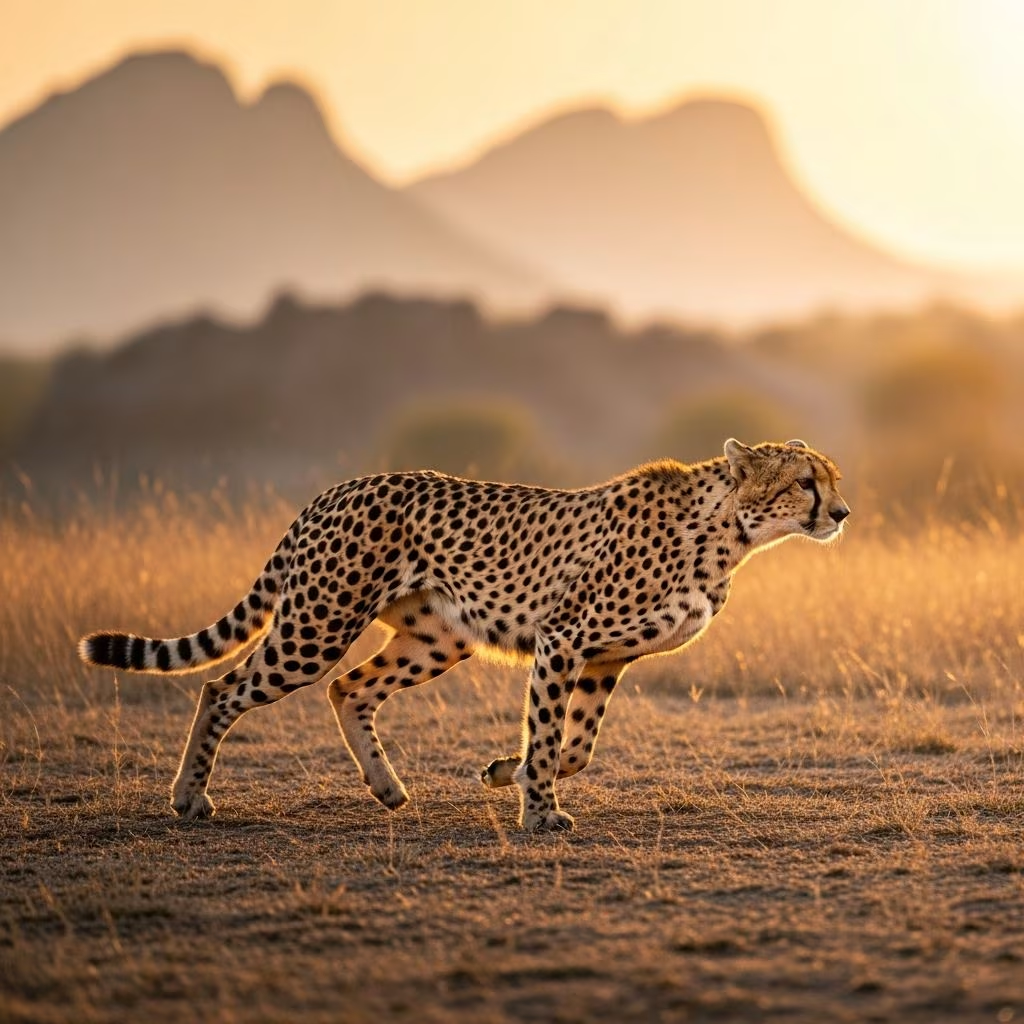
India’s cheetah reintroduction is rebuilding a lost predator population, restoring grasslands, and testing a bold conservation model.
 Travel Essentials
India’s ambitious effort to reintroduce cheetahs represents a landmark in global wildlife restoration. After vanishing from the subcontinent in 1952 due to excessive hunting, these swift predators are now returning through carefully orchestrated translocations from Africa. Spearheaded by Project Cheetah, the initiative targets key habitats like Kuno National Park to rebuild populations and revitalize ecosystems.
Cheetahs once roamed India’s vast grasslands, playing a crucial role as apex predators. Their extinction in independent India marked the loss of the only large carnivore to disappear post-independence. Factors such as habitat loss and poaching wiped them out, leaving ecological gaps in prey control and biodiversity balance.
The government’s resolve stems from a commitment to rectify this void. By sourcing cheetahs from Namibia and South Africa—populations with genetic ties to India’s historic Asiatic cheetah—the project aims to re-establish their presence. This move not only honors cultural heritage but also bolsters international conservation for a species listed as vulnerable globally.
These areas were selected for their prey abundance, low human conflict, and suitability per IUCN guidelines. Kuno, in particular, has become the epicenter, hosting initial releases and monitoring efforts.
The project kicked off in September 2022 with eight cheetahs from Namibia touching down at Kuno after a 5,000-mile journey. Radio-collared for tracking, they adapted amid India’s unique conditions.
| Batch | Source Country | Date | Number of Cheetahs | Key Outcomes |
|---|---|---|---|---|
| First | Namibia | Sept 2022 | 8 | Initial adaptation; first cub births |
| Second | South Africa | Feb 2023 | 12 | Further releases; monitoring enclosures |
| Third (Planned) | Botswana | By Feb 2026 | 8 | Boost to total population |
Plans call for annual imports of about a dozen cheetahs over five years, backed by a budget nearing $11 million, to reach a meta-population of 40 adults.
A pivotal success is the birth of Indian-raised cubs, proving cheetahs’ viability in the new environment. As of early 2026, around 35 cheetahs inhabit India: 11 adults and 24 surviving cubs. Recent litters have pushed cub numbers to 24, with females like Aasha demonstrating resilience by surviving and reproducing without major behavioral shifts.
These cubs signal breeding establishment, essential for self-sustaining populations. Survival rates hover at 50%, heartening amid challenges, as noted by project leaders.
Beyond numbers, Project Cheetah pursues profound objectives:
Grasslands, often overlooked compared to forests, gain vital resources, improving ecosystem services like soil health and water retention.
Not all news is triumphant. By late 2023, nine cheetahs—including cubs—had perished from stress, injuries, and diseases unfamiliar to African imports. Territorial clashes and India’s monsoons posed risks, prompting enclosures for closer supervision.
A government expert committee now oversees releases, balancing wild integration with safety. Recent accelerations, like the Botswana batch, reflect adaptive strategies amid these setbacks.
Success hinges on multi-faceted approaches:
International collaboration with Namibia, South Africa, and Botswana ensures ethical sourcing and expertise sharing.
Environment Minister Bhupendra Yadav confirmed the third batch’s arrival by February 2026, potentially elevating numbers beyond 40. Long-term visions include dispersing cheetahs to additional sanctuaries like Nauradehi and Shahgarh, creating a robust metapopulation.
Genetic diversity from varied sources prevents inbreeding, while cub rearing in bomas—protected enclosures—boosts survival odds before wild release.
India’s project sets a precedent for translocating large carnivores across continents. It underscores that extinction need not be permanent with science-driven interventions. Lessons from cub mortality refine protocols, benefiting similar initiatives worldwide.
As cheetah numbers climb, Kuno transforms into a beacon of hope, drawing researchers and tourists to witness history unfolding.
Cheetahs are the only large carnivore extinct in independent India, symbolizing a key ecological and cultural loss. Their return restores grassland balance.
As of 2026, approximately 35: 11 adults and 24 cubs.
Mortality from adaptation issues, fights, and health problems; mitigated by enclosures and expert oversight.
Mainly Kuno National Park, with expansions to Gandhi Sagar and others.
Yes, with 24 surviving Indian-born cubs, indicating adaptation.
Nearly $11 million; annual additions for five years aiming for 40+ cheetahs.
This revival story blends ambition with reality, promising a cheetah-filled future for India’s wilds.
