

 Travel Essentials
 Travel Essentials

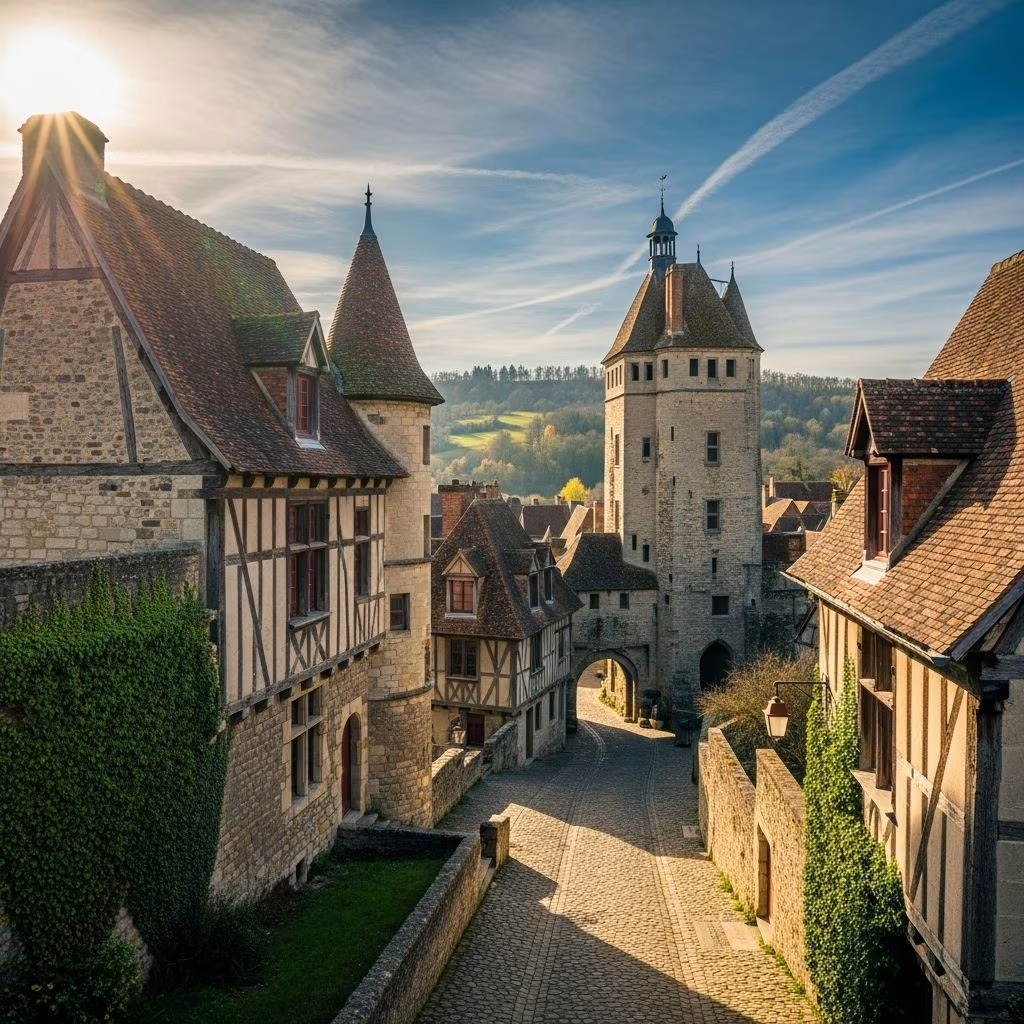
Explore Provins, a UNESCO World Heritage site in France featuring medieval ramparts, historic churches, and authentic medieval markets that transport visitors back in time.
 Travel Essentials
Nestled in the Champagne region of northern France, Provins stands as one of Europe’s most impressively preserved medieval towns. This remarkable destination captivates visitors with its towering ramparts, cobblestone streets, and authentic medieval atmosphere that feels untouched by modern tourism.
Unlike the more heavily trafficked destinations of southern France, Provins offers a genuine window into medieval European life. The town served as a significant trading hub during the Middle Ages, and this heritage is evident in every corner of its walled center.
Provins earned its UNESCO World Heritage designation through centuries of preservation and authentic medieval construction. The town flourished during the 12th and 13th centuries as a major commercial center on the European trade routes. Merchants, craftspeople, and nobles populated its streets, conducting business that shaped regional commerce for generations.
The distinctive architecture visible throughout Provins reflects this prosperous medieval period. Half-timbered buildings, stone towers, and narrow passageways create an environment where history feels tangible rather than merely observed. Unlike reconstructed medieval spaces elsewhere, Provins maintains original structural elements that have survived centuries of European history.
Exploring Provins requires dedicating sufficient time to appreciate its layered historical narrative. The following attractions represent the core experiences available to visitors:
Provins maintains living connections to its medieval heritage through seasonal markets and demonstrations. These events recreate historical commerce patterns and allow visitors to experience how medieval trading proceeded.
Throughout the year, particularly during summer months, Provins hosts period-appropriate markets featuring crafted goods, traditional foods, and historical demonstrations. Artisans showcase medieval trades including blacksmithing, woodworking, and textile production. These living exhibitions provide educational context while maintaining entertainment value for families and serious history enthusiasts.
The town’s commitment to historical authenticity extends to food traditions. Local restaurants serve dishes based on medieval recipes adapted for contemporary palates. This culinary approach connects visitors to the tastes and ingredients that sustained medieval populations.
Provins organizes into distinct zones reflecting its medieval development patterns. The Upper Town contains the primary administrative and religious structures including César Tower and Saint-Quiriace Church. This elevated position provided defensive advantages and emphasized the authority of religious and civic institutions.
The Lower Town developed around commercial and residential functions. Winding streets in this section reveal how medieval urban planning accommodated trading activity while maintaining defensive capabilities. Walking through these districts provides tactile understanding of medieval urban organization.
The town’s layout reflects practical medieval considerations including water access, military defensibility, and commercial efficiency. Exploring different districts reveals how these factors shaped the physical environment.
| Aspect | Details |
|---|---|
| Location | Located approximately 90 kilometers southeast of Paris in the Champagne region |
| Best Visiting Season | May through September offers optimal weather; spring and fall provide fewer crowds |
| Duration | A comprehensive visit requires 4-6 hours; overnight stays allow deeper exploration |
| Accessibility | Frequent train connections from Paris simplify travel logistics |
| Physical Demands | Extensive walking required; cobblestone surfaces and hills present challenges for mobility-limited visitors |
Provins offers various lodging choices ranging from simple guesthouses to more comfortable hotels. Staying within the walled town provides the optimal experience, allowing early morning exploration before day-trippers arrive.
Several excellent restaurants serve regional cuisine with varying price points. Traditional Champagne dishes appear on many menus, reflecting the region’s culinary heritage. Local wines, particularly Champagne production, feature prominently in regional dining culture.
The town also contains cafés suitable for casual refreshment between exploration sessions. These establishments provide respite while maintaining views of medieval architecture and street life.
Provins functions as an exceptional educational destination for understanding medieval European society. The town’s preservation allows visitors to grasp spatial relationships, architectural priorities, and urban organization that medieval planners valued.
Teachers and educational groups frequently utilize Provins for curriculum enhancement, particularly for medieval history studies. The tangible environment effectively communicates abstract historical concepts to student audiences.
Family visits can incorporate guided tours, museum visits, and participatory demonstrations that accommodate different learning styles and age groups. Children particularly benefit from hands-on experiences with medieval crafts and activities.
Provins’ character shifts throughout the year based on seasonal activities and visitor patterns. Summer months bring the most extensive programming including daily medieval demonstrations and expanded market activities. These periods offer maximum engagement opportunities but also attract higher visitor volumes.
Shoulder seasons in spring and fall provide more contemplative exploration conditions with reduced crowds. Winter months offer solitude and atmospheric qualities that appeal to visitors seeking introspection or photography opportunities.
Specific events occur annually, including medieval festivals that transform the entire town into an immersive historical experience. Advance planning allows visitors to coordinate visits with preferred events.
Provins’ preserved medieval character creates exceptional photographic opportunities. The town’s architecture, lighting conditions, and absence of modern visual clutter attract photographers seeking authentic European scenery.
Artists have long drawn inspiration from Provins’ atmospheric qualities. The interplay of stone, shadow, and historical narrative provides subject matter for painters, writers, and other creative practitioners.
Visitors planning photography visits should consider timing strategies to capture optimal lighting while minimizing crowds. Early morning hours often provide superior photographic conditions.
A minimum of 4-6 hours allows comprehensive exploration of primary attractions. Overnight stays enable deeper engagement with the town’s atmosphere and participation in evening events. Visitors with specific historical interests may spend multiple days studying particular aspects.
May through September offers optimal weather and expanded programming. However, these months attract higher visitor numbers. Spring and fall provide excellent conditions with fewer crowds, allowing more personalized exploration experiences.
While self-guided exploration is absolutely feasible, professional guides provide valuable contextual information and historical interpretation. Guided tours particularly benefit visitors with limited historical background or those seeking in-depth understanding of specific periods.
Provins’ primary distinction involves its commercial rather than purely defensive medieval focus. The town’s layout, architecture, and preserved structures reflect trading city functions rather than primarily military purposes. This characteristic provides unique insights into medieval commercial organization.
The extensive cobblestone surfaces, hills, and architectural preservation create accessibility challenges. Visitors with mobility concerns should assess their capabilities honestly and consider which specific areas they can comfortably navigate. Some attractions may present particular difficulty.
Successful Provins visits benefit from advance preparation. Researching specific interests allows prioritization among numerous attractions. Understanding the town’s layout through maps or online resources facilitates efficient navigation.
Appropriate footwear becomes essential given extensive walking on uneven surfaces. Weather-appropriate clothing supports comfortable exploration regardless of season. Bringing water and snacks prevents discomfort during busy exploration periods.
Leaving time for spontaneous discovery enhances the Provins experience. Wandering narrow streets, pausing in unexpected locations, and observing details not mentioned in guidebooks often provides the most memorable moments.
Provins’ convenient location relative to Paris enables flexible itinerary planning. Visitors can combine Provins with Paris exploration or with broader Champagne region experiences. The town serves as an excellent counterpoint to large urban destinations, offering slower-paced historical immersion.
The Champagne region contains additional medieval sites, vineyard tours, and cultural attractions that complement Provins visits. Strategic route planning allows visitors to efficiently explore multiple attractions within the region.
Provins ultimately represents a destination where medieval history remains genuinely alive rather than merely displayed. The town invites visitors to step beyond tourism into authentic engagement with European historical heritage.
