

 Travel Essentials
 Travel Essentials

Discover Mexico’s pueblos mágicos—authentic towns where heritage, culture, and community tourism come together across 31 states.
 Travel Essentials
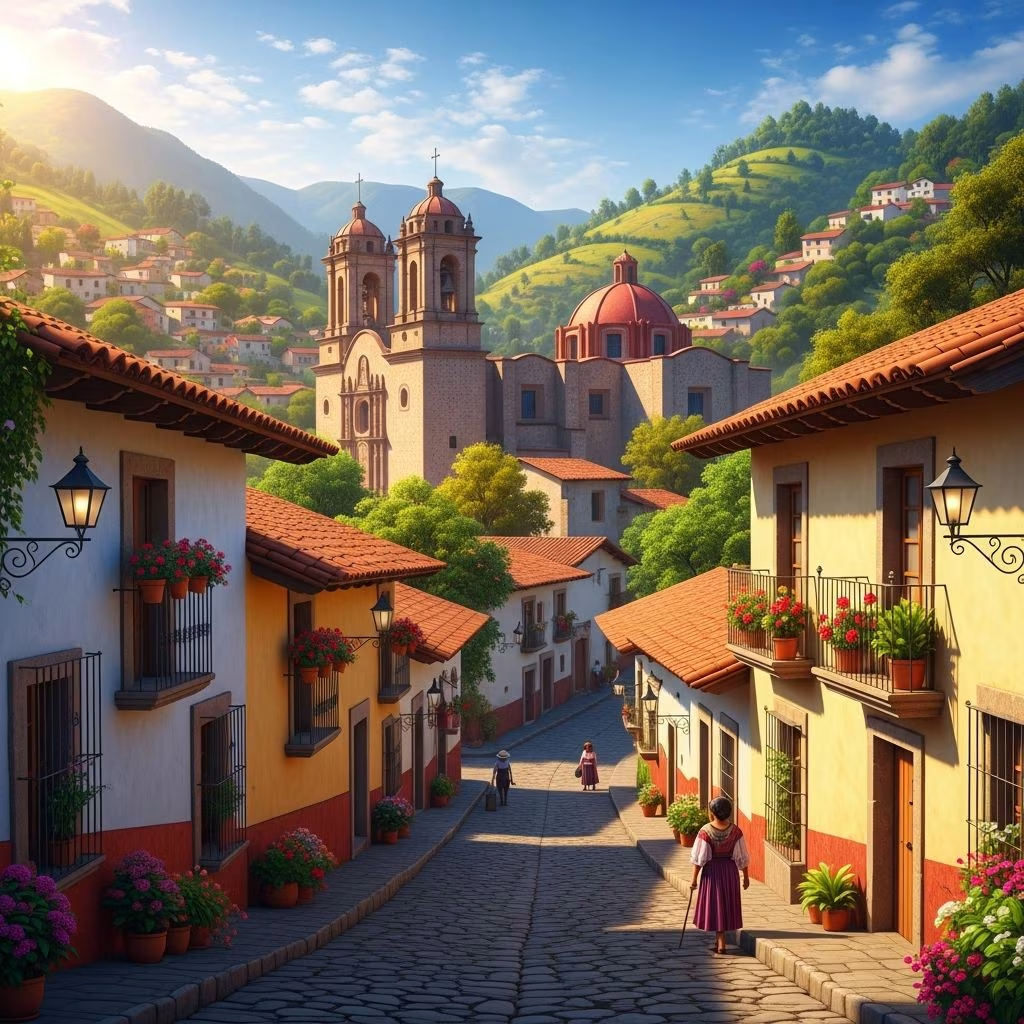
Mexico’s tourism landscape extends far beyond the well-known resort destinations and major metropolitan areas. For travelers seeking genuine cultural immersion and historical exploration, the country offers a remarkable network of communities designated as pueblos mágicos—magical towns. These destinations represent a curated selection of locations that have successfully preserved their architectural heritage, cultural traditions, and historical significance while maintaining authentic connections to their communities.
The pueblo mágico program represents a strategic initiative by Mexico’s Ministry of Tourism (Sectur) to identify and promote communities that embody the country’s rich cultural tapestry. Towns receiving this designation meet rigorous criteria that extend beyond mere aesthetic appeal. The selection process evaluates whether communities have maintained their original architectural character, preserved local traditions, protected historical sites, and demonstrated relevance to Mexico’s broader historical narrative.
This governmental recognition serves multiple purposes. For local communities, it generates employment opportunities, facilitates the integration of comprehensive tourism development strategies, and increases visitor arrivals that strengthen local economies. For international travelers, the designation provides assurance that they are visiting destinations with authentic cultural experiences rather than commercialized attractions.
The pueblo mágico network has experienced substantial growth in recent years. As of recent updates, Mexico now recognizes 132 magical towns distributed across 31 states throughout the country. This expansion reflects the government’s commitment to developing tourism infrastructure beyond traditional coastal and metropolitan centers, encouraging visitors to explore diverse regions and support local economies in previously overlooked areas.
The growth trajectory demonstrates increasing recognition of communities that meet the program’s standards. Each addition to the roster represents years of local effort to preserve cultural identity while adapting to modern tourism expectations. The diversity of designated communities spans multiple Mexican states, ensuring that travelers have access to varied experiences depending on their interests and location preferences.
Magical towns throughout Mexico share several defining characteristics that unite them despite their geographical and cultural diversity:
The pueblo mágico program reflects Mexico’s geographic and cultural diversity. Communities represent varied landscapes and climates, from high-altitude mountain towns to coastal settlements. This distribution means that travelers can access magical towns regardless of their entry point or regional preferences within Mexico.
Certain states have developed particularly strong representations within the program. The state of Quintana Roo, known for beach tourism, includes multiple magical towns such as Bacalar, Isla Mujeres, Tulum, and Cozumel, offering visitors alternatives to conventional resort experiences. The state of Sonora, historically underrepresented in tourism promotion, recently achieved significant recognition with new additions including San Carlos and Ures. This geographic diversification reflects the program’s goal of distributing tourism benefits across the country rather than concentrating visitors in established tourist corridors.
Complementing the pueblo mágico program, the Magical Routes of Color represents an innovative tourism development approach launched in 2020. This initiative guides visitors through connected magical towns, allowing comprehensive regional exploration under organized frameworks. The program provides structured itineraries while supporting urban rehabilitation efforts and community development initiatives.
The Magical Routes of Color program has systematically expanded since its inception. Initial implementation occurred in Tetela de Ocampo, Puebla, during the COVID-19 pandemic when tourism innovation became particularly important. Subsequent expansions included communities across multiple states, with particular emphasis on regional clusters. For instance, nine magical towns throughout Michoacán—including Angangueo, Cuitzeo, Jiquilpan, Paracho, Pátzcuaro, Santa Clara del Cobre, Tacámbaro, Tlalpujahua, and Tzintzuntzan—were integrated into the program, allowing visitors to explore interconnected destinations with complementary cultural offerings.
Recent additions to the pueblo mágico roster showcase Mexico’s remarkable diversity. The municipalities of Otumba and Jilotepec in the State of Mexico demonstrate how communities blend historical significance with contemporary visitor experiences. Otumba holds cultural resonance as the historical site where indigenous leader Cuitláhuac defeated Spanish conquistador Hernán Cortés during the pivotal event known as La Noche Triste (The Sad Night). This historical dimension adds layers of meaning for visitors exploring the location.
Jilotepec emphasizes natural and spiritual tourism, featuring outdoor recreation at Las Peñas Ecotourism Park and the Danxho Dam, alongside the spiritually significant Sanctuary of La Piedrita, where devotional imagery is carved into stone. This combination of ecological, recreational, and spiritual attractions illustrates how magical towns appeal to diverse visitor motivations.
The pueblos mágicos maintain relevance by balancing preservation with contemporary development. Local artisans continue traditional crafts, restaurants serve authentic regional cuisine, and festivals celebrating indigenous and colonial heritage persist alongside modern amenities. This equilibrium allows visitors to experience genuine cultural environments without sacrificing reasonable comfort expectations.
For travelers interested in pre-Hispanic history, several magical towns provide direct connections to ancient civilizations. These destinations allow visitors to explore archaeological contexts while understanding how modern indigenous communities maintain cultural continuity with ancestral traditions. This layered historical experience distinguishes magical towns from conventional tourist attractions.
The pueblo mágico designation generates substantial economic advantages for participating communities. Tourism revenue supports small businesses, creates employment in hospitality and service sectors, and funds infrastructure improvements including road access, utilities, and public spaces. These economic benefits incentivize communities to maintain their cultural heritage while providing residents with opportunities to remain in their home communities rather than migrating to urban centers for employment.
Moreover, international recognition through the pueblo mágico program enhances community pride and cultural consciousness. Young residents increasingly view their heritage as valuable rather than antiquated, supporting efforts to transmit cultural knowledge to subsequent generations. This psychological dimension contributes to sustainable cultural preservation beyond purely economic considerations.
Visitors interested in exploring pueblos mágicos should consider several planning approaches. The Magic Routes of Color program offers structured itineraries connecting multiple communities, providing logistical convenience for travelers with limited time. Alternatively, independent exploration allows visitors to select specific communities based on personal interests—whether architectural appreciation, culinary experiences, outdoor activities, or spiritual exploration.
Transportation accessibility varies across designated communities. While some pueblos mágicos enjoy convenient road access and proximity to major cities, others require more deliberate travel planning. This variability ensures that visitors seeking more remote, less commercialized experiences can find appropriate destinations, while those preferring easier accessibility have options closer to urban centers.
The pueblo mágico program continues evolving as Mexico’s Ministry of Tourism receives nominations from communities across the country. Each selection cycle evaluates new candidates, ensuring that the program remains responsive to communities demonstrating commitment to cultural preservation and heritage protection. This ongoing expansion promises that travelers will continuously discover newly designated destinations offering fresh perspectives on Mexican culture and history.
The program’s emphasis on authenticity and community engagement distinguishes it from commercialized tourism development. By centering local voices and cultural integrity in tourism planning, pueblos mágicos offer alternatives to standardized resort experiences, providing visitors with genuine encounters with Mexican communities, traditions, and historical narratives.
Communities must demonstrate preserved original architecture, maintained cultural traditions, historical significance to Mexico’s narrative, and commitment to authentic tourism development. The Mexico Ministry of Tourism evaluates nominations through a comprehensive review process.
As of recent updates, Mexico recognizes 132 pueblos mágicos distributed across 31 states.
Designation generates employment opportunities, facilitates tourism development planning integration, and increases visitor arrivals that strengthen local economies through tourism revenue.
Yes, designated communities welcome international visitors. Accessibility varies—some pueblos mágicos are close to major cities, while others require more deliberate travel planning for more remote experiences.
This initiative connects multiple magical towns into organized regional itineraries, guiding visitors through interconnected communities while supporting urban rehabilitation and community development efforts.
