

 Travel Essentials
 Travel Essentials

Discover Great Saltee’s thriving puffin colony, from breeding season sightings to conservation success on Ireland’s wild southeast coast.
 Travel Essentials
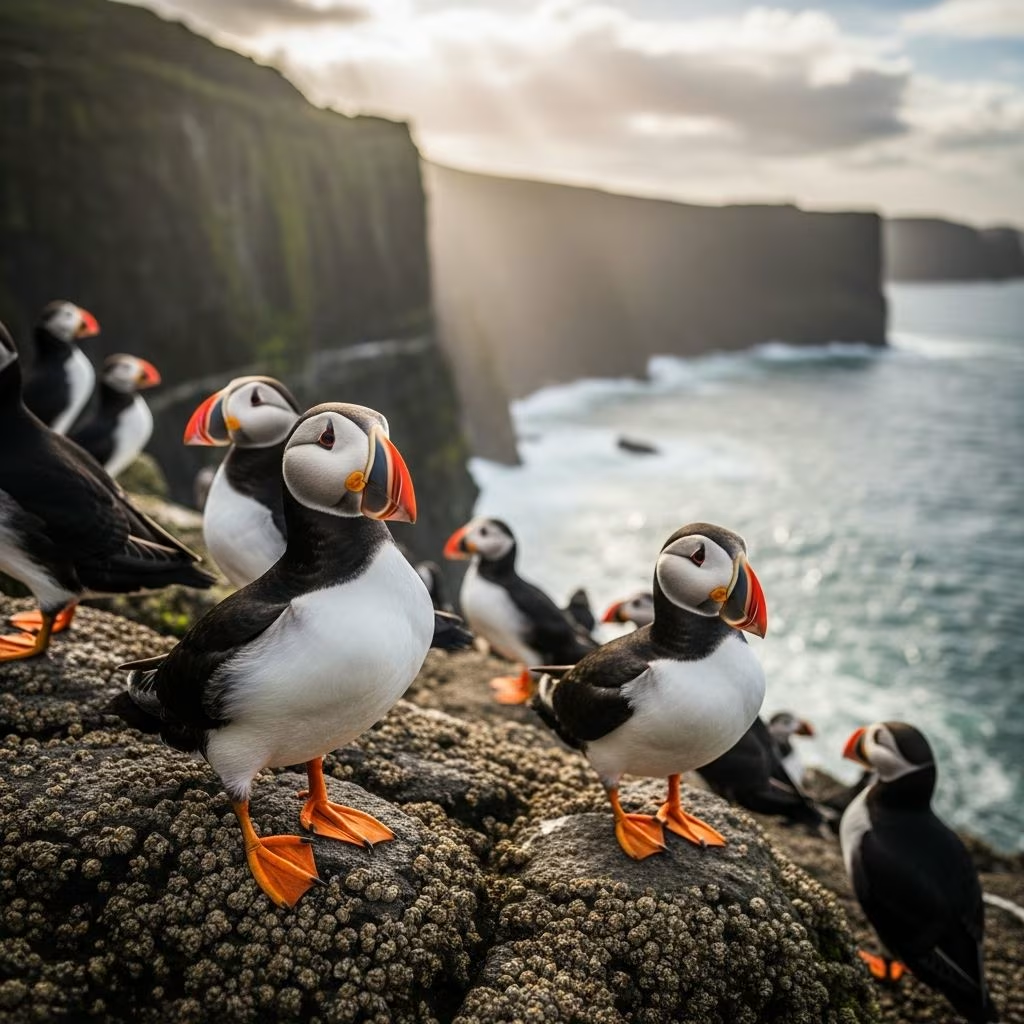
Off the southeast coast of Ireland, the Saltee Islands stand as a beacon for wildlife enthusiasts drawn to the charismatic **Atlantic puffins**. These small seabirds, with their vivid beaks and clown-like markings, transform the rugged cliffs into a living spectacle during breeding season. Great Saltee, the larger of the two islands, serves as a private bird sanctuary where visitors can witness puffins in their natural habitat, free from major disturbances.
Atlantic puffins, often called “sea parrots” for their colorful bills, are compact birds measuring about 10 inches tall. They spend most of their lives on the open ocean but return to coastal cliffs and islands to breed. On the Saltee Islands, they nest in burrows dug into soft soil or rocky crevices, often reusing rabbit holes or excavating their own.
These birds exhibit remarkable monogamy, pairing for life with a divorce rate under 8%, as observed in studies from similar colonies like Skomer Island in Wales. Each pair produces just one egg per year, which both parents incubate for around 40 days. The chick, known as a puffling, fledges after six weeks, embarking on its first sea journey.
Puffins are expert divers, plunging up to 60 meters to catch sand eels and other small oily fish. Their oversized beaks allow them to carry up to 10 fish crosswise, a feat essential for feeding their young. This behavior, visible from Saltee’s cliffs, captivates observers as parents shuttle provisions to hidden burrows.
The Saltee Islands have been protected as a bird sanctuary since 1943, when Michael Neale purchased them and banned hunting and egg collecting. This forward-thinking decision preserved habitats for over 220 bird species, including gannets, razorbills, and guillemots alongside puffins.
Great Saltee spans rolling hills, dramatic cliffs, and turquoise bays, creating ideal nesting grounds. Access is strictly controlled: no dogs, limited visitors, and short landing times ensure minimal impact. Ferries from Kilmore Quay drop off groups for 3.5 hours of exploration, allowing birds to thrive undisturbed.
Puffin populations on Great Saltee faced a dire threat from invasive brown rats, which devoured eggs and pufflings. A census from 1999-2002 counted 1,822 breeding pairs, but by 2018, only 50 remained. Ireland’s National Parks and Wildlife Service launched a rat eradication program, proving pivotal.
Recent reports confirm a turnaround: puffins are thriving again, signaling the program’s success. Predators like rats and mink pose ongoing risks, but controlled access and conservation efforts have stabilized the colony. Puffins’ vulnerability—single egg per season—underscores why such interventions are critical.
Globally, Atlantic puffins appear on the Red List as vulnerable due to declining fish stocks and climate impacts on prey like sand eels. The Saltees exemplify how targeted protection can foster recovery, offering hope for broader seabird conservation.
The optimal window for puffin viewing is late April to late June, peak breeding season when adults court, nest, and feed chicks. Ferries operate April to October from Kilmore Quay, County Wexford, with a 20-minute crossing. Book ahead, especially in May-June, as spots fill quickly on the three 12-passenger boats.
| Aspect | Details |
|---|---|
| Departure Point | Kilmore Quay, Co. Wexford |
| Season | April – October (peak: late Apr-Jun) |
| Island Time | 3.5 hours on Great Saltee |
| Capacity | 12 passengers per boat |
| Cost Factors | Advance booking recommended; weather-dependent |
The island is compact—cross it in 15 minutes— with puffins concentrated along the cliffs. No guide needed; follow coastal paths for sightings. Wear sturdy shoes for uneven terrain, bring binoculars, water, and snacks—no facilities exist. Prepare for wind and spray; a drybag protects essentials.
From clifftops, observe puffins flying low, beaks laden with fish, or preening mates. Their calm demeanor around visitors reflects habituation to controlled tourism. By late July-August, adults depart, leaving fledged pufflings to follow.
Puffins arrive late March, reclaim burrows, and court with billing displays. The single egg hatches in early summer; parents alternate fishing trips. At 5-6 weeks, pufflings emerge at night, navigating to sea by moonlight—a perilous “raiding” aided by instincts.
Juveniles mature in 3-5 years, returning to breed. Lifespans exceed 30 years, with banded birds proving remarkable longevity. This cycle, disrupted by predators but now rebounding, unfolds vividly on Saltee.
The Saltees host a symphony of seabirds. Gannets plunge from heights, razorbills cluster in crevices, and kittiwakes cry overhead. Rabbits share the landscape, inadvertently aiding puffin nesting. Marine life below—seals, dolphins—adds to the allure.
This isolation fosters rarity: no permanent residents, just seasonal avian influxes. Conservation extends to monitoring and habitat maintenance, ensuring the islands remain a vital North Atlantic nursery.
Late April to late June offers peak activity, with adults tending chicks. Ferries run through October, but post-July sightings dwindle.
No—puffins are abundant along cliffs. Paths are straightforward; binoculars enhance views.
Yes, with sturdy footwear. Cliffs have sheer drops—stay on paths. Weather can turn; check forecasts.
Limits protect wildlife: timed landings, no dogs. This sustains populations for future viewers.
No—day visits only. Return via ferry; nearby Kilmore Quay offers lodging.
In an era of declining seabirds, the Saltees deliver intimate encounters with resilient puffins. Amid recovery tales, these islands blend adventure, education, and serenity. Whether a first-time birder or seasoned naturalist, Saltee promises memories etched in feathers and sea spray.
