

 Travel Essentials
 Travel Essentials

Discover how Qatar blends Bedouin traditions with cutting-edge architecture, from desert-inspired museums to Islamic art masterpieces and sustainable landmarks.
 Travel Essentials
Qatar has transformed from a modest pearl-diving outpost into a global beacon of cultural innovation, where towering skyscrapers coexist with structures deeply rooted in desert heritage. This small Gulf nation masterfully intertwines its nomadic Bedouin past with ambitious modern visions, creating a landscape of architectural poetry that captivates visitors worldwide.
Once characterized by vast sandy expanses and sparse settlements, Qatar now hosts over 2.5 million residents and a burgeoning scene of permanent art institutions and tourism hubs. This evolution reflects a deliberate strategy to preserve traditions while embracing prosperity-driven progress. Structures across Doha and beyond embody this duality, drawing inspiration from natural formations, Islamic motifs, and sustainable practices.
The nation’s architectural narrative begins with its commitment to storytelling through built environments. Museums and mosques serve not just as shelters for artifacts but as living embodiments of Qatar’s identity, fostering a dialogue between yesterday’s resilience and tomorrow’s aspirations.
Qatar’s museums stand as the crown jewels of its architectural renaissance, each designed by globally renowned visionaries who interpret local essence through international lenses.
At the heart of Doha’s cultural corridor, the National Museum of Qatar (NMoQ) emerges like a crystalline wonder from the earth. Conceived by Pritzker Prize laureate Jean Nouvel, its facade mimics the **desert rose**—a mineral aggregate sculpted by wind, sand, and evaporating seawater. Spanning 430,500 square feet, the interlocking disc structure envelops the historic palace of Sheikh Abdullah bin Jassim Al-Thani, Qatar’s former seat of government.
Inside, galleries chronicle the nation’s journey from pearling economies to gas-rich modernity, using immersive multimedia to evoke dhow voyages and tribal gatherings. The building’s engineering marvels include shaded courtyards that channel cool breezes, embodying sustainable adaptation to the arid climate. Visitors often describe circling its exterior as a hypnotic ritual, where curves play with light to simulate shifting dunes.
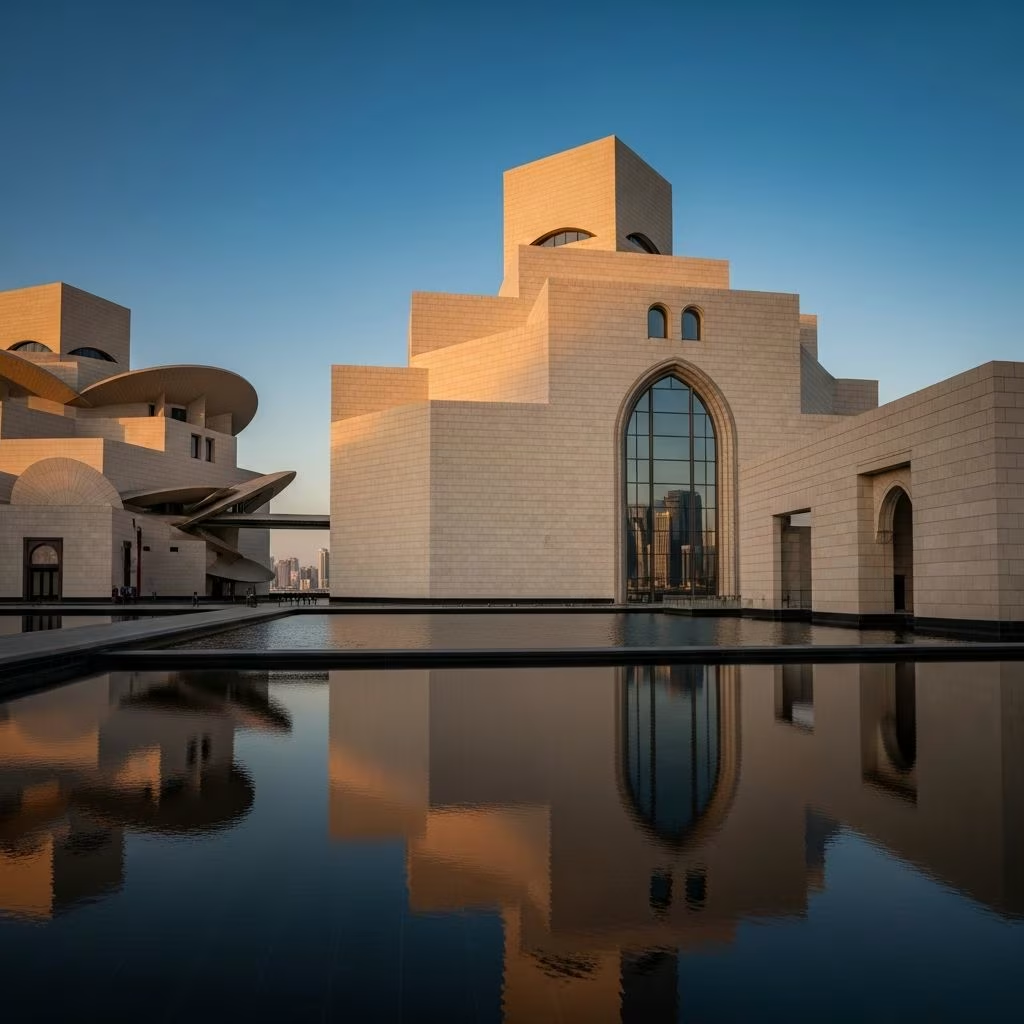
Perched on a purpose-built island along Doha’s waterfront, the Museum of Islamic Art (MIA) is a limestone fortress of geometric perfection. Architect I.M. Pei, famed for the Louvre’s glass pyramid, drew from the 9th-century Sabil ablution fountain of Cairo’s Ibn Tulun Mosque. Its twin domes, intricate arches, and reflective pools fuse Abbasid influences with minimalist modernism.
Housing treasures from the 7th to 19th centuries—manuscripts, ceramics, and textiles—the MIA transcends display to become an artwork itself. The artificial island placement maximizes panoramic views, ensuring the structure dominates the skyline unhindered. Evening illuminations transform it into a glowing beacon, inviting contemplation of Islam’s artistic legacy.
Qatar’s mosques exemplify how religious architecture evolves without forsaking piety, incorporating contemporary elements that honor spiritual harmony.
Nestled within Education City’s verdant expanse, this mosque marries opulent tradition with sleek contemporaneity. Its five minarets, adorned with Quranic calligraphy, symbolize Islam’s five pillars, rising gracefully to invoke serenity. The design philosophy underscores modernity’s compatibility with faith, using clean lines and expansive prayer halls bathed in natural light.
Adjoining the Quranic Botanic Garden, it features flora cited in holy texts alongside Qatar-native species. This botanical extension promotes biodiversity preservation and architectural-nature synergy, with pathways winding through shaded groves for reflective strolls. The mosque’s interiors gleam with marble and gold accents, creating a tranquil oasis amid academic pursuits.
Beyond Education City, structures like the Barzan Towers blend fortified watchtowers with sleek profiles, echoing defensive histories while offering elevated vistas. These sites invite pilgrims and tourists alike to experience worship in environments that resonate with both heritage and progress.
Katara Cultural Village pulses as Doha’s artistic heart, where every edifice channels Qatari soul. Low-slung buildings with wind towers and mashrabiya screens replicate pearling-era dhows and souqs, hosting theaters, galleries, and amphitheaters. This village isn’t mere replication; it’s a dynamic space for performances, workshops, and markets that keep traditions vibrant.
Compare key cultural sites:
| Site | Architectural Inspiration | Key Activities |
|---|---|---|
| National Museum of Qatar | Desert rose crystals | Interactive history exhibits |
| Museum of Islamic Art | Islamic geometric motifs | Artifact viewings, lectures |
| Katara Cultural Village | Pearling heritage compounds | Festivals, artisan markets |
| Education City Mosque | Quranic pillars and gardens | Prayer, botanical tours |
Qatar’s built environment prioritizes resilience against its harsh climate. Features like passive cooling via wind-catching towers and water-efficient landscaping pervade new developments. The 2022 FIFA World Cup stadiums further this ethos, with modular designs convertible to community cooling centers post-event.
Smart city initiatives in Lusail incorporate AI-driven energy management, while green roofs and solar facades reduce urban heat islands. This forward-thinking approach positions Qatar as a model for arid-region urbanism, balancing opulence with ecological stewardship.
It uniquely fuses Bedouin natural inspirations, Islamic geometry, and cutting-edge engineering, creating context-specific icons.
Pritzker winners like Jean Nouvel (NMoQ) and I.M. Pei (MIA) lead, embedding local narratives in global styles.
Yes, most operate daily with adjusted summer hours; check for Ramadan schedules.
Through integrated designs like NMoQ’s palace core and cultural villages reviving souq aesthetics.
Absolutely—interactive exhibits and gardens make them engaging for all ages.
To truly appreciate Qatar’s architectural symphony, embark on a multi-day itinerary: dawn at MIA, midday at NMoQ, evenings wandering Katara. Each edifice whispers stories—of endurance, faith, and ambition—inviting you to witness a nation’s bold reinvention. Whether photographing sunlit discs or pondering ancient folios, Qatar’s creations linger as profound encounters with human ingenuity.
