

 Travel Essentials
 Travel Essentials

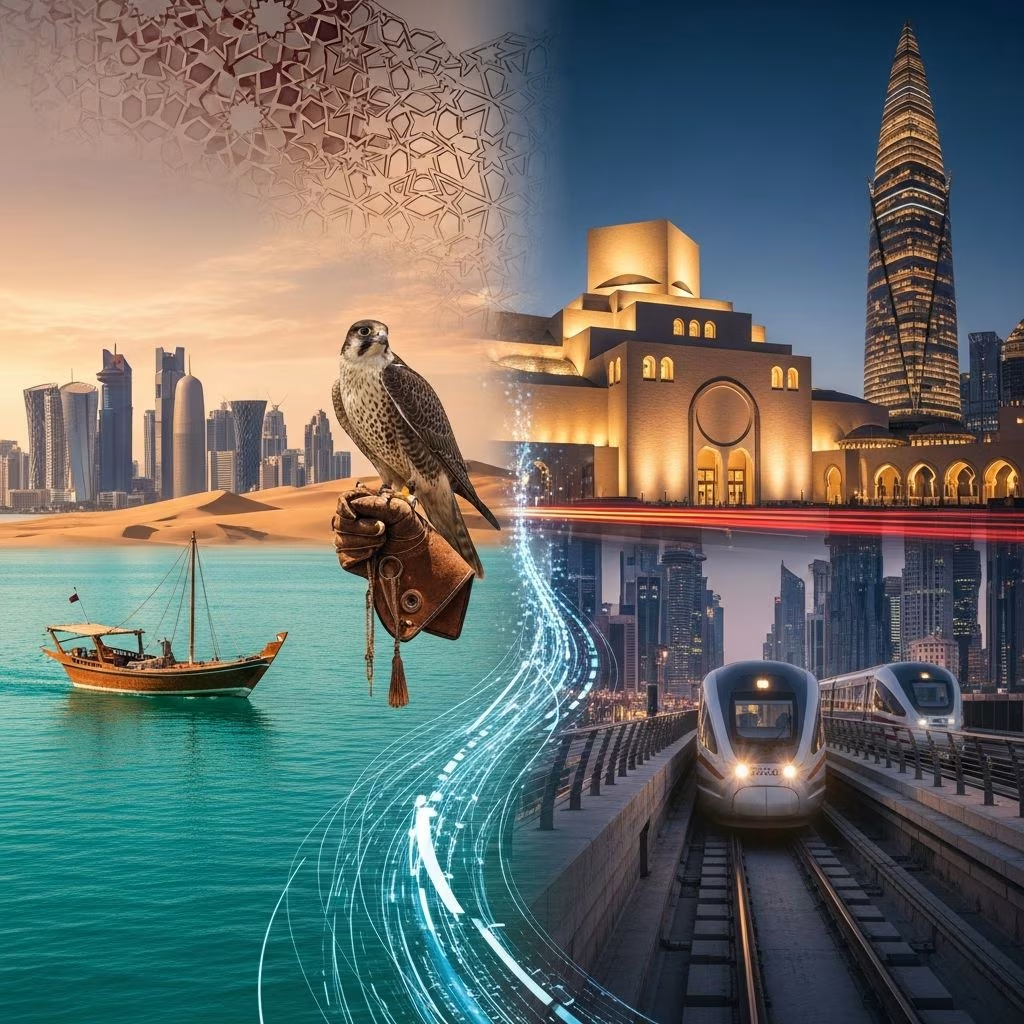
Explore Qatar's evolution from pearl-diving origins to a global powerhouse, highlighting cultural preservation, architectural marvels, and visionary projects that honor the past while embracing tomorrow.
 Travel Essentials
Qatar has undergone a profound transformation, evolving from a modest peninsula reliant on pearling and nomadic herding into a prosperous nation renowned for its skyscrapers, cultural landmarks, and ambitious global initiatives. This evolution reflects a deliberate effort to honor deep-rooted traditions while pioneering futuristic advancements.
Human presence in Qatar traces back tens of thousands of years, with archaeological findings indicating settlements as early as 50,000 years ago. Early inhabitants were nomadic Bedouins who adapted to the arid landscape through fishing, pearl diving, and camel pastoralism. The peninsula’s position along key maritime routes fostered trade connections across the Arabian Gulf, India, and East Africa, embedding maritime themes into folklore, poetry, and music.
Pearl diving emerged as a cornerstone economy, inspiring myths like those of May and Ghilân, while camel herding defined inland life. These activities shaped distinct communities: the nomadic Bedouins and settled Hadar, each with unique customs centered on resilience and communal bonds.
The 7th-century arrival of Islam profoundly influenced Qatar’s societal structure, integrating religious practices into daily life. Mosques became focal points, guiding social norms, laws, and customs under the Islamic Caliphate. This era solidified Arabic-Islamic traditions that persist today.
By the 18th century, migrations from Kuwait, including the Khalifah family, established Al-Zubārah as a thriving pearl and trade center in 1766. Conflicts with Bahrain drew British attention, leading to the 1868 treaty with Mohammed ibn Thani, elevating the Al Thani family and laying groundwork for modern sovereignty.
| Era | Key Event | Impact |
|---|---|---|
| 7th Century | Islam’s advent | Shaped cultural and legal frameworks |
| 1766 | Al-Zubārah founding | Boom in trade and pearling |
| 1868 | British-Qatari treaty | Path to independence under Al Thani |
The 1940s oil discovery revolutionized Qatar’s fortunes, shifting from pearling—devastated by cultured pearls—to hydrocarbon wealth. This boom funded infrastructure, urbanization, and education, propelling Qatar into global prominence. Independence from Britain in 1971 under Sheikh Khalifa bin Hamad Al Thani marked the start of self-directed nation-building.
Natural gas surges in the 21st century amplified growth, enabling investments in cultural projects, universities, and mega-events. The Al Thani leadership has balanced rapid development with heritage preservation, fostering a unique national identity.
Despite skyscrapers and smart cities, Qatar cherishes Bedouin roots through practices like falconry, camel racing, and dhow sailing. The majlis—traditional gathering spaces for storytelling, dispute resolution, and elder wisdom—remains vital, inscribed on UNESCO’s Intangible Cultural Heritage list in 2015 alongside neighbors.
Poetry, a pre-Islamic staple, continues in majlis sessions, transmitting values to youth. Annual Qatar National Day on December 18 features parades and exhibitions celebrating these elements, ensuring cultural continuity amid change.
Bedouin customs like the majlis foster community and moral education, bridging generations in contemporary Qatar.
Doha exemplifies Qatar’s fusion of old and new. Traditional wind towers cool souqs, while modern icons rise nearby. Katara Cultural Village, styled in heritage architecture, hosts global events blending Qatari and international arts, positioning Doha as a cultural tourism hub.
Since the 1970s, art and architecture have flourished, with archaeological sites preserved amid futuristic developments. This juxtaposition creates immersive experiences for visitors.
Qatar’s museums anchor its cultural strategy. The Museum of Islamic Art (2008), by I.M. Pei, showcases Islamic artifacts on a man-made island. The National Museum of Qatar (2019), designed by Jean Nouvel, immerses visitors in the nation’s story through interactive exhibits.
These venues, alongside Education City—home to international university branches and Qatar Foundation initiatives—promote research, innovation, and cross-cultural dialogue.
Msheireb Downtown reimagines urban living with sustainable design inspired by traditional majlis and wind towers, integrating smart tech for eco-friendly living. Lusail City, a planned smart metropolis, hosts stadiums and residential zones for future populations.
These projects underscore Qatar’s commitment to innovation while respecting heritage, preparing for events like global expos and sports spectacles.
Qataris navigate a blend of Islamic values, Bedouin hospitality, and cosmopolitan vibes. Family gatherings, religious observances, and modern amenities coexist. Expatriates enrich the multicultural fabric, evident in diverse cuisine and festivals.
Women increasingly participate in education and workforce, supported by royal initiatives, reflecting progressive shifts within conservative frameworks.
Travelers can dive into history at Al Zubarah UNESCO site, wander Souq Waqif for authentic vibes, or ascend skyscrapers for panoramas. Cultural calendars feature camel races and poetry recitals.
The majlis is a traditional sitting room for social gatherings, storytelling, and decision-making, recognized by UNESCO.
Qatar became fully independent on September 3, 1971, from British protection.
Oil and natural gas dominate, fueling diversification into tourism, education, and finance.
Through museums, festivals, traditional sports, and urban designs echoing Bedouin elements.
Yes, with modest dress codes, family-oriented attractions, and rich cultural experiences.
Qatar invests in green tech, aiming for carbon neutrality. Its mediation in international disputes and hosting of global events like the FIFA World Cup highlight diplomatic ambitions. This forward-thinking approach ensures enduring prosperity rooted in heritage.
(Word count: 1678)
