

 Travel Essentials
 Travel Essentials

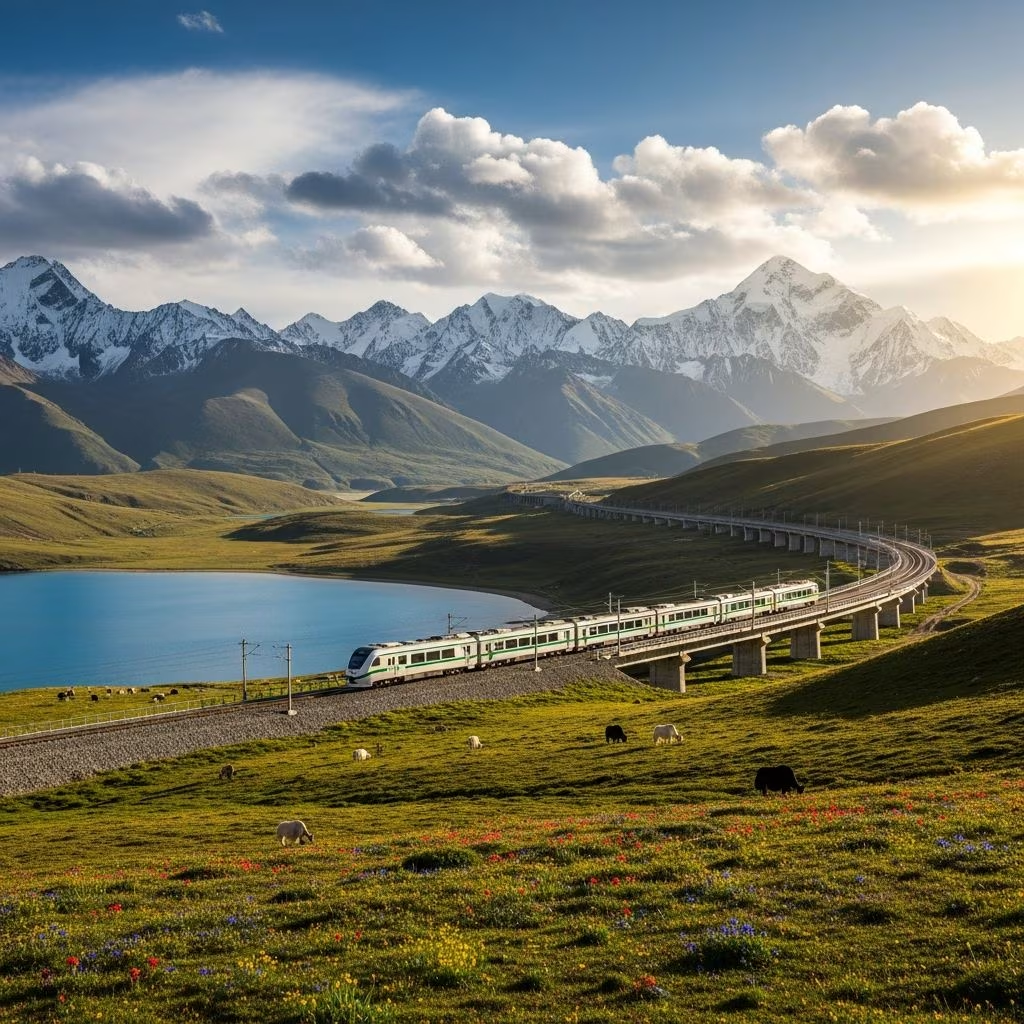
Discover the Qinghai-Tibet Railway: the longest and highest plateau rail line spanning 1,956 km, offering epic views of mountains, lakes, and grasslands on a 20-21 hour journey.
 Travel Essentials
The Qinghai-Tibet Railway stands as an engineering marvel, connecting Xining in Qinghai province to Lhasa in Tibet over 1,956 kilometers of challenging high-altitude terrain. This route, known as the world’s highest railway, reaches elevations up to 5,068 meters, providing passengers with unparalleled views of the Tibetan Plateau’s dramatic landscapes.
Completed in 2006, the Qinghai-Tibet Railway overcame extreme conditions on the world’s highest plateau, averaging 4,300 meters above sea level. Engineers faced permafrost, thin air, and harsh weather, innovating with techniques like elevated tracks to prevent ground thawing and advanced insulation for stability.
The line features the Tanggula Pass at 5,068 meters, the highest rail point globally, and crosses vast wilderness areas like Kekexili Nature Reserve, home to rare wildlife.
The journey typically starts in Xining, a gateway city with easier access for acclimatization. Trains depart nightly around 9 PM, arriving in Lhasa after 20-21 hours.
Longer routes connect from Beijing, Chengdu, Shanghai, and others, but Xining offers the purest plateau experience.
Passengers witness a kaleidoscope of nature: snow-capped peaks piercing blue skies, endless golden grasslands swaying in the wind, crystal-clear plateau lakes like those near Tuotuo River, and stark desert expanses.
| Section | Key Sights | Altitude Highlights |
|---|---|---|
| Xining-Golmud | Qinghai Lake, rolling hills | 2,300-3,000m |
| Golmud-Tanggula | Kunlun Mountains, Kekexili wildlife, Tuotuo River | 3,000-5,068m |
| Tanggula-Nagqu-Lhasa | Grasslands, frozen rivers, monasteries | 5,068m down to 3,650m |
Windows frame nomadic herds, prayer flags fluttering on hillsides, and distant glaciers, creating a moving panorama of isolation and grandeur.
Tibet trains are purpose-built for high altitude, featuring oxygen supply systems: individual ports in cabins, corridors, and lounges deliver enriched air to combat hypoxia. Every berth has an oxygen outlet, ensuring safety up to 5,000 meters.
Accommodations include:
Dining cars serve hot meals—noodles, rice dishes, veggies—with tea always available. Western-style and squat toilets are onboard, but stock tissues and hand sanitizer. Limited outlets mean power banks are essential.
Altitude sickness risks rise above 3,000 meters; symptoms include headaches, nausea, dizziness. Trains’ oxygen helps, but acclimatize in Xining 1-2 days prior. Obtain a Passenger Health Registration Card at stations, declaring fitness for high altitude.
Tips for well-being:
Tickets sell out fast, especially summer peak (June-August). Book 30-60 days ahead via official apps like 12306.cn or agencies. Foreigners need Tibet Travel Permit (TTP) arranged through licensed operators.
Best Times: May-October for milder weather; winter offers solitude but cold snaps.
Packing Essentials: Layers for temperature swings (hot days, freezing nights), snacks, entertainment (no WiFi), binoculars for wildlife, camera with spare batteries.
Combine with tours for guided insights into Tibetan culture.
Kekexili protects endangered species like Tibetan brown bear, wild yak, and chiru antelope—often visible grazing near tracks. Cultural highlights include roadside stupas, herder tents, and prayer wheels, immersing travelers in Tibetan spiritual life.
Expect motion from wind-swept plateaus, dust in dry seasons, and basic facilities. No showers onboard; freshen up with wipes. Sunsets and sunrises over mountains are magical, but sleep may be fitful due to excitement or altitude.
Language barriers exist; basic Mandarin or apps help. Stations like Nagqu offer short walks for photos.
Yes, oxygen systems make it safer than roads, but consult a doctor if you have heart/lung issues.
About 20-21 hours, departing evening, arriving next evening.
Chinese visa plus Tibet Travel Permit (TTP) for foreigners, obtained via tour operators.
Soft sleeper for comfort on this long journey.
Yes, antelopes and yaks in Kekexili; bring binoculars.
Respect fragile ecosystems: no littering, support local economies. Trains reduce road traffic, aiding conservation efforts in Kekexili.
