

 Travel Essentials
 Travel Essentials

Quelimane, Mozambique, leads as the world's most walkable city with over 82% of residents walking daily. Explore its pedestrian-friendly streets, bike culture, and travel tips.
 Travel Essentials
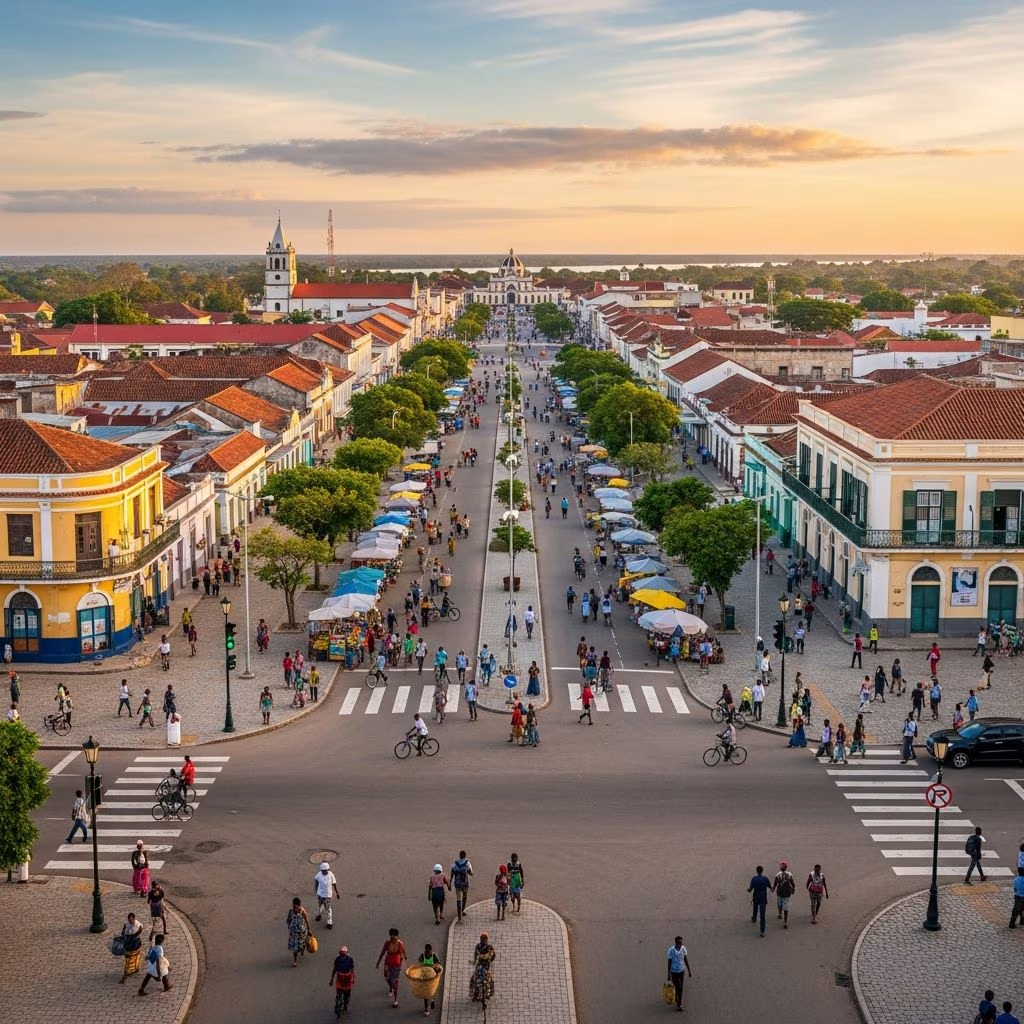
Imagine a place where strolling through vibrant streets is not just possible, but the dominant way of life. Quelimane, a coastal gem in Mozambique, has earned the crown as the planet’s most walkable city. This recognition stems from groundbreaking research analyzing transportation patterns across hundreds of urban centers worldwide. With over 82 percent of its 349,842 inhabitants choosing to walk as their primary mode of transport, Quelimane exemplifies sustainable urban living in an unexpected corner of Africa.
Researchers Rafael Prieto-Curiel and Juan Pablo Ospina delved into data from 850 million people in 794 cities for their ‘ABC of Mobility’ study. Published insights from The Economist highlight how Quelimane surged to the top. The metric? The percentage of residents who walk or bike for daily commutes. Here, walking reigns supreme at 82 percent, supplemented by 9 percent cycling—a stark contrast to car-dominated metropolises elsewhere.
This isn’t mere coincidence. Quelimane’s geography as a seaport city fosters compact layouts ideal for foot travel. Flat terrain, mild tropical climate, and a cultural affinity for pedestrianism converge to make every journey an opportunity to explore on foot. The study’s global scope underscores Quelimane’s outlier status, outpacing even European pedestrian havens.
Local lore jokes that bicycles outnumber cars, a testament to eco-conscious shifts. The ICLEI EcoMobility Alliance praises Quelimane’s innovations, positioning it as a model for cities worldwide aiming to prioritize human-powered movement.
Quelimane’s walkability unlocks its treasures effortlessly. Start at the bustling Central Market, where fresh seafood and spices entice senses mere steps from accommodations.
| Attraction | Walking Time from Center | Highlights |
|---|---|---|
| Central Market | 5-10 mins | Vibrant stalls, local crafts, street food |
| Praia do Quelimane Beach | 15 mins | Pristine sands, sunset views, fishing boats |
| Catedral de Quelimane | 8 mins | Colonial architecture, peaceful gardens |
| Licungo Riverfront | 12 mins | Riverside paths, picnic spots, birdwatching |
These sites form a natural pedestrian loop, perfect for half-day explorations. No need for maps—follow the flow of locals for authentic detours.
Quelimane leads Africa’s green mobility charge. Bicycle taxis, introduced first here, ferry passengers swiftly through traffic-free lanes. This initiative aligns with global pushes for low-emission transport, reducing carbon footprints while boosting economies.
The EcoMobility Alliance fosters peer learning, with Quelimane mentoring other cities on pedestrian infrastructure. Investments in shaded walkways, bike lanes, and public benches enhance comfort, drawing eco-tourists seeking guilt-free adventures.
| Rank | City | Country | Walk % | Bike % |
|---|---|---|---|---|
| 1 | Quelimane | Mozambique | 82% | 9% |
| 2 | Peja | Kosovo | ~78% | Unknown |
| 3 | Utrecht | Netherlands | High | High |
| 4 | Shkoder | Albania | High | Moderate |
| 5 | Granollers | Spain | High | Moderate |
While European cities boast infrastructure, Quelimane’s organic walkability stems from necessity and culture, offering lessons in resilience.
Embrace Quelimane’s rhythm with these strategies:
Accommodations cluster centrally, ensuring walk-to-everything convenience. Budget stays from $20/night offer sea breezes and breakfast strolls.
Walking reveals Quelimane’s soul: Makonde wood carvings in alley workshops, Swahili-influenced music drifting from porches, communal capulana fabric markets. Festivals like Carnival transform streets into dance floors, where joining parades is spontaneous.
Food walks tantalize—grilled prawns at beach shacks, coconut curries from street vendors. Each bite, a few paces from the last, embodies slow travel.
Despite accolades, growth pressures loom. Urban expansion risks eroding paths, but local leaders advocate preservation. Partnerships with ICLEI aim to scale successes, potentially inspiring African urban planning.
Tourism influx could strain infrastructure, yet walkability buffers this—visitors integrate seamlessly without overwhelming transport.
Yes, especially daytime in populated areas. Locals are welcoming; use common sense at night.
Fly into Quelimane Airport (UEL) from Maputo or international hubs; buses from Nampula viable.
Tropical: warm year-round (75-90°F), driest May-Sep ideal.
Informal local guides abound; formal tours like ‘Best of Quelimane’ offer structured insights.
Absolutely—flat paths, kid-friendly beaches, minimal traffic.
Quelimane redefines travel: no rush, pure presence. As the world’s walkability pinnacle, it invites you to step into sustainability and serenity. Book now and let your feet lead the way.
