

 Travel Essentials
 Travel Essentials

A comprehensive travel guide to Rabat featuring UNESCO heritage sites, riverside attractions, cultural landmarks, and practical visitor information.
 Travel Essentials
\n\n
Rabat stands as Morocco’s capital and a UNESCO World Heritage city that seamlessly blends centuries-old traditions with contemporary urban development. Since becoming the nation’s administrative center in 1912, this Atlantic coastal city has evolved into a welcoming destination that maintains an authentic character while offering modern amenities. With a population exceeding 2 million residents, Rabat distinguishes itself from other Moroccan cities through its cleanliness, organized infrastructure, and genuine hospitality. The city’s leisurely pace, coupled with significant historical treasures and riverside charm, makes it an ideal destination for travelers seeking a more relaxed Moroccan experience.
\n\n
\n\n
The city divides naturally into distinct neighborhoods, each offering unique experiences and attractions. Understanding this geographical organization helps visitors maximize their time and navigate the capital efficiently. The northern section showcases the city’s most romantic historical elements, while the northeastern area concentrates major archaeological sites. The central districts pulse with commercial energy, and the southern regions reveal ancient civilizations beneath modern development.
\n\n
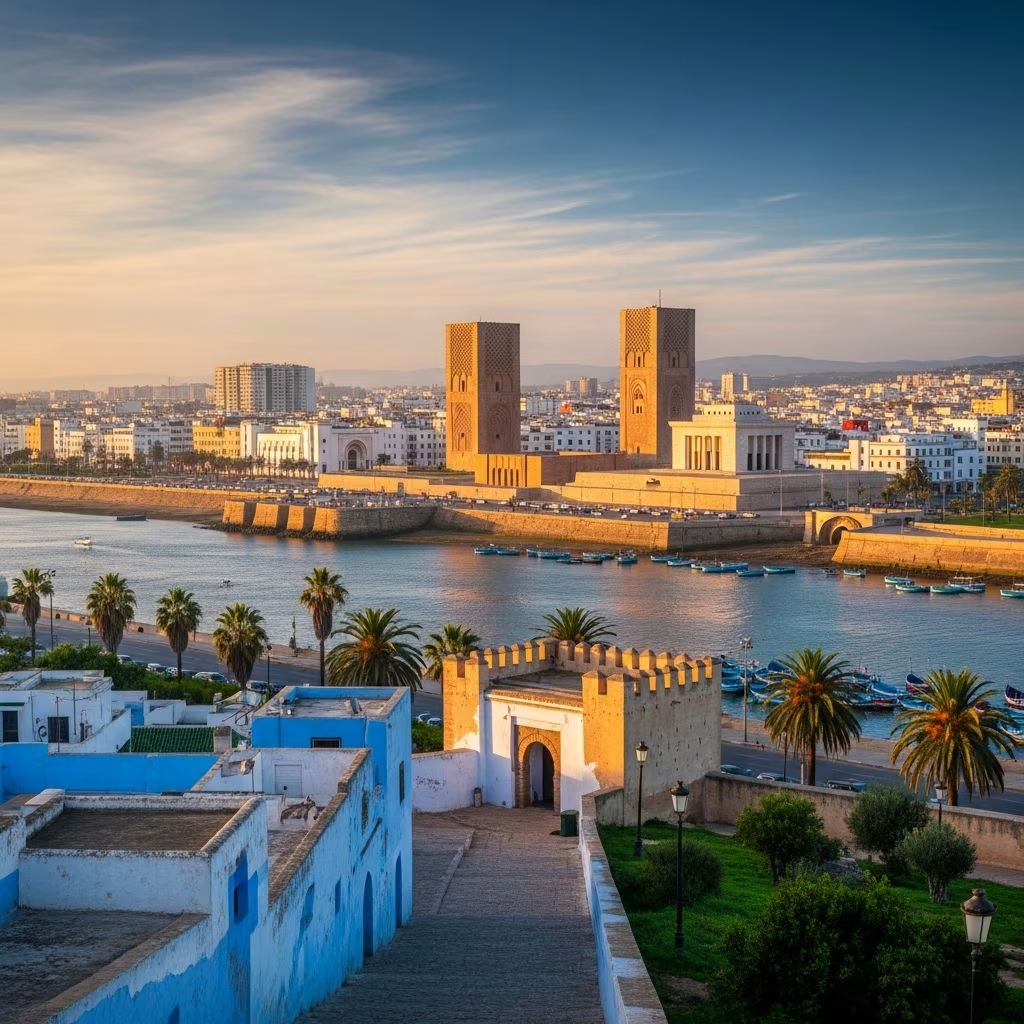
The northern zone features the striking Kasbah des Oudaias, an elevated fortress surrounded by protective fortifications. This 12th-century citadel commands impressive vistas across the Bou Regreg River toward the Atlantic Ocean. Within its medieval ramparts and distinctive rose-colored walls, visitors discover Rabat’s historic essence through winding cobbled passages and residential streets painted in cobalt blue and cream. The famous Andalusian Gardens provide a serene retreat featuring aromatic citrus trees and traditional Islamic landscape design.
\n\n
The northeastern quarter concentrates major monumental sites including the Hassan Tower, an unfinished 12th-century minaret that was intended to become the world’s largest, and the elegant Mausoleum of Mohammed V. This 20th-century tomb honors the father of Moroccan independence and remains one of the few mosques in Morocco welcoming non-Muslim visitors. The surrounding complex includes a museum documenting the Alaouite dynasty and a monument to unknown soldiers.
\n\n
The central medina represents the historic commercial heart where traditional souks continue trading as they have for centuries. Ancient Almohad ramparts define the western boundary, while the 17th-century Andalusian wall marks the southern perimeter. Several historic gates punctuate these fortifications, including Bab al-Ahad, Bab al-Bahr, and Bab Rouah, which incorporates a contemporary art gallery within its historic structure.
\n\n
The southern region encompasses Chellah, an archaeological necropolis revealing remains of Sala Colonia, an ancient Roman settlement. This layered historical site demonstrates millennia of continuous habitation and provides insight into pre-Islamic North African civilization.
\n\n
\n\n
Rabat’s architectural heritage spans multiple centuries and reflects diverse cultural influences. The city’s most significant landmarks tell stories of religious devotion, political power, and national identity.
\n\n
The Kasbah Mosque, formally known as Jamaa al-Atiq, was established in 1150 and holds distinction as Rabat’s oldest religious building. Within the kasbah precinct, the Andalusian Gardens showcase traditional Islamic horticultural principles with their geometric water features, fragrant vegetation, and peaceful courtyards. The National Jewellery Museum operates within this garden complex, displaying extraordinary examples of Moroccan metalwork and traditional adornment.
\n\n
The Hassan Tower dominates Rabat’s skyline and represents an ambitious architectural project initiated during the reign of Yaqub al-Mansur. Though never completed, this 12th-century minaret soars above the ruins of a massive mosque interspersed with over 200 stone columns, creating a haunting and majestic landscape. Both the tower and adjacent Mausoleum of Mohammed V welcome non-Muslim visitors at no charge, though modest dress demonstrates cultural respect.
\n\n
The Mausoleum of Mohammed V showcases 20th-century architectural grandeur with its distinctive green-tiled pyramid roof and traditional zellige tilework. This monumental tomb honors Morocco’s independence movement leader and contains the remains of King Mohammed V and his sons. The attached mosque features intricate marble columns and traditional Islamic design elements.
\n\n
The Royal Palace, known locally as Dar-al-Mahkzen, represents the contemporary seat of governmental authority and royal residence. Though closed to public entry, its impressive exterior walls and architectural style reflect the grandeur of Morocco’s monarchy.
\n\n
\n\n
Contemporary Rabat showcases significant architectural development that transforms the city’s character. The New City district displays distinctive art-deco styling evident in buildings such as the Rabat Ville railway station and the central post office. The Musée Mohammed VI d’Art Moderne et Contemporain serves as both cultural institution and architectural statement, housing contemporary Moroccan and international artwork.
\n\n
The Théâtre Royal de Rabat exemplifies 21st-century design innovation through its striking Zaha Hadid-designed structure featuring sweeping futuristic curves. The forthcoming Mohammed VI Tower will reshape the skyline as the region’s tallest structure at 250 meters, symbolizing Rabat-Salé’s forward momentum.
\n\n
\n\n
The Bou Regreg River and Atlantic coastline provide essential recreational and leisure opportunities. The riverside promenade offers ideal walking routes where visitors observe traditional fishing boats while enjoying riverside cafés. The iconic lighthouse, known as Phare de Rabat, marks the coastal landscape and provides excellent photography opportunities, particularly during sunset hours.
\n\n
Multiple beaches serve different preferences and activity levels. Rabat Beach provides urban seaside access for swimming and relaxation. Plage de Salé Ville and Plage des Nations offer alternative coastal experiences, with Plage des Nations featuring an adjacent golf course. Plage de Témara extends the beach options for those seeking quieter settings beyond the city center.
\n\n
Sunset views from the kasbah or from across the river in Salé create memorable experiences, while the riverside corniche accommodates leisurely strolls and sunset appreciation. The Marina Bouregreg Salé in neighboring Salé provides upscale dining and shopping alongside maritime activities.
\n\n
\n\n
Rabat’s museum network preserves and displays Morocco’s cultural heritage across multiple disciplines. The Musée Mohammed V focuses on the Alaouite dynasty’s history, providing historical context for modern Morocco’s development. The Musée National de la Parure specializes in ethnographic collections emphasizing traditional Moroccan jewelry and personal adornment techniques. These institutions offer deeper understanding of Moroccan craftsmanship and cultural values.
\n\n
\n\n
Several transportation methods facilitate movement throughout Rabat and connections to surrounding regions:
\n\n
\n
\n
\n
\n
\n
\n\n
\n\n
Visit duration significantly influences activity selection and depth of exploration. Travelers with four nights can experience Rabat’s highlights comprehensively, including a half-day excursion to Hassan II Mosque in nearby Casablanca, while maintaining leisure time for café relaxation, pool time, or traditional hammam spa treatments.
\n\n
Two-night visitors benefit from guided tours emphasizing sites unique to Rabat unavailable elsewhere in Morocco. Prioritize the Kasbah des Oudaias, Mausoleum of Mohammed V, and Chellah archaeological sites to maximize cultural impact within limited timeframes.
\n\n
Day-trip possibilities extend experiences beyond Rabat’s immediate boundaries. Casablanca lies within convenient reach for major mosque visitation, while the Moroccan countryside and coastal regions offer alternative day-adventure opportunities.
\n\n
\n\n
Rabat’s commercial landscape reflects the city’s orderly character and offers shopping experiences at substantially lower prices than comparable Moroccan destinations. The medina’s bustling souks showcase traditional merchandise including textiles, ceramics, spices, and handicrafts. Modern shopping districts provide contemporary retail options and international brands alongside local entrepreneurs.
\n\n
\n\n
Rabat distinguishes itself through genuinely welcoming residents and an open-minded population that balances tradition with contemporary sensibilities. The city maintains authentic character while catering to international visitors without developing the aggressive commercialism affecting some Moroccan tourist centers. Tree-lined avenues, manicured green spaces, and striking architecture throughout the capital create an accessible, comfortable environment for exploration.
\n\n
The city’s relatively reserved demeanor by Moroccan standards doesn’t diminish its vibrancy. Instead, Rabat offers a more contemplative travel experience where cultural interaction flows naturally rather than through predetermined tourism infrastructure. This authentic engagement allows visitors genuine insight into contemporary Moroccan life and values.
\n\n
\n\n
Best visiting conditions: Temperate climate throughout much of the year allows flexible scheduling, though shoulder seasons offer optimal weather for walking exploration and outdoor activities.
\n\n
Dress code awareness: Modest clothing demonstrates respect when visiting religious sites including mosques and the mausoleum. Comfortable walking shoes facilitate navigation through historic districts’ cobbled streets.
\n\n
Language assistance: While French and Arabic dominate, English-speaking guides enhance historical site understanding and cultural context interpretation.
\n\n
Currency and payment: Moroccan dirhams facilitate transactions throughout the city, though major establishments accept credit cards.
\n\n
\n\n
Morocco’s capital remains undervalued in comparison to more publicized destinations like Marrakech or Fes. Yet Rabat offers distinctive experiences combining UNESCO-recognized heritage preservation with modern urban planning excellence. The city’s riverside location, architectural diversity spanning multiple centuries, world-class museums, and genuinely welcoming population create comprehensive destination appeal.
\n\n
Visitors consistently express surprise at Rabat’s charm and sophistication. The capital successfully preserves historical authenticity while maintaining contemporary relevance, allowing travelers to experience Morocco’s past and present simultaneously. Whether visiting as a primary destination or incorporating Rabat into broader Moroccan itineraries, the capital delivers exceptional cultural enrichment and travel satisfaction.
\n\n
\n
\n
\n
\n
\n
\n
\n
\n
