

 Travel Essentials
 Travel Essentials

Comprehensive guide to Raja Ampat, Indonesia: best times to visit, how to get there, top activities like diving and island hopping, costs, and tips for an unforgettable trip.
 Travel Essentials
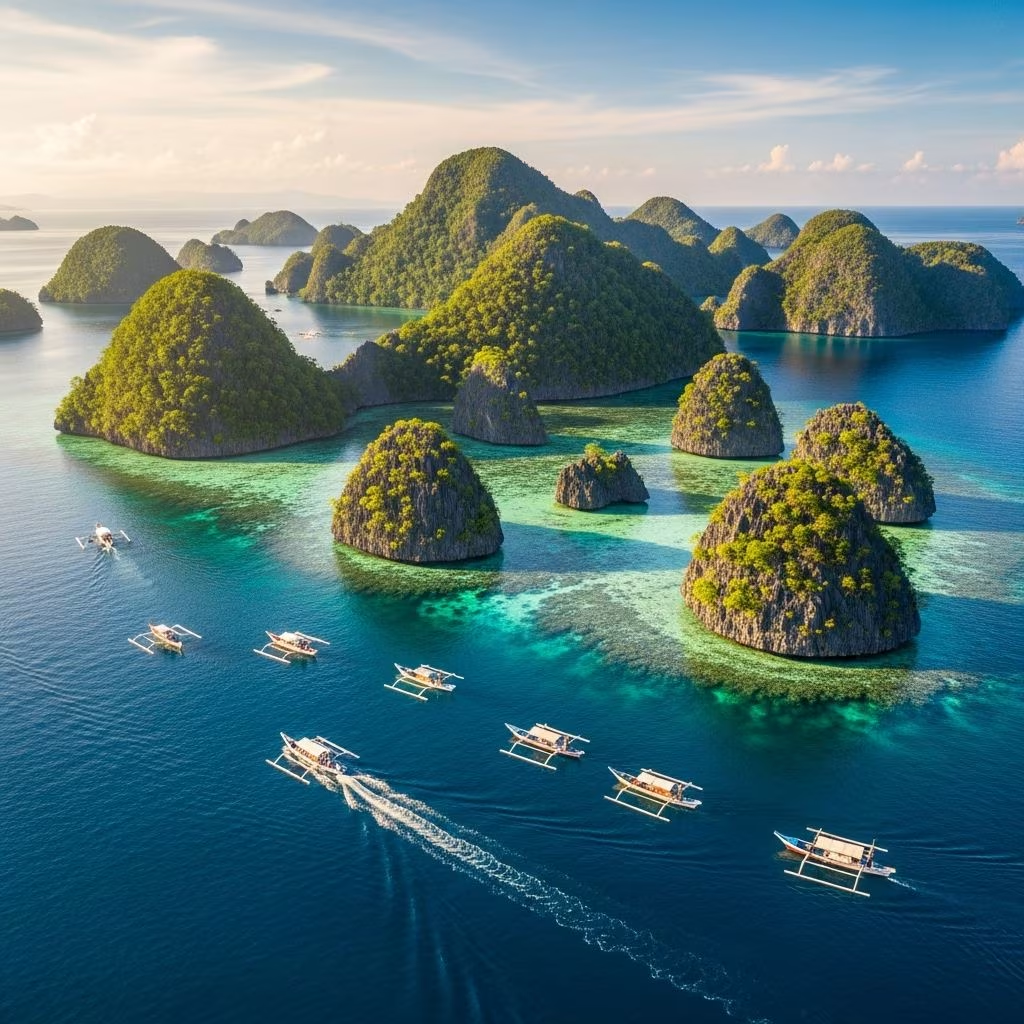
Hidden in the coral triangle of West Papua, Raja Ampat captivates with its unparalleled marine biodiversity and untouched landscapes. Comprising over 1,500 islands, this archipelago offers divers, snorkelers, and nature enthusiasts a chance to witness one of Earth’s richest ecosystems. Plan your journey to this remote haven for crystal-clear waters teeming with life and jagged limestone karsts rising dramatically from the sea.
Raja Ampat, meaning ‘Four Kings’ in local dialect, centers around its namesake islands: Waigeo, Misool, Salawati, and Batanta. These form the heart of a marine park boasting the highest coral diversity globally, with sites sheltering manta rays, sharks, turtles, and countless fish species. Beyond the ocean, hikers scale peaks for panoramic lagoon views, while cultural immersion reveals Papuan village traditions.
Unlike overcrowded tropical spots, Raja Ampat maintains its pristine state due to limited infrastructure and challenging access, preserving authenticity for those willing to invest time and effort.
The equatorial climate ensures warm temperatures year-round, averaging 28-32°C (82-90°F). However, timing matters for ideal conditions. The prime window spans November to April, coinciding with the dry season for calmer seas, clearer visibility, and abundant sunshine—perfect for diving and photography.
Avoid July-August if prioritizing diving, as stronger winds can stir currents.
Reaching this paradise demands multi-leg travel, starting from major Indonesian hubs. No direct international flights exist, so begin with Jakarta, Bali, or Manado.
Homestay owners often arrange pickups; pre-book to secure spots and split boat fees, slashing expenses from Rp4,000,000+ per private charter.
All visitors fund conservation via mandatory charges at Waisai harbor: Raja Ampat Marine Park fee (Rp700,000/US$43) and Visitor Entry Ticket (Rp300,000/US$18.50), totaling Rp1,000,000. Pay cash or card; receipts grant access to protected sites.
Additional prep:
Raja Ampat favors intimate stays over mass tourism. Homestays dominate, offering basic wooden bungalows with meals using fresh catches and gardens. Expect shared facilities, generator power (evenings only), and authentic Papuan hospitality—ideal for budget adventurers.
| Type | Price/Night (Rp) | Features | Best For |
|---|---|---|---|
| Homestays | 300,000-800,000 | Family-run, meals included, snorkel gear | Budget, culture |
| Dive Resorts | 1,500,000+ | Dive packages, PADI centers, WiFi | Divers |
| Liveaboards | 5-14 days: 20M+ | All-inclusive dives, mobility | Intensive diving |
Base on Waigeo (near Waisai), Kri, or Arborek for access. Book via sites listing 100+ options with filters for diving/snorkeling. A week-long stay allows immersion without rush.
Raja Ampat’s reefs legendarily host 75% of world’s coral species across 20+ sites like Cape Kri (barracuda tornadoes), Manta Ridge, and Mike’s Point. Depths exceed 20m with strong currents—advanced certification essential. Expect wobbegongs, pygmy seahorses, turtles, and pelagic giants.
Snorkelers thrive too: shallow reefs burst with color. Resorts/liveaboards mandate medical certs and insurance.
Complement ocean exploits with island explorations.
Day trips bundle snorkeling, hikes; share boats to economize.
Boats are lifelines—rent longboats (Rp500,000-2M/day) for hopping Waigeo, Misool, etc. Discuss routes with captains; fuel surcharges apply for distant spots. Safety first: life jackets, experienced operators.
Raja Ampat suits mid-range budgets; expect higher costs than Bali due to logistics.
| Item | Cost (Rp, per person) |
|---|---|
| Flights to Sorong | 2-5M RT |
| Sorong-Waisai Ferry RT | 274,000 |
| Entry Fees | 1M |
| Homestay (7 nights, FB) | 3-6M |
| Boat Trips (shared) | 1-3M |
| Meals/Extras | 500K |
| Total (7 days) | 8-16M (~US$500-1,000) |
Open trips cut costs further. Bring USD for exchange; no cards on islands.
Support sustainability: no-touch reefs, local hires.
Divers need advanced certs for most sites, but snorkelers and hikers welcome. Strong currents; guided trips advised.
Minimum 7 days for travel/recovery; 10-14 for full immersion.
Yes—hiking, villages, birding abound.
Kri/Waigeo for central access.
Malaria risk—prophylaxis; dive medical.
Fees fund patrols against illegal fishing. Choose eco-homestays, avoid single-use plastics to sustain this biodiversity hotspot.
