

 Travel Essentials
 Travel Essentials

Explore Ramadan's significance in Islam, from fasting and prayers to community iftars and global variations, with etiquette for respectful participation.
 Travel Essentials
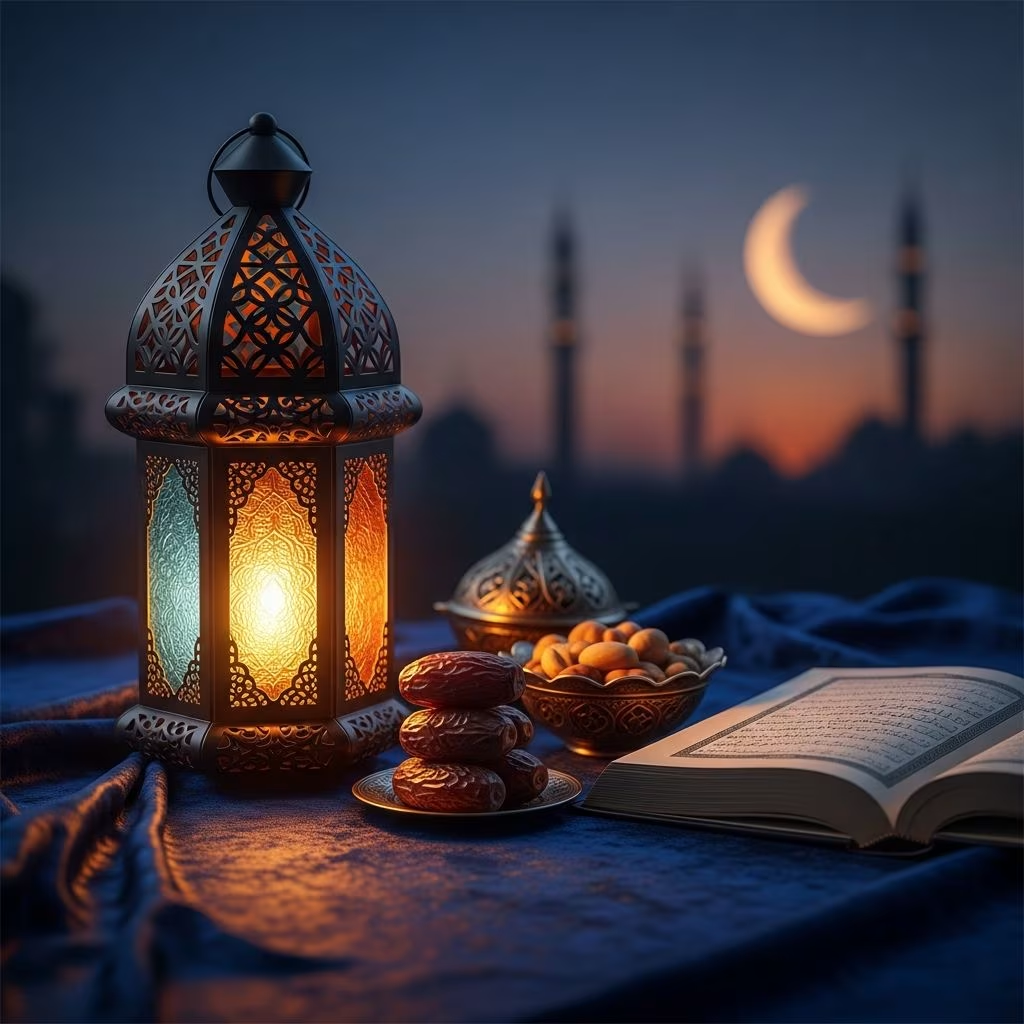
Ramadan stands as the ninth month in the Islamic lunar calendar, a period when Muslims around the world engage in fasting from dawn until sunset, alongside heightened prayer, Quran recitation, and acts of charity. This holy month commemorates the initial revelation of the Quran to Prophet Muhammad and serves as one of the five pillars of Islam, fostering spiritual discipline and community bonds.
At its core, Ramadan derives its name from the Arabic root suggesting intense heat or burning, symbolizing the thirst of fasting, the purification of sins through devotion, and the igniting of love for God and humanity. It is profoundly linked to the Quran’s revelation, believed to have begun during this month on Laylat al-Qadr, a night of immense blessings equivalent to a thousand months of worship.
Muslims view Ramadan as a time when heavenly gates open, hellish ones close, and evil influences are restrained, creating an optimal environment for spiritual growth. The Quran itself declares: “The month of Ramadan is that in which the Quran was sent down as guidance for mankind.” This connection urges believers to align their lives with Quranic principles throughout the month.
Fasting, or sawm, requires abstaining from food, drink, smoking, and intimate relations during daylight hours, typically lasting 29 or 30 days based on moon sightings. It is obligatory for healthy adult Muslims, promoting taqwa—God-consciousness—through self-restraint, empathy for the needy, and renewed faith.
These practices cultivate discipline, gratitude, and protection from sin, as Prophet Muhammad stated fasting is uniquely rewarded by God.
A typical Ramadan day revolves around meal timings and worship. Suhoor sustains fasters through the day, while Iftar brings communal joy with shared feasts of soups, fruits, and traditional dishes.
| Time | Activity | Purpose |
|---|---|---|
| Pre-dawn (Suhoor) | Nutritious meal and Fajr prayer | Strength for fasting and spiritual start |
| Dawn to Sunset | Fasting, work, light activities | Self-control and reflection |
| Sunset (Iftar) | Breaking fast, Maghrib prayer | Gratitude and community bonding |
| Night | Taraweeh prayers, Quran reading, family time | Deepening devotion |
| Late Night | Optional Tahajjud prayers | Seeking forgiveness |
Nights, especially the last ten, intensify with retreats (itikaaf) in mosques for uninterrupted worship.
Islam emphasizes mercy; fasting is waived for children, the elderly, pregnant or nursing women, travelers, the ill, and menstruating women. They may make up missed days later or provide fidyah (feeding the needy). This ensures participation aligns with personal capacity, prioritizing health and compassion.
Among Ramadan’s highlights is Laylat al-Qadr, likely in the last ten odd nights (21st, 23rd, 25th, 27th, 29th). Worship here surpasses a thousand months, offering unparalleled mercy and answered prayers. Believers intensify efforts, seeking destiny decrees and spiritual elevation.
Ramadan ends with Eid al-Fitr, the Festival of Breaking the Fast, marked by special prayers, feasting, gift-giving, and forgiveness-seeking. Zakat al-Fitr purifies fasts and aids the poor, transforming the month into a celebration of renewal.
Ramadan shifts annually by 10-11 days due to the lunar calendar, affecting seasons worldwide. In Muslim-majority nations like Indonesia, Turkey, or Saudi Arabia, public life adjusts with shorter work hours and iftar cannons. Communities host massive iftars, fostering unity.
Diaspora Muslims adapt, balancing work with mosque gatherings.
Travelers in Muslim regions during Ramadan witness profound devotion but should respect altered rhythms: restaurants close daytime, nightlife thrives post-sunset.
Respectful Etiquette:
Exemptions allow travelers to fast optionally or compensate later. Hotels often provide suhoor/iftar buffets.
Proper suhoor with proteins, fibers, and hydration prevents fatigue. Iftar starts gently to avoid digestive issues. Studies affirm benefits like improved metabolism and mindfulness, though consultation is key for health conditions.
Exemptions apply to the ill, elderly, pregnant, travelers, etc. Make up days post-Ramadan or donate fidyah.
By lunar moon sightings, varying by country; lasts 29-30 days.
Observation is welcomed respectfully; trying fasting voluntarily offers insight, but not obligatory.
Nightly prayers reciting the Quran, enhancing spiritual immersion.
Yes, shorter days in many places; confirm locally.
Ramadan transcends ritual, weaving obedience, empathy, and growth into daily life. It renews faith, shields from vice, and unites communities in shared devotion. For travelers, it unveils authentic cultural depths, rewarding patience with vibrant evenings and profound connections.
