

 Travel Essentials
 Travel Essentials

Explore lesser-known festivals in the Indian Himalayan region, from masked dances at Hemis to the epic Nanda Devi pilgrimage, offering unique cultural immersion amid stunning peaks.
 Travel Essentials
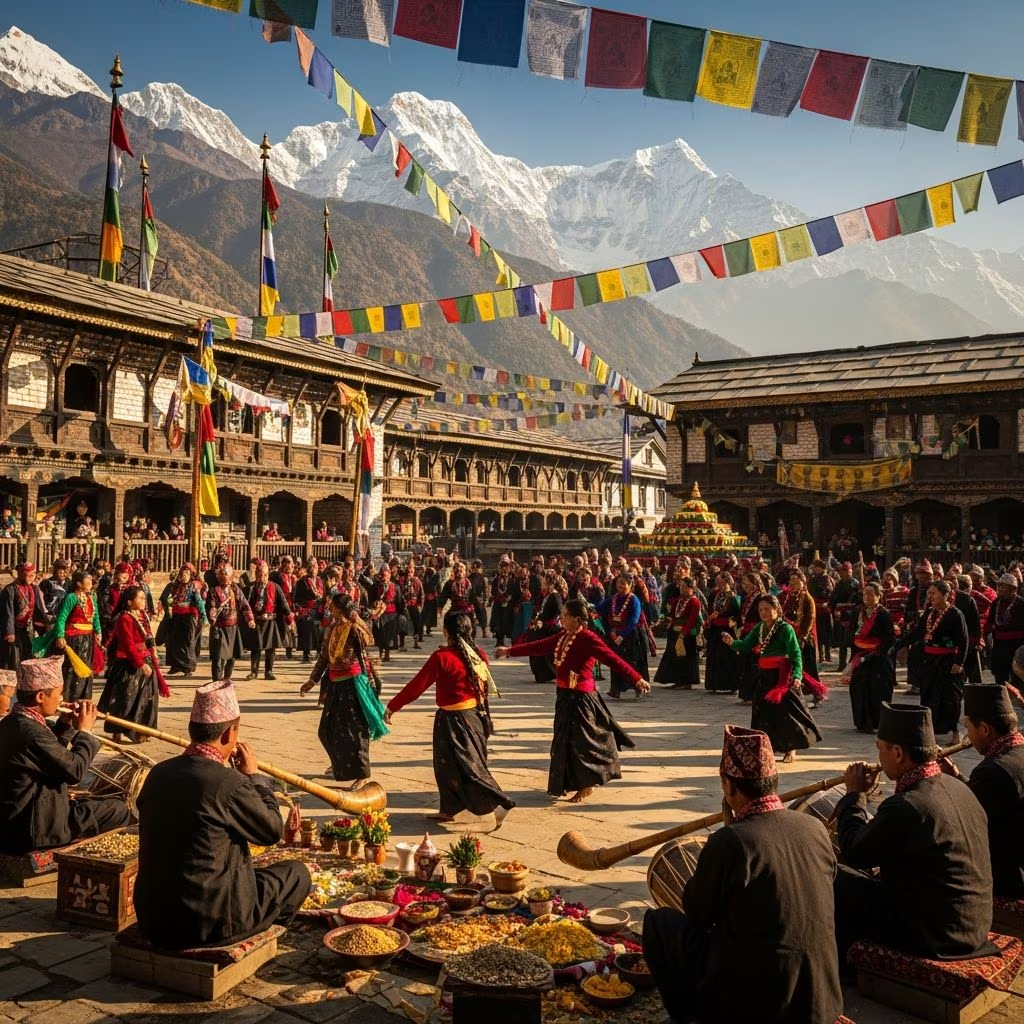
The Indian Himalayas, with their towering peaks and serene valleys, host a series of rare festivals that draw from deep-rooted Buddhist and Hindu traditions. These events transform remote monasteries and villages into hubs of color, music, and spiritual fervor, offering travelers a chance to witness authentic cultural expressions rarely seen elsewhere.
These celebrations stand out for their isolation and intensity, often held in high-altitude locations accessible only by trek. They feature masked dances symbolizing cosmic battles, communal feasts strengthening village bonds, and rituals honoring ancient deities. Unlike mainstream Indian festivals, these Himalayan gems emphasize monastic performances and pilgrimage journeys, providing profound insights into local lifestyles.
Participating requires preparation: pack warm layers for crisp mountain air, respect monastic etiquette by removing hats indoors, and book permits for restricted areas like Ladakh. Timing aligns with lunar calendars, so dates shift annually, making advance planning essential.
At the heart of Ladakh’s festival calendar lies the Hemis Festival, a two-day spectacle at Hemis Monastery. Dedicated to Padmasambhava, the founder of Tibetan Buddhism, it unfolds in June or July with elaborate masked dances. Monks don vibrant costumes depicting deities vanquishing demons, accompanied by thunderous drums and cymbals.
The courtyard fills with locals in traditional attire, sipping chang—a barley beer—while oracles in trance predict fortunes. This event not only entertains but reinforces communal faith, drawing pilgrims from across the region. For visitors, it’s a prime time for photography amid the monastery’s ancient murals.
Losar marks the Tibetan New Year, spanning 15 days from late January to February. Villages in Ladakh and surrounding areas burst into life with house cleanings, new prayer flags, and family gatherings. Central are mask dances and feasts featuring guthuk noodle soup to expel misfortunes.
This festival fosters unity, with communities sharing meals and songs passed down generations. Travelers can join picnics overlooking snow-laden valleys, tasting local brews.
Celebrated during Buddha Jayanti, Saga Dawa commemorates Lord Buddha’s birth, enlightenment, and parinirvana. In Ladakh’s monasteries, devotees circumambulate sacred sites, releasing thousands of prayer flags. Enhanced prayers and prostrations fill the air, reflecting profound devotion.
Processions carry holy relics, and locals fast or meditate. It’s a quieter affair compared to dance festivals, ideal for contemplative souls seeking spiritual recharge amid alpine serenity.
Every 12 years, the Nanda Devi Raj Jat Yatra emerges as the grandest pilgrimage, akin to a Himalayan Kumbh Mela. Starting from Nauti village in Uttarakhand, a silver palanquin bearing goddess Nanda Devi journeys 280 kilometers to her high-altitude temple, guided by a mythical four-horned sheep.
Thousands join this arduous trek, offering tributes at shrines dotting the Garhwal Himalayas. Brahmin priests lead rituals, blending Hinduism with local animism. The 2014 event saw massive crowds; the next is anticipated around 2026, promising epic scale.
| Festival | Frequency | Key Ritual | Location |
|---|---|---|---|
| Hemis | Annual | Masked dances | Hemis Monastery, Ladakh |
| Losar | Annual | Feasts & dances | Ladakh villages |
| Saga Dawa | Annual | Circumambulations | Ladakh monasteries |
| Nanda Devi Raj Jat | Every 12 years | Pilgrimage trek | Garhwal, Uttarakhand |
In Kashmir’s Verinag, at the Jhelum River’s source, Vaitha Vatur Truvah occurs in August-September. Hindu pilgrims converge at the ancient temple for a grand hawan—a fire ritual invoking prosperity. Chants echo against 1,851-meter elevations, with offerings of grains and ghee fueling sacred flames.
This lesser-known event highlights Kashmir’s syncretic traditions, blending Shaivite worship with local folklore.
While focused on India, echoes of Nepalese festivals like Mani Rimdu inspire Ladakhi events. Mani Rimdu, held in October-November at Everest region’s monasteries, features sacred mask dances over three public days, following 16 days of sand mandala creation. Monks embody deities in chham performances teaching Buddhist morals.
Dumji, celebrating Guru Rinpoche’s birth in June-July, unites Sherpa villages with four days of dances, fire pujas, and communal hosting. Each family takes turns feeding the village, fortifying social ties. Tiji in Upper Mustang reenacts demon-exorcism myths via Rha Chham dances in May, aligning with trekking season. These cross-border vibes enrich Indian Himalayan festivities.
To experience these, fly into Leh for Ladakh events, acclimatize to altitude, and hire local guides. For Nanda Devi, train physically for multi-day hikes. Respect customs: no leather in monasteries, offer khadak scarves as gifts. Sustainable tourism means minimizing plastic and supporting homestays.
Typically June or July, per the Tibetan lunar calendar at Hemis Monastery.
Primarily Tibetan Buddhist, but open to respectful visitors joining celebrations.
Every 12 years; check for the next around 2026.
No, sacred performances are monk-only; spectate the final three days.
Try chang, guthuk, momos, and thukpa for authentic flavors.
Climate change and tourism pressure threaten these traditions. Melting glaciers disrupt pilgrimages, while overcrowding strains monasteries. Support conservation via eco-treks and donations to upkeep ancient sites. Engaging respectfully ensures these festivals endure for future generations.
(Word count: 1678)
