

 Travel Essentials
 Travel Essentials

Uncover the history, architecture, and visitor essentials of Delhi's iconic Red Fort, from Shah Jahan's vision to modern-day exploration tips.
 Travel Essentials
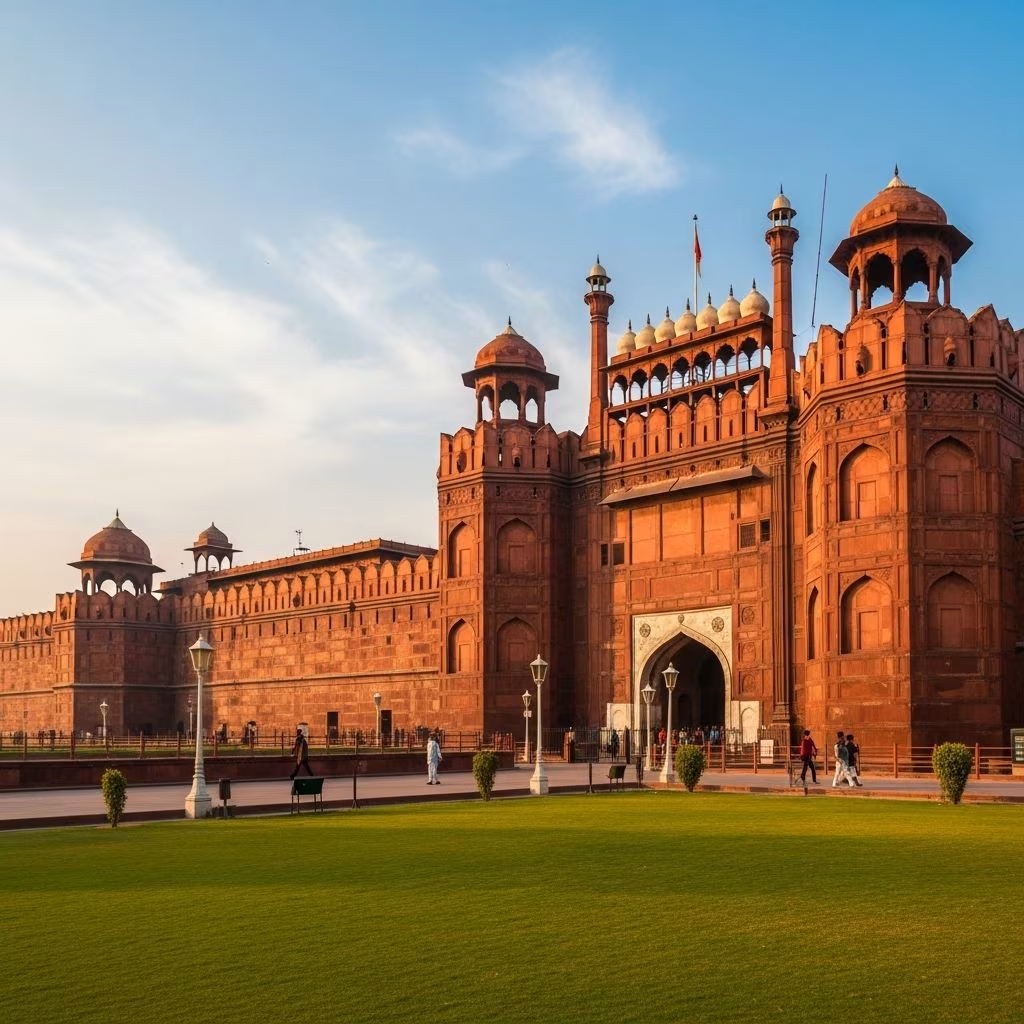
The Red Fort stands as one of India’s most iconic landmarks, a sprawling Mughal masterpiece in Old Delhi that encapsulates centuries of imperial splendor and resilience. Commissioned by Emperor Shah Jahan in 1639, this fort served as the primary residence for Mughal rulers nearly 200 years, blending Persian, Timurid, and Indian architectural elements into a symphony of red sandstone and white marble.
Shah Jahan’s decision to relocate the Mughal capital from Agra to Delhi marked a pivotal shift, birthing the city of Shahjahanabad—today’s Old Delhi. On May 12, 1639, construction commenced under the supervision of renowned architect Ustad Ahmad Lahori, who also designed the Taj Mahal. The project, spanning from 1638 to 1648, transformed a strategic bend along the Yamuna River into a fortified palace complex.
Originally, the fort gleamed with alternating red sandstone and white marble facades, symbolizing the zenith of Mughal opulence. It functioned not just as a home but as the empire’s political and ceremonial core, hosting audiences, festivals, and diplomatic events. The fort’s asymmetrical design incorporated the older Salimgarh Fort, creating the expansive Red Fort Complex—a UNESCO World Heritage Site since 2007.
Tragedy struck in 1739 when Persian invader Nadir Shah plundered its treasures, stripping away jewels and artworks. The 1857 Indian Rebellion brought further devastation: British forces demolished many marble structures, repurposed the site as a garrison, and razed gardens for barracks. Yet, the robust defensive walls endured, preserving the fort’s silhouette against Delhi’s skyline.
Encircled by nearly 2.4 kilometers of towering red sandstone walls—reaching 33 meters on the city side and 18 meters riverside—the fort’s octagonal layout defies perfect symmetry, a deliberate choice to integrate existing structures. Bastions and turrets punctuate the perimeter, offering panoramic views and defensive prowess.
Inside, a labyrinth of pavilions reveals Mughal ingenuity. The Diwan-i-Am (Hall of Public Audience) features 60 red sandstone pillars supporting a flat roof, where emperors addressed subjects through a marble throne encased in golden railings—now a replica. Adjacent, the Diwan-i-Khas (Hall of Private Audience) dazzles with white marble, intricate pietra dura inlays of florals and gems, and the famed inscription: “If there is paradise on earth, it is this, it is this, it is this.”.
The royal apartments enchant with the Nahr-i-Behisht, a ‘Stream of Paradise’ channeling water through cusped arches and jali screens for cooling and aesthetics. Highlights include the Rang Mahal’s gilded ceilings and mirror mosaics, Mumtaz Mahal’s zenana quarters, and the opulent Khas Mahal with its marble balconies overlooking once-lush gardens.
| Pavilion | Key Features | Historical Role |
|---|---|---|
| Diwan-i-Am | 60 pillars, marble throne | Public petitions |
| Diwan-i-Khas | Pietra dura, paradise inscription | Private councils |
| Rang Mahal | Mirrors, lotus tank | Empress’s residence |
| Mumtaz Mahal | Red sandstone, museum now | Royal ladies’ quarters |
| Khas Mahal | Marble, river views | Emperor’s private chambers |
Moti Masjid, a later pearl-like mosque of white marble, exemplifies post-Shah Jahan additions. Gardens, restored to their charbagh pattern, feature fountains and pavilions, evoking the fort’s verdant past.
Perched on the Yamuna’s banks, the fort’s moats—once fed by the river—enhanced security. Its elevated plinth, gateways like Lahori Darwaza with triple arches, and internal water systems highlight engineering brilliance. This fusion influenced forts in Rajasthan, Agra, and beyond, cementing Mughal style’s legacy.
Start at Lahori Darwaza, proceed to Diwan-i-Am, then palaces and gardens. Exit via Delhi Gate for Chandni Chowk markets. Respect no-drones policy and photography rules inside.
India’s Independence Day dawns here with the Prime Minister’s flag-hoisting and address, drawing millions. Festivals like Ramzan illuminate its arches, while year-round events showcase music, dance, and crafts. As a museum, it displays Mughal artifacts, fostering cultural education.
Restoration by the Archaeological Survey of India revives its glory, though challenges like pollution and urbanization persist. The fort symbolizes resilience—from Mughal peak to colonial barracks, now a global heritage beacon.
Emperor Shah Jahan commissioned it in 1639, designed by Ustad Ahmad Lahori.
Yes, from sunrise to sunset; closed on Mondays for some areas.
The PM delivers the national address from Lahori Gate, a tradition since 1947.
Yes, but no flashes in museums; drones prohibited.
2-3 hours on foot; more with guides or shows.
Delhi’s Red Fort transcends stone and mortar—it’s a living chronicle of power, artistry, and rebirth. Whether tracing emperors’ footsteps or witnessing national pride, it captivates all who enter its gates.
