

 Travel Essentials
 Travel Essentials

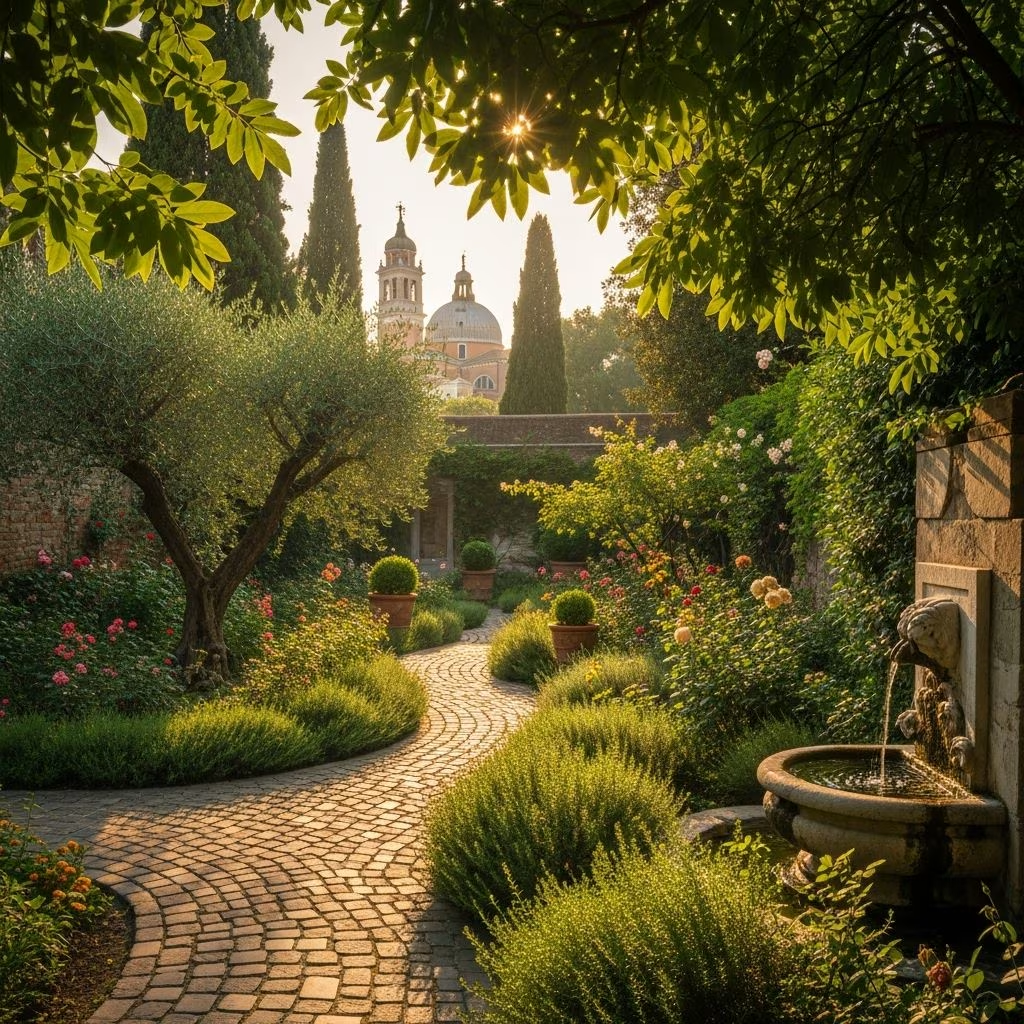
Explore the tranquil Garden of the Redentore on Giudecca island, a meticulously restored 16th-century monastic haven featuring Palladio's church, diverse plantings, and peaceful retreats amid Venice's urban charm.
 Travel Essentials
Amid the shimmering canals and historic palazzos of Venice lies a tranquil retreat on Giudecca island: the Convent Garden of the Redentore. This verdant sanctuary, nestled behind the majestic Church of the Most Holy Redeemer, offers a rare glimpse into monastic life, Renaissance architecture, and botanical beauty. Restored to its former glory, it invites visitors to wander paths lined with ancient olives, aromatic herbs, and blooming flowers, all while gazing over the southern lagoon.
The Church of the Most Holy Redeemer, or Il Redentore, dominates Giudecca’s skyline as a testament to Venice’s resilience. Commissioned in 1577 following a devastating plague that ravaged the city from 1575 to 1577, it was designed by renowned Renaissance architect Andrea Palladio as a votive offering of gratitude for deliverance from the epidemic. The structure, with its classical facade inspired by Roman temples, features overlapping pediments that create a rhythmic visual harmony, especially striking when viewed from the Giudecca Canal.
Originally, Franciscan friars established a modest church and convent on the site in the 1530s. Palladio’s grander design replaced it, with construction beginning soon after the plague subsided. Though Palladio died in 1580, the project continued under his influence, and by 1592, the church hosted its first major services. The attached convent and garden, completed in the 1590s, served the Capuchin friars who resided there for centuries, tending to both spiritual and practical needs.
Giudecca island, just across the water from Venice’s main historic center, has long offered a respite from the crowds. Historically an industrial area with lower rents and a more relaxed vibe, it attracted artists, writers, and gardeners like Frederic Eden and Caroline Jekyll in the 1880s, who created a famed garden nearby visited by luminaries such as Henry James. Today, Giudecca blends working-class roots with modern appeal, its wide canals providing unobstructed views and a sense of space rare in the lagoon city.
The island’s southern edge, where Redentore stands, overlooks the open lagoon toward distant islands, making it an ideal spot for contemplation. Seven Capuchin friars still live in the convent, maintaining the site’s sacred character while welcoming the public.
Spanning about 1 hectare (2.5 acres), the garden follows the traditional hortus conclusus—an enclosed monastic garden—divided into purposeful zones. A 1696 map by Giovanni Merlo depicts its cross-shaped layout, with wooden pergolas framing rectangular beds for various crops. These included:
Possible designer Friar Antonio Pisollo da Pordenone, a Capuchin architect, incorporated meditation chapels evoking early Franciscan wilderness caves. The layout emphasized utility, spirituality, and beauty, with paths for quiet reflection.
For years, the garden lay neglected, its workshops and greenhouses in disrepair. In 2021, the Venice Gardens Foundation spearheaded a comprehensive restoration led by esteemed landscape architect Paolo Pejrone. Rather than a strict historical replica, Pejrone reinterpreted the monastic model, blending medieval flavors with decorative flair inspired by French potagers like Villandry.
Key restoration elements include recovering old structures, replanting over 2,500 species—cypresses, olives, fruit trees, vines, roses, wisteria, and bignonias—and recreating traditional features. A central pond now blooms with lotus and water lilies, while south-facing walls host sun-loving plants. Brick paths engraved with Stations of the Cross guide visitors from an entry olive grove through covered corridors to the main gardens.
| Feature | Description | Historical Role |
|---|---|---|
| Pergola | Vine-draped wooden structure in cross shape | Defined crop zones; shaded walkways |
| Central Pond | Lotus and water lilies | Symbolic serenity; water source |
| Vegetable Beds | Heirloom varieties | Friars’ food and alms |
| Herb Garden | Medicinal plants | Healing simples |
| Olive Grove | Ancient trees | Entry welcome; oil production |
Open to the public Thursday through Saturday from 10 a.m. to 5 p.m., the garden provides a peaceful escape year-round. Entry is via Giudecca 194; check the Venice Gardens Foundation website for updates. A modest fee supports maintenance, and guided tours highlight botanical and historical details.
Arrive by vaporetto (lines 2 or 4.2/4.1) to the Redentore stop. Combine with a church visit—Palladio’s interior boasts serene white spaces and artworks—or the annual Festa del Redentore in July, featuring fireworks and a votive bridge across the canal. Nearby cafes offer lagoon views for post-visit relaxation.
The garden teems with life suited to Venice’s lagoon climate. Towering cypresses and olives provide shade and structure, while espaliered fruit trees cling to walls. Seasonal blooms—climbing roses in spring, wisteria cascades in summer—create picturesque frames for lagoon panoramas.
Birds flit among branches, and the pond attracts dragonflies and frogs. Sustainable practices ensure biodiversity, with native species dominating to combat Venice’s environmental challenges like high water (acqua alta).
Beyond botany, the garden embodies Franciscan ideals of simplicity, stewardship, and service. Its restoration honors this legacy while adapting to modern needs, fostering community through public access. Artists and photographers drawn to its geometry and light find endless inspiration, echoing visits by past notables.
In a city of overt grandeur, Redentore Garden whispers of humility—a sacred ground where nature and faith intertwine.
No, a small entry fee applies to fund preservation. Check current rates on the official site.
Spring for flowers, early morning for quietude, or July for Festa del Redentore fireworks.
Yes, offered by the Venice Gardens Foundation; reservations recommended.
Absolutely—it’s open daily with separate hours from the garden.
Paths are mostly flat, but some gravel areas may challenge mobility aids; inquire ahead.
Leashed dogs may enter at discretion; respect the sacred space.
