

 Travel Essentials
 Travel Essentials

Explore Redwood National and State Parks: home to the world's tallest trees, rugged beaches, and rich wildlife. Learn history, top trails, and planning tips for your visit.
 Travel Essentials
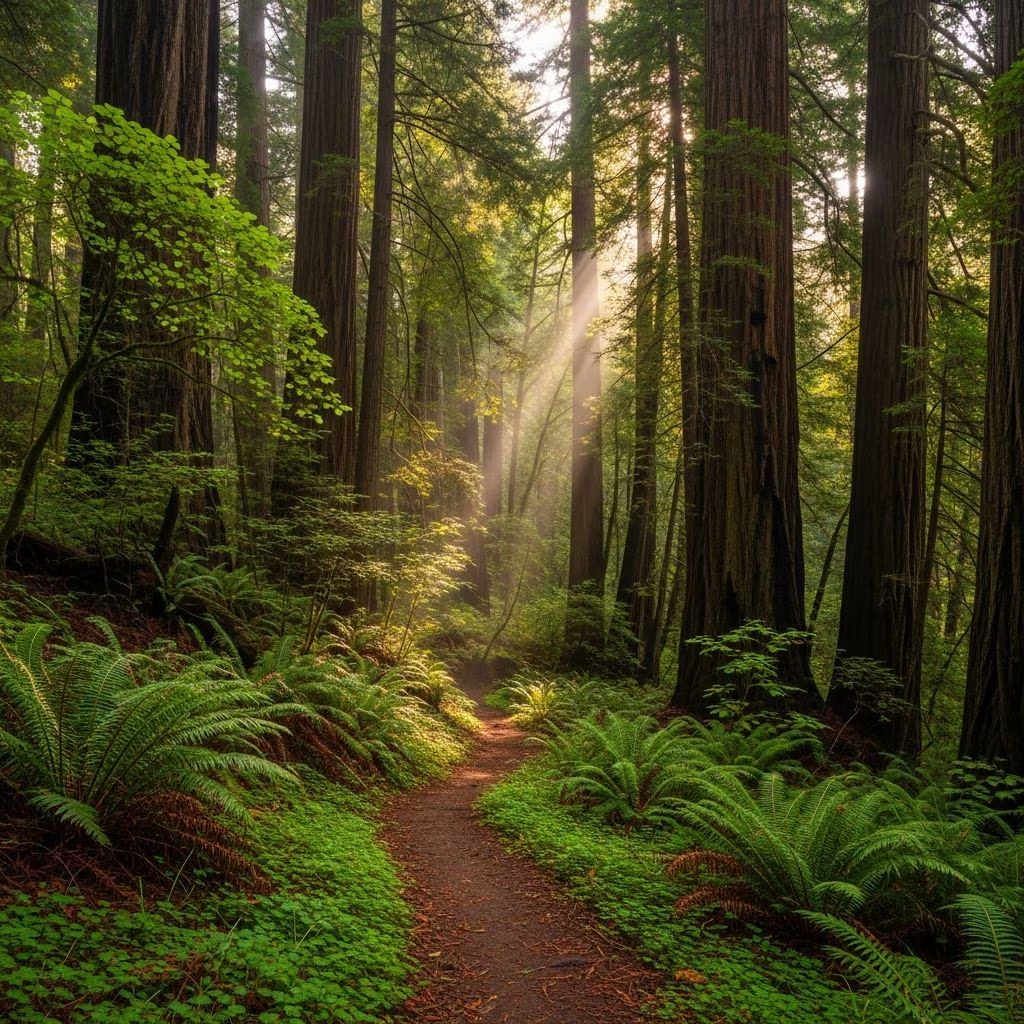
Redwood National and State Parks in northern California protect one of the planet’s most awe-inspiring natural wonders: vast groves of coast redwoods, the tallest trees on Earth. Spanning 133,000 acres along 40 miles of Pacific coastline, this park system combines federal and state lands to safeguard old-growth forests, pristine beaches, rivers, prairies, and diverse wildlife habitats.
Coast redwoods (Sequoia sempervirens) dominate the landscape, reaching heights over 300 feet and living up to 2,000 years. These ancient survivors trace their lineage to the dinosaur era, thriving in the foggy, moist climate of the coastal mountains. Unlike giant sequoias, coast redwoods are slimmer but taller, with diameters up to 18 feet at the base. Their fibrous bark, up to 12 inches thick, resists fire and insects, contributing to their longevity.
Old-growth groves cover 15,800 hectares (39,000 acres), remnants of forests that once spanned temperate regions worldwide but now survive only along North America’s west coast. Fog from the Pacific provides essential moisture, dripping from branches to sustain the understory of ferns, berry bushes, spruce, hemlock, and Douglas-fir.
Human presence dates back over 4,500 years, with Native peoples like the Yurok, Tolowa, and Hupa using fallen redwoods for canoes and homes. Scars from these sustainable practices remain visible. European arrival during the Gold Rush spurred commercial logging, exploiting technological advances for clear-cutting that caused floods and erosion.
Early 20th-century state parks—Prairie Creek Redwoods (1920s), Del Norte Coast Redwoods, and Jedediah Smith Redwoods—protected 50,000 acres. Environmentalists pushed for more, leading Congress to establish Redwood National Park in 1968 (22,646 hectares). Expansion in 1978 under President Carter added 48,000 acres, though it impacted ~1,000 timber jobs amid Orick’s declining industry. Designated a UNESCO World Heritage Site in 1980, the parks are cooperatively managed by the National Park Service and California State Parks since 1994.
Beyond redwoods, the parks encompass rocky cliffs, sandy beaches, fern-filled canyons, oak woodlands, open prairies, and fog-shrouded river valleys. Nearly 40 miles of undeveloped coastline feature tide pools teeming with marine life, including sea lions and endangered California brown pelicans. Inland, rivers like the Klamath and Smith support salmon runs, while prairies host elk herds.
This mosaic supports rare species: bald eagles soar overhead, marbled murrelets nest in old-growth canopies, and tidewater glaciers shaped the terrain eons ago.
The parks offer trails for all levels amid towering trees and ocean views. Key hikes include:
Biking options abound on coastal trails, and kayaking on the Klamath River reveals hidden groves. Beaches like Enderts Beach offer solitude for whale-watching (December-April).
| Season | Highlights | Wildlife |
|---|---|---|
| Spring | Wildflower blooms in prairies; milder trails | Gray whales migrating; newborn elk calves |
| Summer | Peak visitation; longest days for hiking | Salmon runs; bird nesting |
| Fall | Fewer crowds; vibrant foliage | Roosevelt elk rut; migrating raptors |
| Winter | Rainy but dramatic; storm watching | Whale breaches; seals pupping |
Rare sightings include the tidewater glacier-sculpted landscapes and endemic species thriving in intertidal zones.
Access: Fly into Eureka-Arcata Airport (ACV), 90 minutes south. Drive Highway 101 north from San Francisco (5-6 hours). Entrance fees: $35/vehicle for 7 days (covers all units).
Best Time: Summer for dry weather, fall for fewer crowds. Expect fog and rain year-round—pack layers.
Lodging: Camp at Gold Bluffs Beach or Mill Creek (reservations essential). Nearby towns: Crescent City, Orick (timber history), Trinidad. Lodges like Historic Hiouchi in Jedediah Smith.
What to Bring: Sturdy boots for muddy trails, bear spray (rare sightings), tide charts for beaches. No drones; leashed pets only on roads.
Permits needed for Fern Canyon (summer) and backcountry. Download offline maps—cell service spotty.
Logging threats persist; the 1978 expansion averted ecological collapse but challenged local economies. Today, management focuses on restoration, removing invasive species, and monitoring climate impacts like drought stressing redwoods. Visitors must stay on trails to prevent erosion, pack out trash, and respect closures protecting marbled murrelets.
The General Management Plan emphasizes ecological reconstruction, blending wild and managed elements. Support via donations to partners like Save the Redwoods League, founded 1918.
The tallest measured coast redwood, Hyperion, exceeds 379 feet, though access is restricted.
Dogs allowed only on leashes in developed areas; not on trails or beaches to protect wildlife.
133,000 acres across Redwood National Park and three state parks: Prairie Creek, Del Norte Coast, Jedediah Smith.
Many sites are first-come, first-served; reservations recommended for peak season.
Yes, Big Tree Wayside and Lady Bird Johnson Grove offer paved paths.
Redwood National and State Parks offer a humbling escape where nature’s scale dwarfs human concerns. Plan ahead to immerse in this UNESCO treasure.
