

 Travel Essentials
 Travel Essentials

Discover how New Zealand is leading regenerative tourism—restoring nature, empowering communities, and building a carbon-zero visitor economy by 2030.
 Travel Essentials
New Zealand is at the forefront of transforming tourism from a consumptive industry into a force for positive change. Regenerative tourism goes beyond sustainability by ensuring that visitors actively contribute to the restoration of environments, the enrichment of communities, and the building of resilient economies. This approach aims to leave destinations healthier and more vibrant than before.
Traditional sustainable tourism focuses on minimizing harm, often summarized as ‘leave no trace.’ In contrast, regenerative tourism requires giving back more than what is taken. It emphasizes holistic benefits across environmental health, social well-being, cultural preservation, and economic vitality. For New Zealand, this means tourism that decarbonizes operations, restores ecosystems, and fosters community prosperity.
The government’s vision, as outlined by the Ministry of Business, Innovation and Employment (MBIE), positions regenerative tourism as central to national strategy. It supports broader goals like economic decarbonization while ensuring visitors become advocates for New Zealand’s unique heritage.
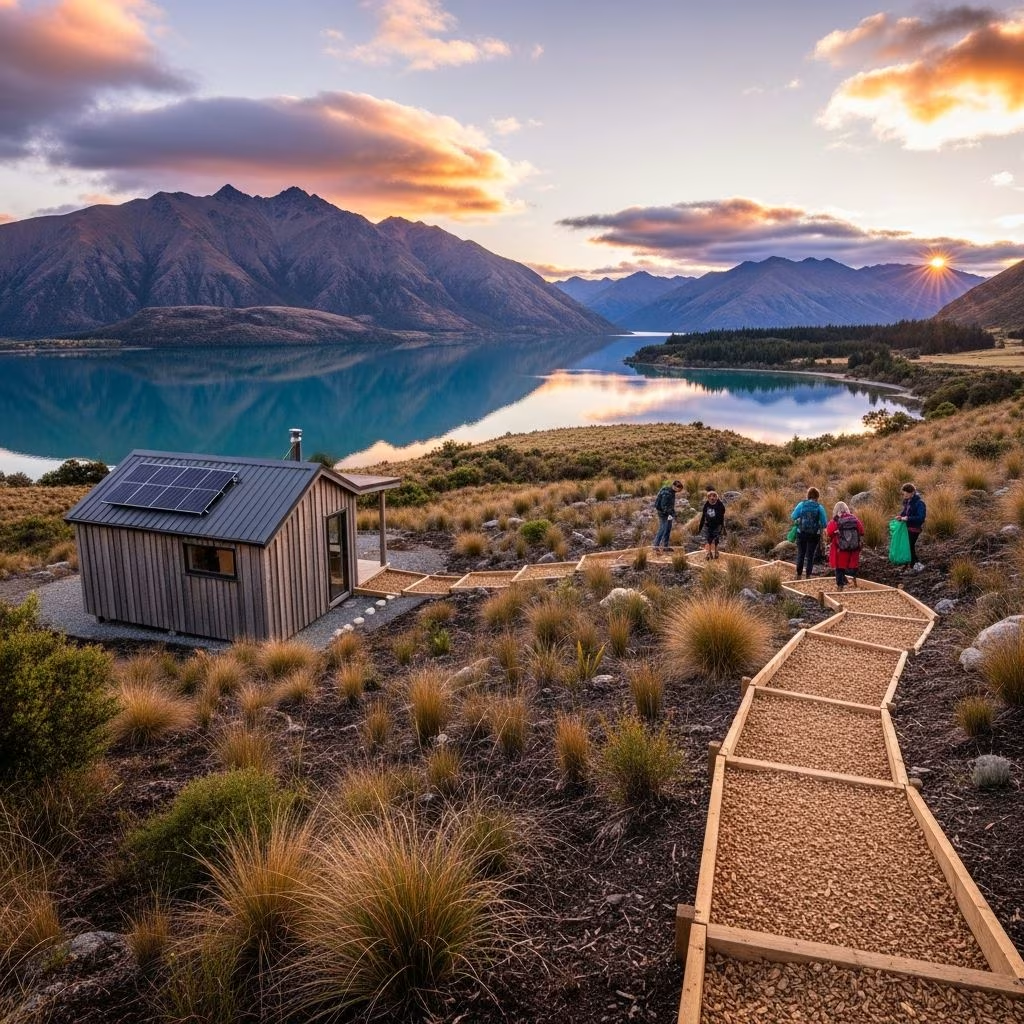
Queenstown Lakes District serves as a flagship model with its Travel to a Thriving Future Destination Management Plan. This comprehensive roadmap targets a carbon zero visitor economy by 2030 through targeted projects across three pillars: enriching communities, restoring environments, and building economic resilience.
| Pillar | Key Objectives | Example Projects |
|---|---|---|
| Enrich Communities & Enhance Experiences | Boost local engagement and cultural preservation | Community programs, Tiaki Promise, Māori heritage initiatives |
| Restore Environment & Decarbonize | Reach carbon zero, zero footprint | Footprint measurement, ecosystem restoration, waste reduction |
| Build Economic Resilience | Increase productivity and adaptability | Infrastructure funding, business excellence, innovation hubs |
Foundational elements include robust governance frameworks, data measurement systems, and updated branding to align marketing with regenerative principles.
Achieving carbon neutrality in tourism demands rigorous measurement and action. Queenstown Lakes is implementing tools to track greenhouse gas emissions and environmental footprints from visitor activities. Keystone projects focus on offsetting emissions through restoration efforts and transitioning to renewable energy sources across accommodations, transport, and attractions.
Bush and Beach, a leader in this space, reinvests tour revenues directly into environmental improvements, demonstrating how operators can fund biodiversity projects and habitat recovery. Their model shows regenerative tourism in action: tours that not only educate but actively heal the landscapes they explore.
Regenerative approaches prioritize people. Initiatives like welcome programs for visitors and place-based planning ensure tourism aligns with local needs. In Queenstown, projects celebrate Kāi Tahu (Ngāi Tahu) mātauranga (knowledge), preserving indigenous stories and practices while creating authentic experiences.
Arts, culture, and heritage developments draw visitors deeper into New Zealand’s narratives, fostering respect and long-term stewardship. WaikatoNZ provides resources for businesses, from beginners to advanced adopters, to integrate regenerative principles, emphasizing prosperity for both people and places.
To build resilience, New Zealand tourism is evolving products beyond adventure staples. Programs like product evolution and tourism business excellence equip operators with skills for sustainable innovation. Direct infrastructure funding addresses overcrowding and enhances visitor dispersal.
Thriving workforce initiatives tackle labor shortages with training, while emergency preparedness plans mitigate climate risks. Economic leakage assessments ensure more revenue stays local, maximizing benefits.
Travelers can participate in regenerative journeys like GOOD Awaits, a 13-day itinerary connecting guests with hosts regenerating communities. These immersive trips blend fun, meaning, and impact, turning tourists into storytellers who amplify New Zealand’s model globally.
Operators encourage the Tiaki Promise, a pledge to care for the land, embedding regenerative ethos from arrival. Visitors measure their footprints via apps, offset emissions, and join restoration activities, creating memorable, purpose-driven holidays.
Transitioning requires collaboration across government, iwi (tribes), businesses, and visitors. Data frameworks are crucial for tracking progress, with annual reviews ensuring adaptability. While Queenstown leads, national efforts scale these principles to regions like Waikato.
Barriers include initial costs and behavioral shifts, but benefits—resilient economies, healthier ecosystems, empowered communities—outweigh them. By 2030, New Zealand aims for tourism that not only survives but thrives amid global challenges.
It is tourism that actively improves destinations by restoring nature, strengthening communities, and ensuring economic benefits exceed costs.
Through measured emission reductions, renewable transitions, and restoration projects, targeting 2030 in areas like Queenstown Lakes.
Initial premiums may apply, but long-term value through premium experiences and societal benefits makes it worthwhile.
Yes, with scalable resources from MBIE and regional bodies like WaikatoNZ supporting diverse operators.
Look for Tiaki Promise adherents, plans like Travel to a Thriving Future, or experiences like GOOD Awaits.
