

 Travel Essentials
 Travel Essentials

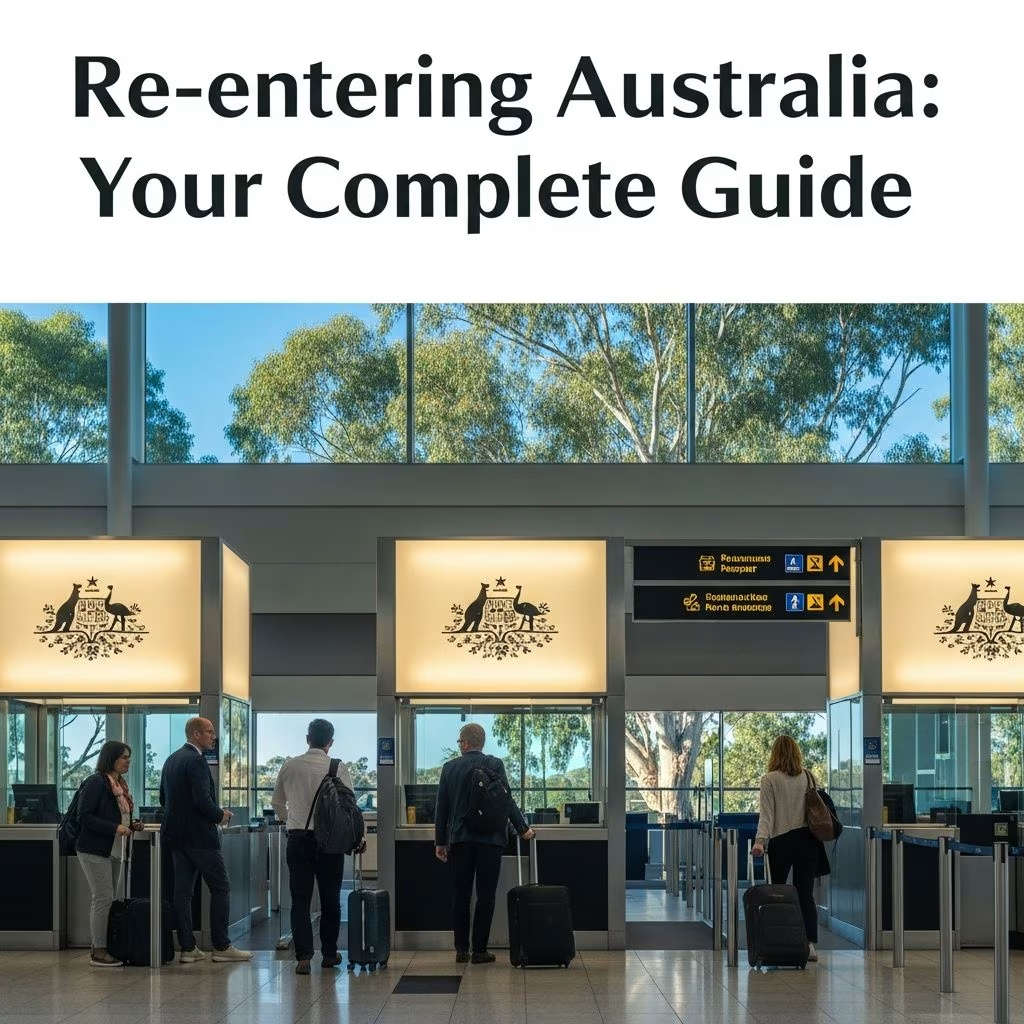
Navigate re-entry to Australia with expert advice on visas, biosecurity, quarantine rules, transportation, and top destinations for returnees.
 Travel Essentials
Australia’s vast landscapes, vibrant cities, and unique wildlife draw millions back home or for repeat visits each year. Whether you’re an Australian citizen, permanent resident, or international traveler with ties Down Under, re-entering the country requires careful preparation to avoid delays at the border. This guide covers everything from visa essentials and health protocols to practical travel logistics and inspiring itineraries for your return.
Secure entry starts with the right documents. Australian citizens must present a valid Australian passport upon arrival, as other travel documents are not accepted for entry or exit. Permanent residents and visa holders need to verify their visa status remains active, including checking expiry dates and any attached conditions before departure.
For short-term visitors from eligible countries like the US, an Electronic Travel Authority (ETA) suffices for stays under 90 days, obtainable via app or airline.
Visa policies form the backbone of Australia’s border controls. Citizens face no visa hurdles but must adhere to passport rules. Visa holders, including expats returning after overseas stints, should monitor conditions like work restrictions or multiple-entry permissions.
| Traveler Type | Required Document | Key Notes |
|---|---|---|
| Australian Citizen | Australian Passport | Must be valid on entry day; no visa needed. |
| Permanent Resident | Valid Resident Visa | Check expiry; renew if necessary via Home Affairs. |
| Tourist (e.g., US Citizen) | ETA or Visitor Visa | ETA for <90 days; apply online or through airline. |
| Expats Returning | Existing Visa | Update status; prepare for residency proofs if questioned. |
Expats often overlook banking and superannuation updates upon return, which can impact financial re-integration.
Australia maintains stringent biosecurity to protect its ecosystems. Declare all food, plant materials, and animal products on your Incoming Passenger Card. High-risk items like fresh fruits, meats, or unclean gear may be confiscated or incur fines up to AUD 420,000 for serious breaches.
Health-wise, while COVID-era mandates have eased, vaccination records for diseases like yellow fever (if from endemic areas) remain mandatory. Monitor SmartTraveller for updates on any resurgence risks.
Biosecurity inspections are thorough, with detector dogs and X-rays common. Goods over AUD 900 in value per adult require declaration for duties. Alcohol limits are 2.25L, tobacco 25 cigarettes or 25g.
Australian Border Force officers prioritize efficiency; honest declarations speed processes. For expats shipping belongings, use approved freight forwarders compliant with quarantine standards.
Major gateways include Sydney (SYD), Melbourne (MEL), Brisbane (BNE), and Perth (PER). From airports, options abound:
Internal travel is straightforward with Qantas, Virgin Australia, and budget Jetstar flights. Buses (Greyhound) and trains (Great Southern Rail) offer scenic routes.
Returning expats face unique challenges like reverse culture shock. Reconnect with Medicare for healthcare, update driver’s licenses within three months, and notify Centrelink for benefits.
Budget for higher living costs in cities; housing in Sydney or Melbourne remains premium. Refresh on slang like “arvo” for afternoon to ease social reintegration.
Maximize your return by exploring:
For 2-week trips, focus on one region; 3+ weeks allow multi-state adventures.
| Trip Duration | Suggested Itinerary | Highlights |
|---|---|---|
| 1 Week | Sydney + Blue Mountains | City vibes, bushwalks, wildlife spotting. |
| 2 Weeks | Perth to Margaret River | Beaches, forests, wine tasting. |
| 3 Weeks | NSW + NT + QLD | Outback, Reef, coastal drives. |
No, but a valid Australian passport is mandatory.
Apply for a new one before attempting re-entry; contact Department of Home Affairs.
Limited cooked items only; declare everything to avoid fines.
Yes, with ramps, low-floor buses, and priority seating widely available.
International license valid 3 months; convert for longer stays.
Double-check documents 48 hours pre-flight. Download the myGov app for visa and service updates. Pack light, respecting baggage rules, and embrace the thrill of returning to Australia’s sun-soaked shores.
