

 Travel Essentials
 Travel Essentials

Discover the Rhine River's rich history, medieval castles, and cultural landmarks through immersive river cruising experiences tailored to modern travelers.
 Travel Essentials
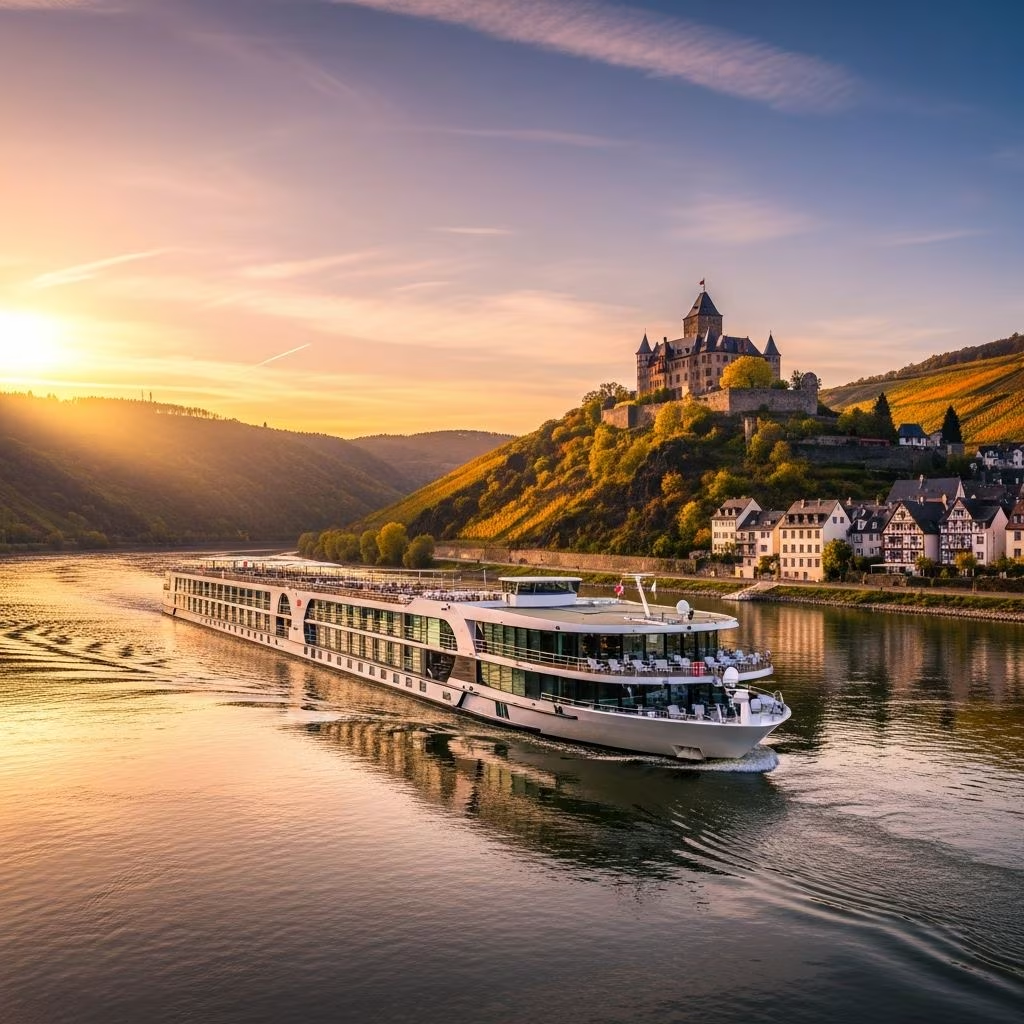
The Rhine River stands as one of Europe’s most captivating natural and cultural landmarks, flowing through regions steeped in history, artistic expression, and architectural splendor. Spanning nearly 800 miles from the Alpine peaks of Switzerland to the coastal plains of the Netherlands, this waterway traverses six distinct countries, each contributing unique cultural layers to the river’s identity. For travelers seeking an intimate connection with Europe’s past and present, river-based exploration offers an unparalleled perspective that traditional land-based tourism cannot replicate.
Modern river cruising has transformed how visitors engage with this historic corridor. Rather than rushing through multiple destinations on a compressed schedule, contemporary cruise operators have reimagined the travel experience to emphasize quality, personalization, and authentic cultural immersion. Vessels designed for smaller passenger loads navigate the river’s varied waterways with graceful efficiency, allowing travelers to access both major cultural centers and hidden villages that larger ships cannot accommodate.
The Rhine River originates in the Swiss Alps and traces a northwestern path through Central and Western Europe, touching Switzerland, Liechtenstein, Austria, Germany, France, and the Netherlands before emptying into the North Sea. This geographic positioning made the river a crucial trade route, defensive boundary, and cultural crossroads throughout recorded history. During the Holy Roman Empire, the Rhine represented far more than a simple waterway—it served as the backbone of political authority, economic power, and cultural exchange.
The river’s strategic importance remains evident in the architectural heritage visible from its banks. Medieval fortifications dot the landscape at regular intervals, reflecting centuries of territorial disputes, trade disputes, and power consolidations. Towns and cities developed at crucial fording points or where tributaries provided additional commercial advantages, creating a linear chain of urban centers that collectively narrate Europe’s transformation from feudalism through industrialization to modernity.
A journey along the Rhine provides an exceptional framework for understanding European diversity and interconnection. Rather than treating each country as a separate destination, river cruising reveals how neighboring nations share cultural characteristics while maintaining distinct identities. The linguistic transitions alone—from German to French to Dutch—underscore the region’s cultural complexity within a geographic span that can be traversed in less than two weeks.
Port cities along the Rhine have evolved into sophisticated cultural hubs. Basel, Switzerland’s third-largest city, showcases medieval architecture anchored by its iconic Basel Minster with distinctive red sandstone construction. Nearby Strasbourg, perched on the French-German border, physically embodies the region’s bicultural heritage, with architectural and culinary traditions reflecting both French and Germanic influences. Cologne’s Gothic cathedral represents centuries of religious significance and artistic achievement, while Amsterdam’s canal system demonstrates ingenious approaches to urban development within challenging geographical constraints.
Each destination offers travelers opportunities to engage with local communities, sample regional cuisines, explore artistic traditions, and understand contemporary life in these historic settings. Rather than treating culture as museum exhibits, contemporary travel emphasizes living engagement with communities, their traditions, and their modern aspirations.
The most visually dramatic section of the Rhine extends through the Gorge region, a UNESCO World Heritage Site spanning approximately 67 kilometers and featuring over 40 medieval fortifications perched on dramatic cliff formations. The geological story embedded in these landscapes reveals how tectonic and erosional forces created the river’s current path. Towering cliffs rise approximately 400 feet above the water surface, creating a landscape that inspired centuries of artistic, literary, and musical responses.
The legendary Rock of the Lorelei represents one of the river’s most famous natural formations and has inspired Germanic folklore for generations. According to local mythology, a siren maiden enchanted sailors with her haunting songs, luring vessels to destruction on the rocks below. This legend has inspired musical compositions, literary works, and remains a focal point for understanding how natural landscapes become interwoven with cultural narratives.
Beyond the mythological associations, the Gorge showcases vineyards cascading down steep hillsides, demonstrating centuries of agricultural adaptation to challenging terrain. The wine production in this region represents not merely an economic activity but a cultural expression deeply embedded in local identity and culinary traditions. Spring and autumn season transformations reveal different facets of this landscape—from the explosive bloom of flowering fruit trees to the golden harvest preparations.
The Rhine Valley’s architectural inventory spans numerous historical periods and styles, each reflecting the era and culture of its construction. Medieval castles perch strategically on cliff peaks, their placement revealing sophisticated understanding of defensive positioning and territorial control. Many of these fortifications date to the period of the Holy Roman Empire, when the region fragmented into numerous competing principalities and ecclesiastical territories.
Romanesque cathedral architecture dominates urban skylines throughout the region, with cities like Mainz showcasing ecclesiastical power through monumental religious structures. The evolution toward Gothic architectural principles appears in cathedrals and churches throughout the journey, representing shifting aesthetic values and technological innovations in construction methods. Renaissance and Baroque elements appear in civic buildings and residences, particularly in larger cities that accumulated wealth through trade.
Contemporary architecture exists alongside historical structures without erasing or diminishing the older buildings. This layering of temporal periods creates visual narratives about European continuity and adaptation. Rather than segregating historic centers from modern urban development, these communities demonstrate ongoing vitalization and cultural evolution.
The Rhine Valley represents one of Europe’s significant wine-producing regions, with viticulture traditions extending back to Roman times. The terraced vineyards clinging to steep hillsides produce distinctive white wines, particularly Rieslings, that have developed international reputations. Wine cultivation shaped regional economies, settlement patterns, and cultural traditions throughout the centuries.
Local cuisines reflect both the agricultural products of the surrounding hinterland and the historical influences of various occupying powers and trading partners. Game, fish, fresh produce, and dairy products feature prominently in traditional preparations. The intersection of German, French, and Dutch culinary traditions creates opportunities for travelers to sample diverse preparations and flavor profiles within a confined geographic area.
Contemporary river cruises often incorporate wine tastings, visits to local producers, and meals featuring regional specialties. These culinary experiences extend beyond mere consumption to encompass education about production methods, regional geography’s influence on flavor characteristics, and cultural significance of traditional dishes.
Cities along the Rhine maintain exceptional museum collections documenting regional history, artistic traditions, and cultural heritage. Mainz, recognized as the birthplace of the printing press through Johannes Gutenberg’s innovations, houses dedicated museums exploring this revolutionary technology’s impact on information distribution and cultural development. These institutions provide context for understanding how technological innovations originated in specific geographic locations before spreading throughout Europe.
Archaeological museums throughout the region contain artifacts from Roman occupation periods, medieval kingdoms, and pre-Christian societies. These collections offer tangible connections to populations and cultures that shaped the region’s development trajectory. Rather than presenting history as an abstract narrative, museum displays ground historical understanding in concrete objects, architectural fragments, and artistic expressions.
Modern river cruise operators have recognized that larger passenger volumes necessarily compromise the travel experience through overcrowding, rushed itineraries, and impersonal service. Vessels carrying limited passenger capacity—typically up to 150 guests—enable several operational advantages. Smaller ships access secondary ports and narrower river channels unavailable to massive ocean-going vessels. This accessibility permits discovery of smaller towns and villages that retain authentic local character without the commercial overlay that massive tourism creates.
The reduction in passenger numbers allows crew members to develop familiarity with individual guests, enabling service tailored to specific interests and preferences. Rather than generic group activities, smaller operations can accommodate diverse interests through flexible scheduling and customizable shore excursions. This personalization extends to dining arrangements, entertainment programming, and onboard activities.
Vessels themselves have undergone design innovations reflecting contemporary expectations. Panoramic suites with expansive windows enable guests to observe changing landscapes without leaving their cabins. Modern amenities—from advanced climate control to contemporary entertainment systems—provide comfort without sacrificing the authentic riverside experience. Sustainability considerations have influenced vessel design and operational procedures, from fuel efficiency to waste management systems.
The Rhine experience transforms seasonally, with each period offering distinct atmospheric qualities and visual characteristics. Spring brings vibrant flowering displays, with fruit tree blossoms cascading down hillsides and tulips creating spectacular floral arrangements throughout the Netherlands. Summer provides warm weather, extended daylight hours, and lively street festivals in riverside communities. Autumn reveals golden vineyards under harvest conditions and increasingly dramatic atmospheric lighting. Winter transforms the landscape into quieter contemplation, with frosted landscapes and holiday celebrations adding festive atmosphere.
Water levels fluctuate seasonally, affecting navigation capabilities and the accessibility of certain routes. Spring snowmelt from Alpine regions raises water levels, potentially affecting which secondary channels remain navigable. Cruise operators coordinate scheduling to maximize accessibility while accounting for these natural variations.
Contemporary river cruise programming acknowledges diverse physical capabilities and interest profiles among passengers. Excursion categories typically include active options for travelers seeking physical engagement—cycling routes, hiking opportunities, and water-based activities. Discovery excursions balance moderate activity with educational content, ideal for travelers interested in cultural immersion without intense physical demands. Classic options emphasize comfort and ease of access while providing cultural and historical information.
This framework enables individual travelers within the same cruise to pursue entirely different daily activities while sharing evening reunification and communal experiences. Families with varied age ranges and physical capabilities can satisfy diverse preferences without forcing compromises. Travelers with specific interests—wine appreciation, architectural history, artistic traditions—can concentrate their limited time on activities aligned with personal passions.
Effective river cruising requires minimal advance logistical complexity compared to multi-city land-based travel. Accommodations, meals, and transportation between destinations remain coordinated through a single operator. This consolidation eliminates numerous sources of confusion and requires fewer independent decisions. Baggage handling occurs once, as the vessel serves as your consistently available home base.
Documentation requirements involve standard European travel protocols, with considerations for national border crossings. Most contemporary cruises employ professional guides with multilingual capabilities, enabling communication and interpretation of cultural and historical information regardless of your linguistic background.
Packing for river cruising involves moderate luggage—comfortable walking shoes for shore activities, weather-appropriate clothing reflecting seasonal conditions, and personal preferences regarding formality for evening meals. Most vessels provide laundry facilities, eliminating the necessity of extensive wardrobe quantities.
Modern river cruise operators increasingly emphasize environmental stewardship, recognizing their responsibility as visitors to sensitive riparian ecosystems. Sustainable vessel design prioritizes fuel efficiency, waste management, and minimal water pollution. These operational practices protect the river environment while modeling responsible tourism for guests who increasingly expect environmental accountability from travel providers.
Educational programming frequently includes environmental interpretation, explaining ecosystem functions, conservation challenges, and local conservation initiatives. Rather than presenting nature as scenery for passive observation, sustainability-focused operators contextualize natural systems as living, dynamic environments requiring protection and thoughtful management.
Most Rhine River itineraries span 7-10 days, permitting comprehensive regional exploration while accommodating vacation scheduling constraints. Extended itineraries may combine the Rhine with connected waterways like the Moselle or Seine, creating 12-14 day comprehensive European experiences.
River cruising accommodates diverse physical abilities. The programmed excursion options enable selection of activities matching individual capabilities. Vessels themselves involve minimal physical exertion—accommodations remain accessible via ship elevators, and deck areas provide seating for passive observation of scenery.
English-language interpretation is standard on international cruises. German, French, and Dutch appear throughout the region. Professional guides provide translation and cultural explanation, eliminating necessity for individual language fluency.
River cruises consolidate transportation, accommodations, meals, and guided activities into single per-diem costs. While upfront pricing appears substantial, comprehensive accounting often reveals equivalent or reduced total costs compared to independent multi-city travel requiring separate hotel reservations, restaurant selections, and individual activity bookings.
