

 Travel Essentials
 Travel Essentials

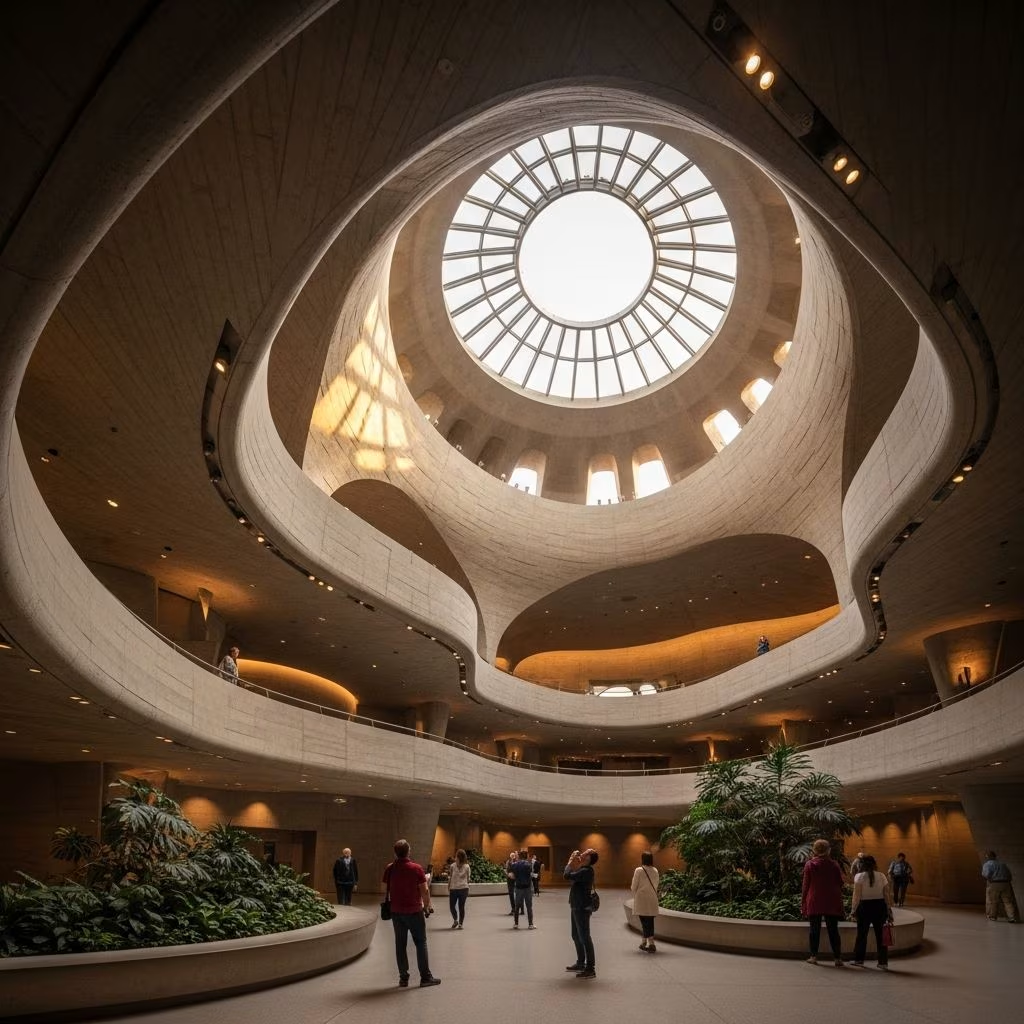
Explore the innovative architecture, immersive exhibits, and educational hubs of the Gilder Center, enhancing visitor access and inspiring awe in natural wonders.
 Travel Essentials
The Richard Gilder Center for Science, Education, and Innovation represents a transformative addition to the American Museum of Natural History (AMNH) in New York City. Opened in 2023 after nearly a decade of planning and construction, this 230,000-square-foot expansion reimagines how visitors engage with science, blending cutting-edge architecture with interactive exhibits to foster curiosity and discovery.
At the core of the Gilder Center lies its iconic atrium, a multi-story space evoking the dramatic forms of slot canyons sculpted by wind and water. Designed by Chicago-based Studio Gang led by Jeanne Gang, the structure features undulating walls that rise to tapered skylights, flooding the interior with natural light and creating a sense of awe akin to standing in a Paleolithic cave. This ‘inside-out’ design philosophy prioritizes visitor flow, replacing the museum’s historical dead ends with over 33 new access points across ten buildings.
The $465 million project, announced in 2014, faced legal hurdles over neighboring school preservation but prevailed in court, resuming construction to deliver a fully accessible Columbus Avenue entrance and seamless east-west connections. Unlike traditional museum additions, the Gilder Center integrates back-of-house functions like research into public view, demystifying scientific processes for all ages.
The Gilder Center houses groundbreaking galleries that immerse visitors in the natural world. Key highlights include:
These spaces branch off the central atrium via bridges and cave-like openings, encouraging organic exploration and connecting to the broader AMNH collection.
Beyond exhibitions, the center emphasizes learning with 18 new classrooms, a library, and research facilities now visible to the public. This setup supports STEM programs for diverse groups, from schoolchildren to lifelong learners, aligning with AMNH’s mission to improve science literacy. Museum leaders, including former president Ellen Futter, highlight its role in promoting interdependence of life and planetary stewardship.
The design resolves longstanding circulation issues in the 154-year-old museum, a sprawling complex built piecemeal over 150 years. New loops and hubs make navigation intuitive, while practical enhancements like improved artifact loading streamline operations.
Access to the Gilder Center is included with general AMNH admission, but premium exhibits like the Butterfly Vivarium and Invisible Worlds require additional tickets. Located on Manhattan’s Upper West Side near Central Park, the museum is easily reachable by subway (B or C lines to 81st Street-Museum of Natural History).
| Exhibit | Access | Highlights |
|---|---|---|
| Atrium | Included | Canyon-like architecture, bridges |
| Butterfly Vivarium | Extra ticket | Live butterflies, tropical plants |
| Insectarium | Included | Live insects, interactive displays |
| Invisible Worlds | Extra ticket | 360° immersive projections |
Visitors report the center as a ‘must-see’ for 2023-2026 NYC trips, with families praising its kid-friendly awe factor. Allow 2-3 hours to fully explore, combining it with classic AMNH gems like the dinosaur halls.
In an era of declining STEM interest, the Gilder Center stands as a beacon. By making abstract concepts tangible—through live specimens, immersive tech, and open research—it invites questions about biodiversity, evolution, and conservation. Studio Gang’s nature-mimicking forms subconsciously evoke geological timescales, priming minds for scientific wonder.
Critics note its geomorphic aesthetic occasionally overwhelms, but most laud its functionality and inspiration. As AMNH evolves, this wing positions it as a global leader in experiential learning.
The Gilder Center enhances NYC’s museum scene, complementing institutions like the Met while focusing on interactive science. Its opening coincides with AMNH’s ongoing expansions, solidifying the Upper West Side as a cultural hub. Tourists and locals alike benefit from improved accessibility, with wheelchair-friendly paths and multilingual resources.
Economically, it boosts tourism; videos and reviews highlight it as a top attraction, drawing international crowds. Environmentally conscious design, including energy-efficient skylights, aligns with sustainability goals.
Yes, it follows AMNH hours: typically 10 AM-5:30 PM, closed Thanksgiving, Christmas, and some holidays. Check the official site for updates.
General admission (including Gilder Center core): $28 adults, $16 kids (pay-what-you-wish for NY residents). Vivarium/Invisible Worlds: ~$10 extra.
Absolutely—designed for all ages, with hands-on elements captivating children.
Yes, in most areas; no flash in live exhibits.
Weekdays early morning to avoid crowds; weekends busier but vibrant.
Simultaneously, other museums like LA’s Natural History Museum unveil NHM Commons in 2024, adding community-focused galleries—a $75M nod to inclusive design. This trend underscores science institutions prioritizing engagement over static displays.
