

 Travel Essentials
 Travel Essentials

Explore the extraordinary tale of Richard III's skeleton found under a parking lot, his dignified reburial, and how his tomb is now accessible to the public at Leicester Cathedral.
 Travel Essentials
The remains of King Richard III, the last Plantagenet monarch killed in battle at Bosworth Field in 1485, were discovered in 2012 beneath a Leicester car park. After rigorous scientific analysis, they were reburied with full honors at Leicester Cathedral on March 26, 2015, and the site is now open to the public, offering a profound connection to medieval English history.
In August 2012, archaeologists from the University of Leicester unearthed a skeleton in the former Greyfriars Friary site, now a council car park. The remains showed severe scoliosis, battle wounds to the skull, and no feet—consistent with legends of Richard III’s hasty burial after his defeat. Ground-penetrating radar and map regression pinpointed the location, overturning myths that his body was thrown into the River Soar.
The dig, led by Philippa Langley of the Richard III Society and archaeologist Richard Buckley, confirmed the friary’s church layout. The grave was shallow and misaligned, with the head propped awkwardly, indicating a rushed interment without coffin.
DNA testing matched the skeleton to Canadian descendants of Richard’s sister, Anne of York, via mitochondrial DNA. Radiocarbon dating placed death between 1450-1540, and strontium isotope analysis in teeth confirmed Leicester upbringing. Osteological exams verified a warrior’s life: athletic build, but severe spinal curvature.
Independent experts, including archaeologist Mike Pitts, endorsed the findings: “I don’t think there is any question. It is Richard III.” This multidisciplinary approach silenced skeptics and paved the way for reburial planning.
Before reinterment, the remains followed Richard’s last route: from University of Leicester labs, through Bosworth Battlefield, Dadlington, Sutton Cheney, and Market Bosworth. On March 22, 2015, bones were sealed in a lead ossuary within an oak coffin crafted by John Watts.
The procession drew thousands, symbolizing national reconciliation with the maligned king, famously vilified by Shakespeare as a hunchbacked tyrant.
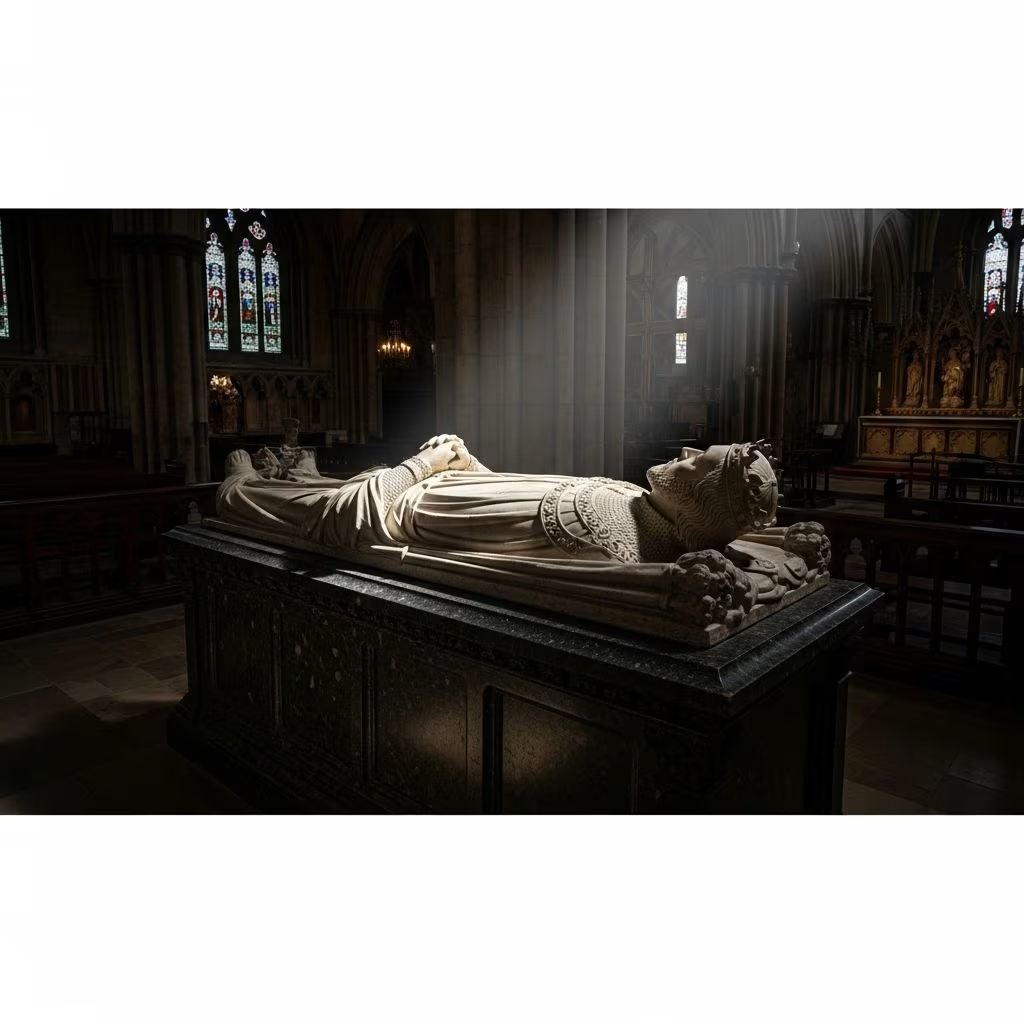
The March 26, 2015, service at Leicester Cathedral featured the Archbishop of Canterbury, interfaith leaders, and descendants. Composer Judith Weir’s Like as the Hart premiered, blending solemnity with celebration. On March 27, the tomb—a carved Swaledale fossil stone sarcophagus topped with alabaster effigy—was unveiled in a public “Service of Reveal.”
Leicester Cathedral transformed: the tomb sits in the Lady Chapel, with a dedicated Richard III Chapel nearby. Daily services and exhibitions enhance the spiritual ambiance.
| Key Reburial Timeline | Date | Event |
|---|---|---|
| Skeleton Sealed | March 22, 2015 | Lead-lined ossuary in wooden coffin |
| Procession | March 22-26, 2015 | Retracing Bosworth route |
| Main Service | March 26, 2015 | Interment with clergy and royals |
| Public Unveiling | March 27, 2015 | Tomb reveal and city celebrations |
Richard III’s tomb is fully accessible at Leicester Cathedral (admission free; donations welcome). Visitors enter via the north transept, viewing the tomb through a vigil light-lit space. The alabaster effigy shows the king crowned, hands in prayer, with York white rose and boar emblems.
Quiet reflection prevails; photography is permitted without flash. Special tours delve into Plantagenet history.
Adjacent to the discovery site, this £4.5 million center (adult £9.99) immerses visitors in Richard’s life. Exhibits cover his reign, death, myths, and rediscovery with interactive timelines, replicas, and artifacts like dig leader Mathew Morris’s hard hat.
Sections include:
Annual events like reenactments draw crowds, boosting Leicester’s tourism by millions.
Legends claimed Henry VII tossed Richard’s body off Bow Bridge—disproven by articulated skeleton and 1494 records of a royal tomb at Greyfriars. John Speed’s 1610 map errors fueled confusion, but archival evidence by Mary Ann Greenwood pinpointed the site.
Richard’s reputation, scarred by Tudor propaganda, is reevaluated: praised for northern laws, child welfare laws, yet accused of nephew murders (Princes in the Tower).
The project united Leicester City Council, University of Leicester, and Richard III Society, creating heritage hubs. Visitor numbers surged: Cathedral sees 400,000+ annually; Centre, 100,000+. It humanizes history, showing scoliosis didn’t preclude kingship.
Descendants like Canadian Michael Ibsen attended reburial, closing a family circle. Globally, it inspires archaeology, proving parking lots hide treasures.
Yes, it’s open daily to the public at Leicester Cathedral with no entry fee.
Beneath a social services car park on Greyfriars site, now partly the Visitor Centre.
DNA, dating, and osteology provide overwhelming evidence; experts concur.
527 years, from 1485 burial to 2012 discovery.
Highly rated for interactive exhibits; combine with Cathedral for full experience.
Start at the Visitor Centre for context, walk to the Cathedral (5 minutes), then Bosworth Battlefield (20 miles). Book tickets online; peak summer queues form. Leicester’s canals, markets add charm.
