

 Travel Essentials
 Travel Essentials

A comprehensive guide to experiencing Riga's architectural wonders, historic landmarks, and local markets on a budget-conscious traveler's itinerary.
 Travel Essentials
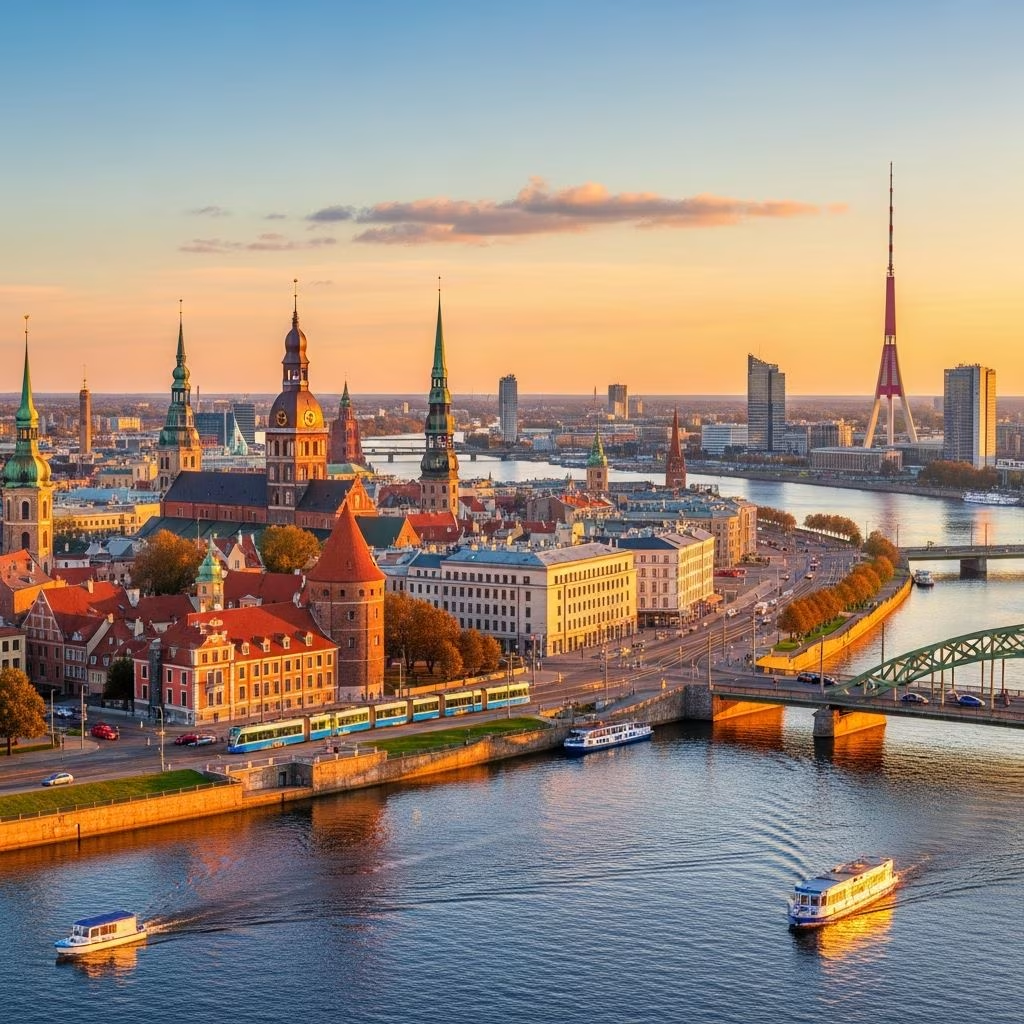
Riga, the capital of Latvia, stands as one of Europe’s most compelling destinations for travelers seeking authentic cultural experiences at reasonable prices. This Baltic gem combines centuries of architectural heritage with a vibrant contemporary scene, making it an ideal choice for budget-conscious explorers who refuse to compromise on the quality of their travel experiences. The city’s compact size, walkable streets, and abundance of free attractions create the perfect environment for discovering European history without excessive expenditure.
The city’s most appealing characteristic for budget travelers is its highly walkable nature. The historic core occupies a relatively confined area, allowing visitors to navigate between major attractions on foot. This geographical advantage eliminates the need for expensive transportation systems while encouraging spontaneous discoveries around every corner. The narrow, winding streets of the Old Town create an immersive experience that cannot be replicated through vehicular tours, transforming a budget necessity into an authentic advantage.
Riga’s layout reflects its complex history. Multiple rulers—German merchants, Swedish kings, and Russian emperors—each left their architectural fingerprints throughout the cityscape. This layered history means that a simple stroll through the streets serves as an open-air museum, with buildings representing Romanesque, Gothic, Baroque, and Art Nouveau styles existing side by side.
The heart of Riga’s tourist appeal lies in its Old Town, a UNESCO World Heritage site that requires no admission fee to explore. This densely packed medieval quarter features cobblestone pedestrian pathways that wind between historic structures, each with stories spanning multiple centuries. The very act of wandering these streets constitutes a primary attraction, as the architecture itself conveys the region’s turbulent and fascinating past.
Several landmark buildings immediately capture attention within this district. The House of the Blackheads, with its ornate facade, serves as Riga’s most photographed structure and can be admired from the street without cost. The Three Brothers represent the city’s oldest medieval residences, with the oldest dating to the 15th century, providing tangible evidence of the district’s ancient origins.
The Cat House presents an intriguing piece of local folklore. According to legend, the building’s original owner created an angry cat sculpture atop the structure to mock members of the nearby Guild Hall who had rejected him for membership. This act of spite transformed into a beloved symbol, inspiring countless cat-themed souvenirs throughout the district.
Riga’s religious buildings represent exceptional examples of medieval and Renaissance design, with several offering free entry to visitors. Riga Cathedral, the largest medieval structure in Latvia, welcomes explorers at no charge and showcases 13th-century craftsmanship alongside stunning stained-glass windows and one of Europe’s most valuable church organs.
Saint John’s Lutheran Church, recognized as Latvia’s oldest active place of worship, features distinctive High Gothic architecture with intricate rib vaulting. The interior’s austere beauty reflects Nordic Protestant traditions while maintaining exceptional historical authenticity. Entry remains completely free, making it an essential addition to any cultural itinerary.
Beyond these major churches, the Nativity of Christ Orthodox Cathedral contributes its distinctive golden domes to the skyline, visible from numerous vantage points throughout the city. The cathedral’s Byzantine-influenced architecture provides stark contrast to the Western European styles dominating the Old Town, visually representing Riga’s multicultural heritage.
Travelers seeking outdoor respite will discover multiple parks within comfortable walking distance of the city center. The Esplanade provides a tree-lined corridor that separates the Old Town from the Art Nouveau district, offering peaceful walking paths and recreational space. Vermanes Garden nearby supplies additional green refuge with well-maintained pathways and historical significance.
The Freedom Monument, located in a central plaza within Kronvalda Park, celebrates Latvia’s independence and stands as a powerful symbol recognized across the nation. The surrounding park area accommodates free exploration, and the monument itself can be appreciated without entrance fees. Nearby stands the Laima Clock, a retro advertising structure for a traditional Latvian chocolate company, adding nostalgic charm to the park experience.
Beyond the medieval Old Town lies an entirely different architectural treasure: the Art Nouveau quarter, featuring one of Europe’s most extensive concentrations of Jugendstil buildings. Alberta Street represents the district’s crown jewel, with magnificent buildings displaying the ornate decorative principles that defined early 20th-century modernism. Strolling these streets costs nothing while providing exposure to architectural movements far removed from medieval aesthetics.
The contrast between Old Town’s medieval character and the Art Nouveau district’s contemporary styling illustrates how Riga’s urban landscape evolved through different historical periods. This architectural variety within walking distance creates a comprehensive historical survey spanning several centuries of design philosophy.
Riga Central Market represents a unique shopping and cultural experience that demands several hours of exploration. Located in five former Zeppelin hangars dating to 1930, the market accommodates approximately 3,000 stalls and welcomes between 80,000 and 100,000 visitors daily. These repurposed military structures provide visible reminders of early 20th-century industrial history while serving contemporary commercial purposes.
The market pavilions display everything from fresh produce and locally caught fish to traditional dairy products, baked goods, and regional honey. Beyond food items, vendors offer handmade crafts, souvenirs, and household products at prices substantially lower than tourist-oriented shops. Browsing alongside local residents provides authentic glimpses into daily Latvian life and consumption patterns.
Market exploration serves multiple budget-travel purposes simultaneously. The experience functions as cultural observation, shopping opportunity, meal procurement, and entertainment—all within a single location. The sheer scale of the market means that spending a full morning or afternoon wandering pavilions costs nothing while yielding both practical purchases and memorable experiences.
While many attractions remain free, several modestly-priced options offer compelling experiences for budget travelers. The Powder Tower provides historical context about Riga’s medieval fortifications and houses the Latvian War Museum, with entry fees around 6-10 EUR depending on desired access levels.
Saint Peter’s Church offers a budget-conscious choice at approximately 3 EUR for basic entry, though climbing to the belfry platform for panoramic city views costs additional euros. The cathedral’s interior contains fascinating Gothic and Romanesque elements worth examining even at ground level.
The Three Brothers buildings, though best appreciated from exterior photography, contribute to the free walking experience through their prominent positioning along a major street.
Several organizations operate free walking tours throughout the Old Town, with visitors encouraged to tip guides at tours’ conclusion. FreeTours Riga and Riga Free Tours both offer daily departures at convenient times, providing structured introductions to major sites and historical context. These tours operate on tip-based models, allowing participation even for travelers with limited budgets.
An efficient Riga visit balances planned sightseeing with spontaneous exploration. Beginning in the Old Town allows progressive discovery of medieval architecture while naturally gravitating toward the Art Nouveau district and eventually reaching the Central Market. This natural geographic flow minimizes backtracking and maximizes the immersive walking experience.
Schedule morning hours for the Central Market to experience peak activity and ensure item availability. Afternoon hours work well for church visits and district exploration, while evenings suit extended walks through different neighborhoods and observation of the city’s vibrant nightlife scene from a budget perspective—many bars and cafes in the Old Town area offer affordable local beer and traditional snacks.
Most major attractions lie within the central walking radius, making Riga one of Europe’s most pedestrian-friendly capitals. For journeys beyond the immediate center, the public transportation system offers affordable options. Local buses and trolleys operate at minimal cost, though the core experience requires no paid transport whatsoever.
The transition from expensive tourist restaurants to affordable local establishments involves venturing slightly away from the most heavily trafficked streets. The Central Market provides the ultimate budget dining opportunity, with fresh produce, prepared foods, and street vendors offering excellent value. Traditional Latvian restaurants positioned on side streets rather than main squares typically maintain lower price points while serving authentic cuisine that reflects regional culinary traditions.
Riga experiences significant seasonal tourism fluctuations. Summer months attract the highest visitor concentrations and peak prices, while shoulder seasons (spring and early autumn) offer a balance between pleasant weather and lower accommodation costs. Winter visits provide exceptional value with minimal competition for services, though shorter daylight hours and cold weather require appropriate preparation.
The most distinctive Riga experiences often occur through chance encounters rather than planned itineraries. Discovering a hidden courtyard off a side street, observing local residents in neighborhood cafes, or stumbling upon small galleries tucked between historic buildings creates authentic travel memories without expenditure. The city’s compact size and pedestrian orientation encourage exactly this kind of unstructured exploration.
Riga’s status as an underrated European destination means fewer crowds than comparable historic capitals, providing breathing room for genuine cultural immersion. Budget travelers receive an unexpected advantage: the absence of excessive commercialization that plagues more famous destinations.
Riga stands as an exceptional destination for travelers combining limited budgets with desires for authentic cultural experiences. The city’s walkable layout, abundance of free attractions, and reasonable prices for paid experiences create ideal conditions for economical exploration. UNESCO World Heritage status ensures architectural and historical significance without requiring expensive guided experiences. The Central Market provides both practical shopping and cultural observation opportunities, while the contrast between medieval Old Town and Art Nouveau architecture offers comprehensive surveys of European design evolution.
Successful Riga budget travel depends less on access to exclusive attractions and more on embracing the city’s organic character through street-level exploration and authentic local interactions. This approach transforms budgetary constraints into methodological advantages, encouraging the spontaneous discoveries and genuine cultural engagement that distinguish memorable travel from conventional tourism.
