

Food & Culture Stays Travel Essentials Travel Guides Trip Ideas
Categories
From the Blog
Remy’s Ratatouille Adventure at EPCOT: Ride Review, Tips & 2D Update
Travel Essentials

Riga Travel Guide: Top Attractions, Old Town & Art Nouveau

Comprehensive travel guide to Riga, Latvia's captivating capital, featuring historic landmarks, architectural treasures, museums, and practical visitor information.
Travel Essentials

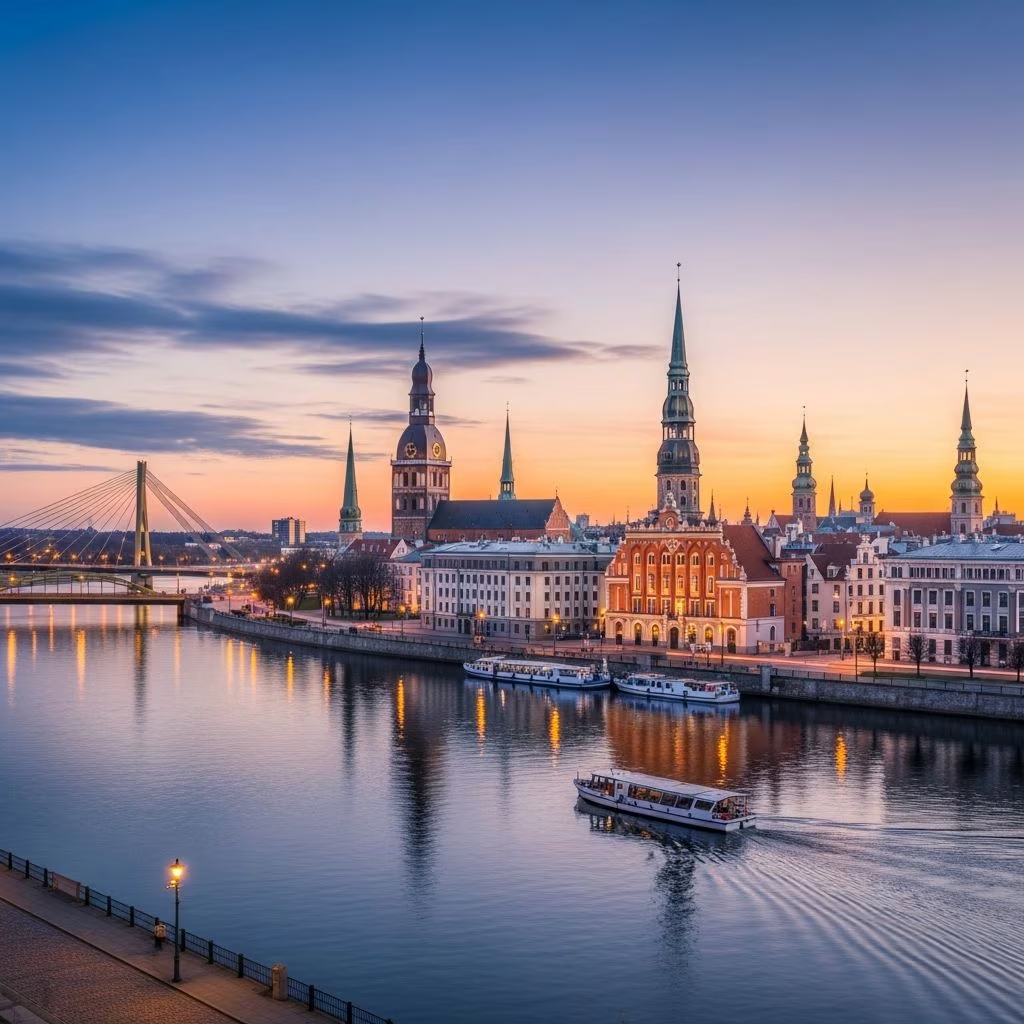
Latvia’s capital city presents a compelling destination for travelers seeking a blend of historical significance, architectural innovation, and contemporary cultural vibrancy. Nestled along the Daugava River in Northern Europe, Riga serves as a gateway to Baltic heritage while maintaining a distinctly modern character. Whether planning a brief weekend escape or an extended exploration, visitors discover a city that rewards both structured sightseeing and spontaneous wandering through its distinctive neighborhoods.

Understanding Riga’s Geographic and Historical Context

Riga functions as the primary urban center of Latvia, a Baltic nation with a complex historical trajectory spanning medieval commerce, imperial occupation, and modern independence. The city’s location along the Daugava River facilitated its development as a significant trading hub during the medieval period, influencing its architectural heritage and economic importance. This strategic positioning continues to define the city’s character, with waterfront areas offering contemporary recreation alongside historical significance.

The city’s evolution reflects broader European transitions, with distinct architectural layers representing different eras of development and cultural influence. Understanding this historical context enriches visitor experiences, as each neighborhood and building communicates narratives of resilience, cultural identity, and artistic achievement.

The Historic Core: Medieval Splendor and Architectural Icons

Riga’s Old Town (Vecrīga) represents the city’s historical foundation, encompassing narrow cobblestone streets, merchant houses, and religious structures dating from the medieval period through subsequent centuries. This UNESCO World Heritage Site concentrates most of the city’s iconic attractions within a compact, pedestrian-friendly area suitable for exploratory walking.

The architectural character of Old Town reflects diverse influences and construction periods. Gothic elements stand adjacent to Renaissance details and baroque flourishes, creating visual richness that rewards careful observation. The streetscape maintains authenticity through preservation efforts and restrictions on modern commercial signage, allowing visitors to experience the historic environment largely as medieval inhabitants encountered it.

Architectural Landmarks Within the Historic District

Several structures within Old Town command particular attention:

  • House of the Blackheads – This striking merchant residence from the 14th century features distinctive white decorative elements and intricate architectural detailing. The building’s historical significance derives from its association with a prominent merchant guild, and its restored façade now serves as one of Riga’s most photographed monuments.
  • St. Peter’s Church – Originally constructed during the 13th century and rebuilt multiple times following damage and destruction, this gothic-style church dominates the Old Town skyline. An internal lift provides access to a 72-meter observation platform offering panoramic city views, with Baltic Sea visibility on clear days.
  • The Three Brothers – Representing the oldest surviving residential medieval buildings in Riga, this trio of structures showcases different architectural periods. The oldest building (positioned on the right) dates to approximately 1490, while the three collectively demonstrate evolving construction techniques and aesthetic preferences across centuries.
  • Riga Cathedral – Established in 1211, this cathedral occupies a central position within Old Town and features its own plaza. The structure’s scale and prominence reflect its historical importance as a religious and cultural center.
  • The Swedish Gate – Integrated into the surviving Old Town defensive walls, this historical entrance point offers both architectural and historical interest, representing the city’s medieval defensive infrastructure.

The Art Nouveau Revolution: Modern Artistic Expression

Beyond Old Town, Riga distinguishes itself through an extraordinary concentration of Art Nouveau (Jugendstil) architecture, with approximately one-third of city-center buildings constructed in this style. This architectural movement, flourishing during the early 20th century, reflects a specific historical period when Riga experienced significant expansion and economic growth.

The Art Nouveau district, positioned immediately north of Old Town, contains numerous grand residences and civic structures featuring characteristic design elements including ornamental façades, sculptural details, and elaborate decoration. Walking tours can highlight significant examples, though individual exploration along streets such as Alberta iela and Elisabetes iela allows personal discovery and observation of architectural variations within the broader movement.

The concentration of Art Nouveau architecture exceeds that of any other global city, making Riga a destination of particular interest for architecture enthusiasts and cultural historians. The stylistic coherence creates unified neighborhoods with distinctive character, contributing to the city’s overall aesthetic appeal.

Museums and Cultural Institutions

Riga’s museum offerings address diverse interests and historical perspectives:

  • Museum of the Occupation of Latvia – This institution documents Latvia’s complex 20th-century experience, addressing Soviet and Nazi occupations through exhibitions, artifacts, and educational materials. The museum provides essential context for understanding contemporary Latvian identity and historical consciousness.
  • Latvian National Museum of Art – This comprehensive institution houses Latvian artistic traditions across multiple genres and periods, offering insights into the nation’s creative heritage and contemporary art practices.
  • National Library of Latvia – Beyond its function as a repository of knowledge, this architectural landmark provides observation platforms featuring distinctive panoramic views of the city skyline and river landscape.
  • Riga Motor Museum – For enthusiasts of automotive history, this collection presents vintage vehicles including examples from Soviet-era leadership, offering an unconventional perspective on historical artifacts.

Markets, Commerce, and Culinary Discovery

Riga Central Market represents a singular shopping and cultural experience, housed within five repurposed German Zeppelin hangars from World War I. The facility accommodates approximately 3,000 market stands organized by product category, including fresh produce, dairy products, fish, meat, and regional delicacies such as smoked eel and pickled preparations. This concentration of vendors, products, and sensory experiences provides authentic engagement with local food culture and commercial traditions.

Beyond the central market, the Lastādija district and Āgenskalns market offer alternative commercial experiences with distinct character and local clientele. Flea markets and specialized vendors throughout the city serve different shopping interests and budgets.

Public Spaces and Outdoor Recreation

Riga’s green spaces and public areas provide respite from urban intensity:

  • Bastejkalna Park – This landscaped park along the canal provides peaceful settings for relaxation and observation of both natural and architectural elements.
  • Freedom Monument – This prominent civic sculpture symbolizes Latvian independence and national identity, serving as a gathering point and landmark throughout the city.
  • Canal Walks – Pedestrian paths along the water provide recreational routes with changing perspectives on the city’s architecture and natural environment.
  • Daugava River Recreation – Kayaking and boat tours offer alternative viewing angles and engagement with the waterfront landscape that shaped historical development.

Viewing Platforms and Panoramic Perspectives

Experiencing Riga from elevated vantage points provides distinctive appreciation of urban form and architectural relationships:

  • St. Peter’s Church observation tower offers extensive city views including Old Town church spires and river landscapes
  • The AB Dam viewing area captures the characteristic silhouette with church towers prominent against the skyline
  • National Library of Latvia provides modern vantage points with contemporary architectural framing
  • Alternative perspectives emerge from river-level viewpoints accessed via kayaking or boat tours

Neighborhoods Beyond the Historic Center

The Kalnciema Quarter contains concentrations of traditional wooden architecture, offering visual contrast to stone structures dominating central areas. The Lastādija district presents bohemian and artistic character with galleries, studios, and independent venues. These neighborhoods reward exploratory visits and provide deeper engagement with contemporary local culture beyond tourist-concentrated zones.

Planning Your Riga Experience

Time Allocation and Itinerary Frameworks

A weekend visit accommodates most major attractions with moderate pacing, allowing time for both directed sightseeing and spontaneous discovery. Extended stays enable deeper engagement with museums, neighborhood exploration, and day trip possibilities. A three-day framework typically permits Old Town exploration, Art Nouveau district walking, one or two museum visits, and restaurant experiences reflecting local cuisine.

Practical Navigation

Riga’s Old Town geography encourages walking-based exploration, with pedestrian pathways, relatively compact dimensions, and frequent landmark visibility facilitating independent navigation. Public transportation effectively connects outlying neighborhoods and museums. Rental bicycles provide alternative mobility suited to flat terrain and dedicated cycling infrastructure.

Seasonal Considerations

Riga experiences distinct seasonal variations affecting visitor experience. Summer months provide extended daylight, outdoor market activity, and festival programming. Winter transforms the city through snow and ice, affecting accessibility but creating atmospheric conditions suitable to particular aesthetics and holiday celebrations. Spring and autumn offer moderate temperatures and reduced crowds while maintaining most attractions’ operational status.

Frequently Asked Questions

What is the best way to explore Riga Old Town?
Walking represents the optimal approach for Old Town exploration, as pedestrian-only streets, narrow passages, and frequent landmarks reward gradual discovery. Self-directed wandering balances structured landmark visits with spontaneous discovery of architectural details, small cafes, and neighborhood character.
How much time should I allocate for museum visits?
Most visitors spend 2-3 hours at comprehensive museums. The Museum of the Occupation of Latvia merits 1.5-2 hours for meaningful engagement with exhibits. The Latvian National Museum of Art requires 2-3 hours depending on artistic interest levels.
Is the St. Peter’s Church observation tower worth the entrance fee?
At €9 per person, the tower provides distinctive panoramic views, particularly valuable on clear days when visibility extends to the Baltic Sea. For photography enthusiasts and landscape appreciation, the experience generally justifies the cost.
What makes Riga’s Art Nouveau district distinctive?
Riga contains a higher concentration of Art Nouveau architecture than any other global city, with approximately one-third of city-center buildings representing this style. The uniform development period and architectural coherence create neighborhoods of unusual stylistic consistency.
What are realistic expectations for market experiences?
Riga Central Market presents authentic commercial and culinary experiences with over 3,000 vendors and diverse product categories. Language barriers and commercial intensity are standard, but the experience provides genuine engagement with local food culture and trading traditions.

Practical Visitor Information

Riga accommodates diverse accommodation options from budget hostels to luxury hotels, with Old Town locations offering convenience but premium pricing. Restaurant scenes range from casual street food vendors to fine dining establishments, with traditional Latvian cuisine available alongside international options. Local transportation through public transit requires tickets or passes available at kiosks throughout the city. Currency considerations depend on visitor origins, though EUR represents the standard monetary unit.

Visitor information centers provide maps, event schedules, and local guidance. English language proficiency is common among service sector employees and younger residents, though language preparation enhances experiences in smaller establishments and markets.

References

  1. My ultimate travel guide to Riga, Latvia — Reaching Hot. 2024. https://reachinghot.com/my-ultimate-travel-guide-to-riga-latvia/
  2. Explore RIGA, Latvia – Ultimate Travel Guide 2025 — YouTube. 2025. https://www.youtube.com/watch?v=kLFDVkCDuK0
  3. How To Spend a Perfect Long Weekend in Riga, Latvia — Double Skinny Macchiato. 2025. https://www.doubleskinnymacchiato.com/2025/04/three-days-riga-latvia-long-weekend-city-guide-food-drink.html
  4. How to Spend 48 Hours in Riga: Best Things to Do and Eat — Into the Bloom. 2024. https://www.intothebloom.com/riga-travel-guide/
  5. Guide to Rīga, Latvia — Lonely Planet. 2024. https://www.lonelyplanet.com/articles/guide-to-riga
  6. Your Ultimate Riga Travel Guide: Exploring Latvia’s Enchanting Capital — Alexandre Kan. 2024. https://www.alexandrekan.com/mytravels/riga-guide
ME
medha deb
Medha Deb is an editor with…

Medha Deb is an editor with a master's degree in Applied Linguistics from the University of Hyderabad. She believes that her qualification has helped her develop a deep understanding of language and its application in various contexts. Medha specializes in the areas of beauty, health, sports, and wellness and is committed to ensuring that the content on the website is of the highest quality.Medha's passion for writing and editing began early in life when she joined a book writer's club with her mother. It was there that she discovered her love for the written word and the power it holds to inform, inspire, and transform lives. Since then, she has honed her skills as a writer and editor, working with a variety of clients and publications to produce compelling and informative content. Currently, she writes and edits for CultureTreker.She is also an ardent animal lover and dedicates her time and resources to the foster care of neonatal kittens, providing them with the love and attention they need to thrive. Her commitment to animal welfare is a testament to her compassion and empathy, and it underscores her belief in the importance of caring for the most vulnerable members of our society.

← Previous
Best Hikes Near Tokyo: Easy Day Trips, Scenic Peaks & Trail Tips
‹›
