

 Travel Essentials
 Travel Essentials

Explore Bulgaria’s wild alpine heart: glacial lakes, rare wildlife, scenic hikes, and sustainable mountain tourism in Rila National Park.
 Travel Essentials
Tucked within the heart of Eastern Europe’s Rodopi Mountains lies one of the Balkans’ most spectacular natural treasures. Spanning 800 square kilometers, this vast protected area represents a unique convergence of rugged alpine terrain, pristine ecosystems, and carefully managed tourism infrastructure. The region has emerged as a premier destination for travelers seeking authentic mountain experiences while supporting conservation efforts that preserve some of Europe’s most remarkable wildlife populations.
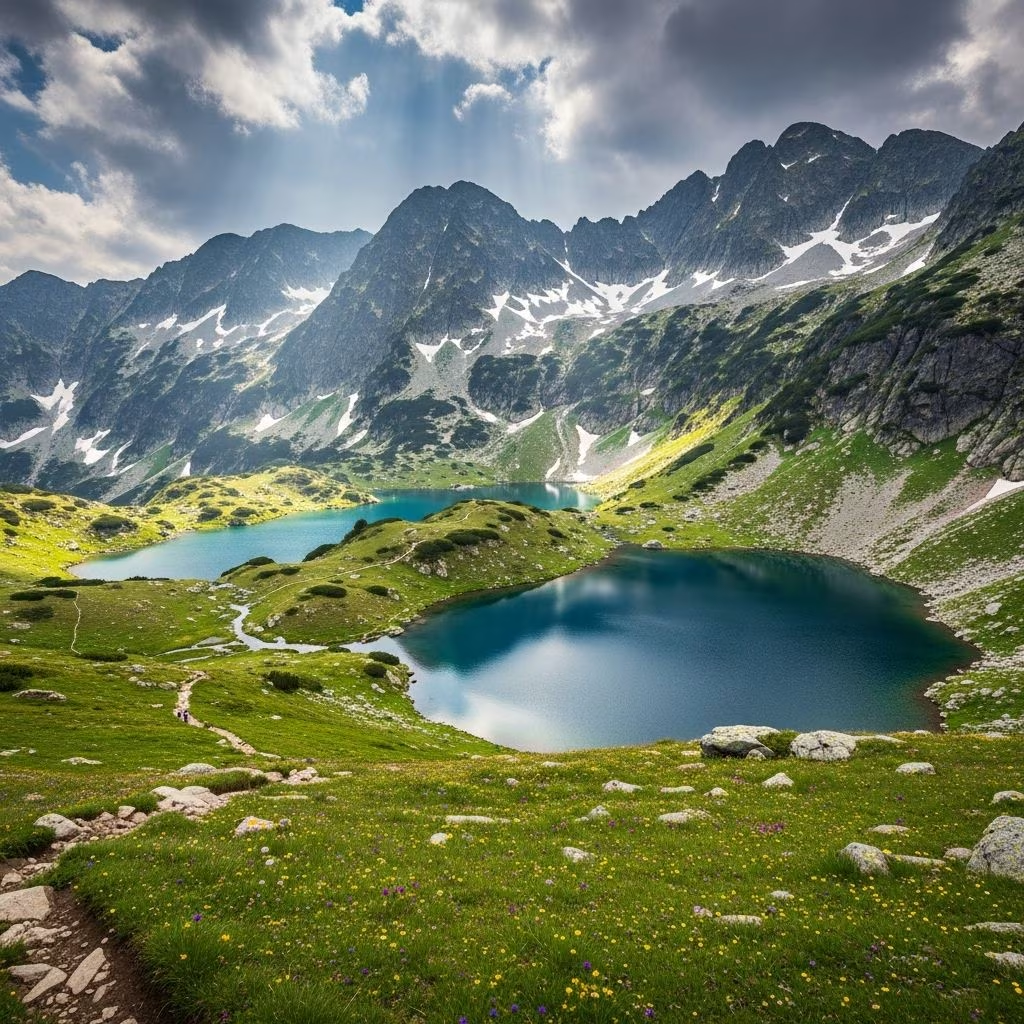
The Rila Mountains form the highest mountain chain across the entire Balkan Peninsula, with the landscape shaped by ancient glaciation. This geographic distinction makes the region irreplaceable from both ecological and recreational perspectives. Within the park’s boundaries stand multiple superlatives that underscore its environmental importance: the continent’s highest peak in this region, the deepest and longest river systems originating from these heights, and the highest alpine lake situated at extraordinary elevation.
The terrain encompasses diverse ecological zones, from dense coniferous forests at lower elevations to alpine meadows and rocky peaks above the treeline. This vertical diversity creates distinct habitat types that support specialized plant and animal communities adapted to their specific environmental conditions.
Four distinct nature reserves operate within the park’s jurisdiction, each protecting specific ecosystems and wildlife populations. These protected zones represent a comprehensive approach to biodiversity conservation, ensuring that critical habitats remain undisturbed while still allowing carefully controlled recreational access. The reserves maintain strict environmental guidelines and monitoring protocols to assess the health of protected species and ecosystems.
Beyond these natural reserves, the park encompasses culturally significant sites that blend historical heritage with natural beauty, creating destinations of dual importance for both environmental and cultural tourism.
The park’s extensive network of clearly marked hiking trails accommodates visitors ranging from casual day-walkers to experienced mountaineers. Trail difficulty spans the full spectrum, allowing travelers to select routes matching their fitness levels and time availability.
For visitors with limited time or preference for less strenuous activities, shorter interpretive trails and valley walks provide meaningful engagement with the landscape. These routes typically feature well-maintained paths, directional signage, and manageable elevation gains, making them suitable for families and recreational walkers.
The mountains surrounding the park’s highest peak have transformed into Bulgaria’s most developed outdoor recreation complex. Modern resort facilities provide comprehensive winter sports amenities including varied slope terrain, ski trails suitable for different proficiency levels, and extensive après-ski entertainment options.
Resort management has prioritized environmental responsibility by implementing mandatory sustainability guidelines for all guests. Information packets distributed throughout accommodations outline behavior expectations designed to minimize ecological impact. This integration of recreational development with conservation messaging demonstrates how tourism infrastructure can coexist with environmental protection objectives.
The park functions as a critical refuge for numerous species found nowhere else within such proximity. The region’s varied elevation zones support distinct wildlife communities adapted to alpine, subalpine, and forest environments.
The presence of apex predators indicates ecosystem health and demonstrates successful wildlife management practices. These animal populations require extensive territories and pristine habitat, making their continued presence a reliable indicator of conservation success.
The botanical landscape transitions dramatically with elevation, featuring subalpine meadows displaying seasonal flower displays, specialized alpine vegetation adapted to harsh conditions, and diverse lichen and moss communities colonizing rocky substrates. The glacial lakes support unique aquatic plant communities rarely found in continental European mountain ranges.
| Season | Weather Characteristics | Hiking Conditions | Wildlife Activity |
|---|---|---|---|
| July–August | Warm, stable conditions | All trails fully accessible; lakes completely thawed | Peak animal visibility; vegetation at full growth |
| Early September–Early October | Cool mornings; clear skies common | Excellent; fewer crowds; fall coloration emerging | Migration periods; autumnal activity patterns |
| Late October–May | Cold; frequent precipitation and snow | Most alpine trails impassable; winter skills required | Animals in lower elevation refugia |
| May–Early June | Highly variable; lingering snow | Lower elevation trails accessible; high routes hazardous | Spring migration; breeding season activity |
The mid-summer period represents the most popular visitation window due to predictable weather, fully accessible trail systems, and complete melting of glacial ice. However, early autumn months offer compelling alternatives with diminished crowds and distinctive scenic qualities.
The park lies within reasonable driving distance from the nation’s capital, with private vehicle rental providing optimal flexibility for self-directed exploration. Dedicated parking facilities exist at primary trailhead locations, accommodating the high visitor volumes typical of peak seasons. Alternative options include organized group tours departing from major urban centers, eliminating navigation concerns while providing structured itineraries.
Access fees remain remarkably affordable for international travelers, with round-trip entry permits costing approximately 10-15 euros per person. These nominal fees support park management, trail maintenance, and conservation programs. Additional expenditures may include chairlift usage, mountain refuge accommodation, and meal services at hut facilities.
Substantial elevation changes demand appropriate footwear with ankle support and reliable traction. Water carrying capacity should accommodate 1-2 liters per person, though certain routes feature natural water sources. Layered clothing systems prove essential given rapid temperature fluctuations and unpredictable weather patterns characteristic of alpine environments.
Park management actively promotes environmentally conscious visitor behavior through comprehensive education initiatives. Accommodations distribute informational materials outlining specific conduct guidelines, ensuring guests understand their role in preserving sensitive ecosystems. These efforts demonstrate successful integration of tourism development with conservation priorities.
Visitors contribute directly to conservation outcomes through access fees and accommodation expenditures, supporting staffing, research, and habitat management activities. This financial linkage between tourism and conservation creates incentive structures favoring environmental protection.
Beyond natural attractions, the park encompasses significant cultural landmarks representing centuries of regional history and spiritual heritage. These sites attract additional visitor interest and provide context for understanding human relationships with mountain environments. Integration of cultural tourism with natural area recreation enriches visitor experiences while supporting local communities economically.
July and August offer the most reliable weather and completely thawed lakes, though September and early October provide excellent conditions with fewer visitors and attractive seasonal transitions.
Yes, the park features trails across all difficulty levels. Day-walkers can utilize lower elevation routes or chairlift assistance to reach alpine terrain without extensive climbing, making the park accessible to varied abilities.
Alpine huts provide basic overnight facilities along major trekking routes, offering warm meals and beds. Advanced reservations through park services ensure availability during peak seasons.
While encounters with large predators remain extremely rare, hikers should avoid leaving food sources exposed, make noise when traveling to minimize startling wildlife, and report any concerning animal behavior to park rangers.
Yes, dedicated resort facilities provide comprehensive winter sports infrastructure. However, untracked backcountry hiking during winter requires specialized skills and equipment due to avalanche hazards and extreme conditions.
The primary access point lies approximately 50 kilometers from the nearest substantial town, reachable via private vehicle in roughly one hour from capital city areas.
