

 Travel Essentials
 Travel Essentials

Explore Rimini's remarkable ancient monuments, Renaissance architecture, and authentic Italian traditions that extend far beyond its famous beaches.
 Travel Essentials
Rimini, situated along Italy’s Adriatic coast, has long been recognized as a premier seaside resort destination. However, the city offers far more than nine miles of sandy shores and waterfront accommodations. Beneath the surface of this popular beach getaway lies a compelling narrative of Roman civilization, Renaissance artistry, and contemporary cultural vitality. Visitors who venture beyond the beach discover a destination rich with historical significance and authentic Italian character that rivals many of Italy’s more celebrated inland cities.
The transformation from seaside resort to cultural hub becomes apparent when exploring Rimini’s historic center, located merely a 15-minute walk from the waterfront. This proximity makes it remarkably easy for beach-bound travelers to transition into historical exploration and cultural immersion without requiring significant travel time or logistical planning.
Rimini’s historical identity is fundamentally rooted in its significance as a Roman settlement. The city served as an important junction point in the Roman empire’s infrastructure, particularly along the Via Flaminia, the ancient road that connected Rome to the northeastern territories. This strategic location resulted in the construction of monumental structures that have survived millennia and continue to captivate visitors today.
Dominating the entrance to Rimini’s historic center stands the Arch of Augustus, an architectural triumph completed in 27 BC under the rule of Caesar Octavian Augustus. This triumphal gateway represents the oldest surviving Roman arch in Italy and stands as one of the city’s most iconic symbols. Reaching approximately 17 meters in height, the structure originally marked the terminus of the Via Flaminia, serving both practical and ceremonial purposes for ancient travelers and merchants.
The arch showcases intricate sculptural details and inscriptions that provide glimpses into Roman artistic conventions and imperial propaganda. Visitors approaching the monument can observe the craftsmanship that enabled Roman architects to create enduring structures that have withstood centuries of environmental and political upheaval. Beyond its aesthetic qualities, the arch represents a tangible connection to the vast Roman empire and the engineering knowledge that characterized classical civilization.
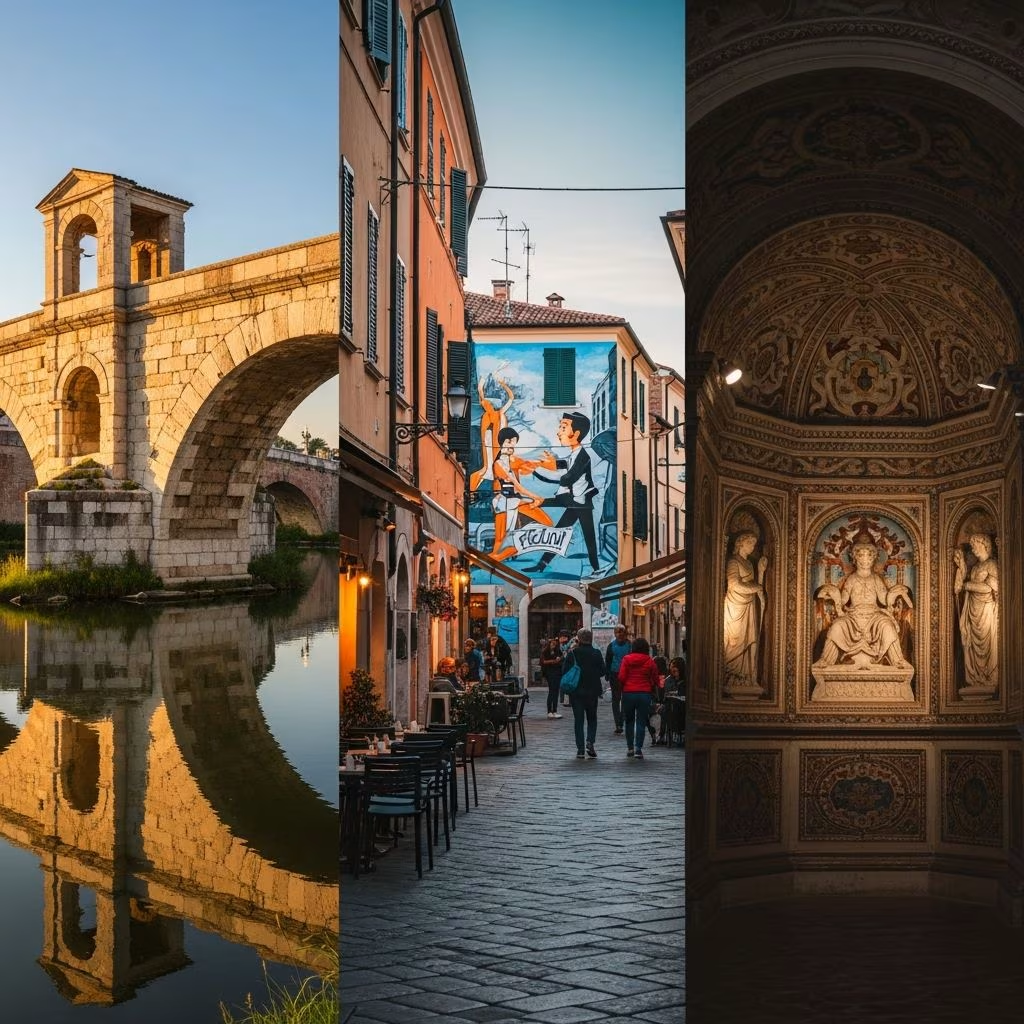
Equally impressive as the Arch of Augustus, the Tiberius Bridge (Ponte di Tiberio) demonstrates the sophisticated engineering capabilities of Roman builders. Construction of this five-arched bridge commenced in 14 AD under Emperor Augustus and was completed in 21 AD during Emperor Tiberius’ reign. The bridge spans more than 70 meters across the river and connects the city center to the charming Borgo San Giuliano neighborhood on the opposite side.
The bridge’s elegant proportions and structural integrity represent a masterpiece of Roman engineering innovation. The five arches distribute weight efficiently, allowing the structure to withstand both the river’s current and centuries of vehicular and pedestrian traffic. Archaeological studies have revealed that Roman engineers utilized specific stone compositions and construction techniques that contributed to the bridge’s exceptional durability. Standing on this ancient structure while contemplating the countless individuals who crossed it throughout history creates a profound sense of temporal connection.
Beyond its Roman foundations, Rimini contains significant artistic and architectural contributions from the Renaissance period, a time of renewed cultural flourishing that transformed European civilization.
The Tempio Malatestiano represents one of Rimini’s most artistically significant structures. This church showcases elaborate mosaics and frescoes that exemplify Renaissance artistic achievement and religious devotion. The temple’s interior decoration reflects the wealth and cultural ambitions of the Malatesta family, whose patronage shaped much of Rimini’s artistic legacy during the medieval and Renaissance periods.
The religious artwork within the temple provides valuable insights into Renaissance artistic techniques, including perspective rendering, classical references, and the integration of religious iconography with humanistic themes. Art historians recognize the Tempio Malatestiano as a significant example of how Renaissance architects and artisans synthesized classical architectural principles with contemporary artistic sensibilities.
Castel Sismondo, constructed during the mid-15th century by Sigismondo Pandolfo Malatesta, the Lord of Rimini, exemplifies medieval military architecture adapted for aristocratic residence. This fortress served as both a defensive structure and a symbol of the Malatesta family’s power within the region. The castle’s design reflects the strategic considerations of medieval warfare while incorporating elements of comfort and prestige befitting a ruling family’s primary residence.
Borgo San Giuliano represents one of Rimini’s oldest districts, with origins tracing back to the 11th century. Originally serving as a humble fishing community, the neighborhood has undergone sensitive restoration that has transformed it into a charming, picturesque area while maintaining its authentic character and historical integrity.
Contemporary Borgo San Giuliano features narrow cobblestone streets, pastel-colored houses, and vibrant murals that dominate the façades of historic buildings. Notably, many murals celebrate the life and cinematic legacy of Federico Fellini, the renowned Italian film director who was born in Rimini and drew considerable inspiration from his hometown in his artistic work. Walking through the neighborhood feels like stepping into a living gallery, where street art combines with architectural authenticity to create an immersive cultural experience.
Rimini’s main squares function as vital social hubs where locals and visitors gather for coffee, conversation, and evening aperitivos. Piazza Cavour, often referred to as the heart of Rimini, pulses with authentic Italian energy as residents conduct their daily social rituals. The square’s elegant fountain and surrounding architecture create an inviting atmosphere that encourages lingering and people-watching.
Piazza Tre Martiri carries historical weight beyond its architectural beauty. During World War II, three young partisan resistance fighters were publicly hanged at this location in 1944, events that fundamentally shaped the square’s historical meaning and contemporary remembrance. The plaza serves as both a bustling social space and a memorial to Rimini’s complex modern history.
Rimini’s food culture reflects both its coastal location and its position within the Emilia-Romagna region, renowned throughout Italy for culinary excellence. While beach resorts often feature standardized tourist menus, authentic local restaurants and cooking classes offer opportunities to engage with regional food traditions.
Piadina represents the region’s most iconic culinary specialty—a traditional flatbread that locals consume regularly as a quick meal or snack. This simple yet satisfying preparation showcases how fundamental ingredients, when prepared with skill and regional knowledge, create memorable gastronomic experiences. Cooking classes conducted by local chefs provide visitors with hands-on opportunities to learn traditional recipes and understand the philosophical approaches that characterize Italian regional cuisine.
The Rimini City Museum offers comprehensive exhibits exploring the city’s historical development from Roman antiquity through contemporary times. The Federico Fellini Museum celebrates the life and cinematic achievements of Rimini’s most famous native son, providing context for understanding how the city influenced his artistic vision and filmmaking aesthetics.
The Teatro Amintore Galli hosts theatrical performances, concerts, and cultural events throughout the year, contributing to Rimini’s vibrant performing arts scene. These venues attract both professional artists and culturally engaged audiences, creating opportunities for visitors to experience contemporary Italian cultural expression beyond beach-focused entertainment.
Italia in Miniatura theme park presents an innovative approach to cultural tourism by displaying 273 miniaturized reproductions of Italy’s and Europe’s most significant architectural and natural attractions. The park, which opened in 1970 and attracts approximately 400,000 visitors annually, offers both educational value and entertainment for families and adult travelers seeking unique perspectives on European cultural heritage.
Rimini’s extensive network of cycling infrastructure enables visitors to explore the city and surrounding regions on two wheels. Scenic coastal paths connect various neighborhoods and offer alternative perspectives on the landscape compared to traditional pedestrian walking routes. E-bike tours provide guided experiences that combine physical activity with historical and cultural education, making them appealing options for travelers seeking active engagement with their destinations.
San Marino, one of the world’s smallest independent nations, lies within accessible distance of Rimini and offers distinctive cultural and historical experiences. The medieval town of Santarcangelo di Romagna provides opportunities to experience authentic Emilia-Romagna countryside culture, including regional food markets and traditional architecture.
Rimini’s cultural calendar includes numerous festivals and events that structure the city’s year-round rhythms. The Rimini Wellness Festival, held in June, attracts visitors interested in health, fitness, and wellness-related activities, reflecting contemporary cultural preoccupations alongside traditional tourism offerings. These seasonal events provide opportunities for cultural engagement that extend beyond the summer beach season.
Visitors seeking to experience Rimini’s cultural and historical dimensions should allocate at least two days for meaningful engagement with the city’s attractions. A single day permits coverage of primary monuments including the Arch of Augustus, Tiberius Bridge, and Castel Sismondo, along with casual exploration of central squares and neighborhood wandering. Extended stays enable deeper investigation of museums, attendance at cultural events, and day trips to surrounding regions.
The 15-minute walk between beach areas and the historic center makes transitions between leisure and cultural activities remarkably convenient. This proximity allows visitors to structure flexible daily itineraries that combine beach relaxation with historical exploration without requiring complex transportation logistics or significant time commitments.
Contemporary Rimini represents the synthesis of multiple historical periods and cultural traditions. While the city’s beach resorts and waterfront entertainment dominate marketing materials and popular perception, the authentic essence of Rimini extends far beyond sand and swimming. Roman monuments, Renaissance artistry, authentic neighborhood character, culinary traditions, and cultural institutions create a multifaceted destination that rewards curious exploration.
Travelers who venture beyond the beach discover a city where history remains tangibly present, where local culture continues to flourish despite international tourism pressures, and where ancient civilizations’ achievements remain accessible to contemporary visitors. Rimini deserves recognition not merely as a seaside escape but as a substantive cultural destination capable of competing with Italy’s more established cultural tourism centers.
Rimini’s transformation from ancient Roman settlement to contemporary European destination reflects broader historical patterns while maintaining distinctive local character. Understanding the city requires moving beyond simplistic beach resort categorization to recognize the complex historical narratives, artistic achievements, and cultural vitality that characterize this Adriatic destination. Whether approaching Rimini as a beach vacation base or as a cultural tourism center, visitors who explore beyond the waterfront discover a city worthy of extended engagement and repeated visits.
