

 Travel Essentials
 Travel Essentials

Comprehensive guide covering accommodation choices, transportation, cultural etiquette, safety practices, and lifestyle tips for first-time visitors to Rio de Janeiro.
 Travel Essentials
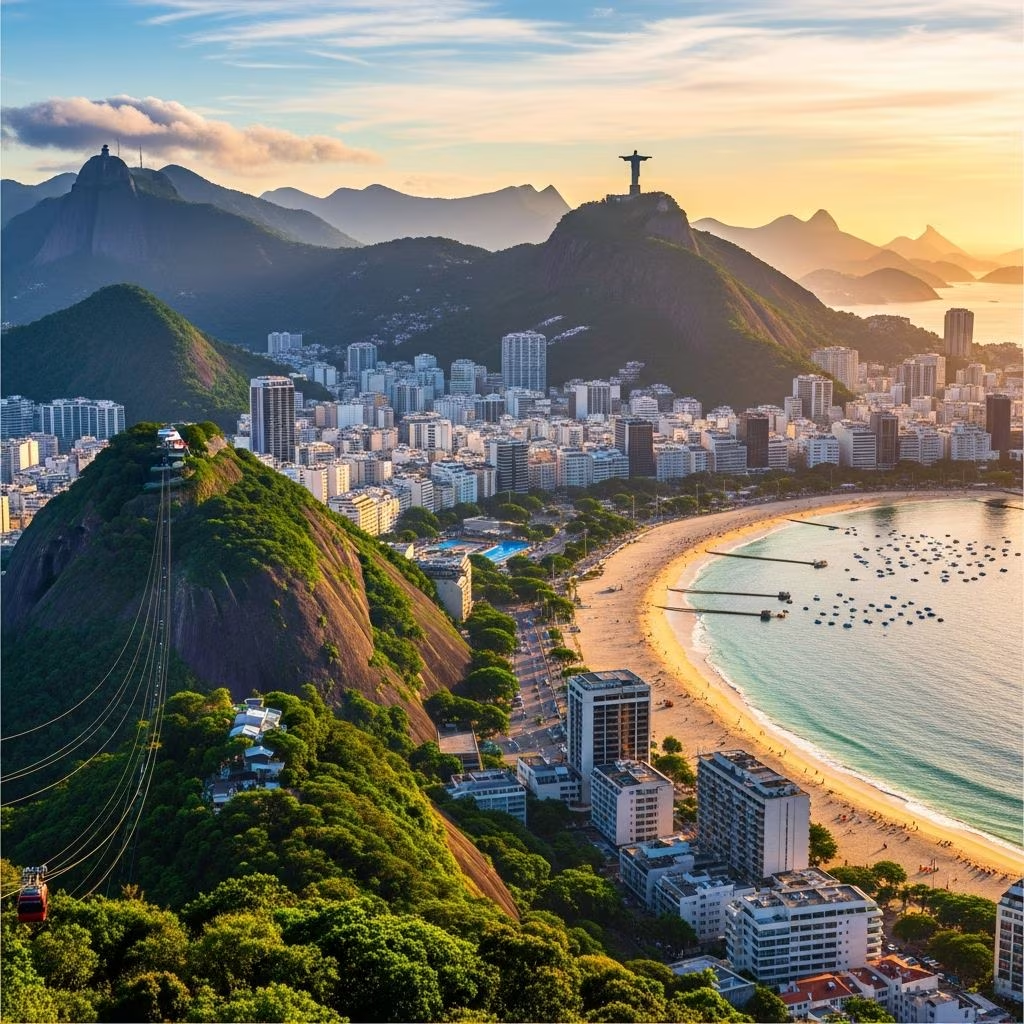
Rio de Janeiro represents one of the world’s most compelling travel destinations, combining natural majesty with vibrant urban culture. However, the city’s chaotic energy and fast-paced rhythm require visitors to adjust their expectations and travel style. Understanding the fundamentals before arriving transforms what could be an overwhelming experience into an enriching adventure that balances exploration with genuine connection to local life.
Rio de Janeiro operates on principles fundamentally different from many international cities. The metropolis pulses with spontaneity, and attempting to rigidly control every moment often leads to frustration rather than fulfillment. The most satisfying approach involves planning a single meaningful activity per day while remaining open to unexpected opportunities that emerge. This philosophy reflects how long-term residents, known as Cariocas, navigate their city—they work with the city’s energy rather than against it.
The practical implication is straightforward: book accommodations and major attractions in advance, but leave afternoons and evenings unscheduled. Street musicians, local festivals, spontaneous beach gatherings, and conversations with residents often create the most memorable moments. This flexibility becomes especially valuable when weather changes plans or when you discover a neighborhood worth exploring more deeply than anticipated.
Rio’s geography and neighborhood characteristics significantly influence the visitor experience. Understanding the distinctions between areas helps match your travel style to appropriate locations.
Beach-Focused Areas: Ipanema and Copacabana remain the most famous coastal neighborhoods, offering direct beach access, extensive dining options, and reliable infrastructure. Ipanema maintains a more upscale atmosphere with designer boutiques and contemporary restaurants, while Copacabana provides a broader demographic mix and slightly more budget-friendly options. Both neighborhoods feature reliable transportation and abundant accommodation choices.
Cultural and Historic Zones: Centro represents Rio’s historical nucleus, containing museums, colonial architecture, and cultural institutions. The neighborhood buzzes with activity during daylight hours but becomes significantly quieter—and statistically less safe—after dark. Lapa, adjacent to Centro, transforms into the city’s primary nightlife destination as evening approaches, featuring live music venues, street parties, and bohemian atmosphere. Santa Teresa offers an entirely different character: narrow cobblestone streets, street art, artist studios, and galleries create a village-like environment within the urban landscape.
Island and Peripheral Neighborhoods: Paquetá Island provides peaceful retreat from urban intensity, with car-free streets and ferry access via Guanabara Bay. The island suits travelers seeking quiet contemplation rather than party atmospheres.
Travelers should allocate sufficient time for inter-neighborhood travel rather than cramming excessive activities into single days. The metro system connects major attractions, supplemented by city trains for additional coverage. Obtaining free metro and bus guides upon arrival proves invaluable for route planning.
Where you sleep dramatically affects daily experience. Established tourist areas like Copacabana, Ipanema, and Leblon offer proven safety infrastructure, abundant restaurants and shops, and reliable transportation access. These neighborhoods justify their popularity—they provide security and convenience that lower stress levels for visitors unfamiliar with Rio’s geography.
Budget travelers often debate whether less expensive peripheral neighborhoods justify potential safety tradeoffs. Current traveler consensus strongly recommends prioritizing safety and peace of mind over minimal cost savings. The psychological benefit of comfortable, secure accommodation outweighs monetary considerations, particularly for first-time visitors navigating an unfamiliar city.
Rio’s public transportation system combines buses, metro trains, and supplementary transport options. The metro efficiently connects major attractions, though frequency and coverage limitations necessitate supplementary transportation methods. Modern ride-sharing services provide reliable alternatives to street hailing, particularly valuable during evening hours and around Carnival celebrations when crowding intensifies.
Safety considerations influence transportation choices significantly. Carnival and large public gatherings create conditions favoring organized services over independent public transport, particularly for evening travel. Hotel-arranged transfers to major events like Sambadrome performances add security and reliability compared to navigation independent transportation during peak celebration periods.
Learning basic Portuguese phrases enhances transportation experiences and reduces frustration when directions aren’t clearly understood. While English speakers exist throughout tourist areas, broader city navigation often requires at least translation application assistance.
Rio’s beaches function as social laboratories where visitors encounter local culture authentically. Beyond swimming, beaches serve people-watching, relaxation, and social interaction purposes. The constant flow of vendors creates a distinctive feature—virtually any consumable imaginable arrives at your beach location: cocktails, açaí bowls, beer, grilled cheese, meat skewers, empanadas, and even clothing and accessories. This vendor ecosystem eliminates the need to carry supplies, though negotiating prices requires comfort with casual bargaining.
Beach safety demands specific precautions. Valuables require protection through secured bags or leaving items with trusted acquaintances. Phones, jewelry, high-end watches, and expensive sunglasses attract attention during crowded periods. The practical approach involves traveling light, keeping expensive items at accommodations, and accepting that some loss of convenience trades for genuine peace of mind.
Portuguese represents the essential communication tool, though English speakers populate tourist zones. However, restaurants in neighborhoods beyond main tourist districts, emergency situations, and local market interactions frequently require Portuguese capability. Downloading translation applications provides backup support when language barriers emerge.
Communication extends beyond basic language—understanding Carioca cultural norms shapes interactions. Brazilians generally embrace social connection and warmth; formal interactions feel unusually cold by local standards. Smiling, greeting people, and showing interest in their perspectives creates openings for genuine interactions. Solo travelers specifically benefit from this cultural orientation; joining organized tours, free walking tours, or participating in local activities creates natural social contexts.
Rio’s calendar includes numerous celebrations beyond the famous Carnival. Understanding seasonal considerations influences experience quality and practical logistics. Carnival season transforms the city into an around-the-clock celebration featuring parades, costumes, music, dance, and food spectacles. This extraordinary event creates unparalleled cultural immersion but also generates crowding, elevated prices, and transportation challenges.
Beyond Carnival, other seasons offer distinct advantages. Certain months feature better weather, fewer crowds, and lower accommodation rates. Research specific travel dates to determine seasonal advantages aligned with personal preferences regarding crowds, climate, and festival participation.
Rio accommodates diverse budget levels, though luxury tourism dominates popular tourist areas. Understanding relative costs helps establish realistic budgets. Por kilo buffet-style restaurants provide opportunities to sample diverse Brazilian dishes economically. Beach vendor economies offer meal options ranging from budget to premium. Accommodation costs vary dramatically based on neighborhood selection and facility quality, justifying research across different options.
Rio’s reputation for safety concerns deserves balanced consideration. Urban realities include pickpocketing risks during crowded events, particularly around Carnival celebrations. Less touristy areas and nighttime venues warrant heightened awareness compared to established tourist neighborhoods. These realities don’t necessitate excessive paranoia but rather practical awareness: avoid displaying valuable items, stay alert in crowds, and recognize that certain areas present higher risk profiles during specific times.
Rio offers experiences transcending beach and samba stereotypes. The Botanical Gardens and Parque Lage provide nature immersion within urban settings. Museums including Centro Cultural Banco do Brasil and Museu Nacional de Belas Artes showcase artistic and cultural depth. Hiking trails like Morro da Urca and Dois Irmãos offer physical engagement with the landscape. Attending samba sessions at Pedra do Sal on Monday nights provides cultural participation rather than touristic observation.
The Floresta da Tijuca tropical rainforest offers ecosystem exploration demonstrating Rio’s natural diversity. Lookout points like Pedra do Telégrafo provide panoramic perspectives on city geography and natural beauty. Colonial architecture, street art installations, and artist communities reveal cultural layers often missed by visitors following conventional tourist itineraries.
Rio de Janeiro rewards travelers who embrace flexibility, cultural curiosity, and practical awareness. The city’s complexity—combining natural beauty, cultural richness, urban energy, and everyday challenges—creates experiences that transcend typical vacation narratives. Success comes through planning strategically while remaining emotionally available to unexpected moments. Rio’s greatest gifts arrive through spontaneous connections, accidental discoveries, and the particular magic that emerges when visitors stop fighting the city’s rhythm and instead move with it. Arriving prepared, safety-conscious, and culturally humble transforms Rio from an overwhelming destination into a place that captivates visitors and compels return journeys.
