

 Travel Essentials
 Travel Essentials

Explore why stacking rocks harms ecosystems, confuses hikers, and violates park rules. Find eco-friendly alternatives for mindful outdoor experiences.
 Travel Essentials
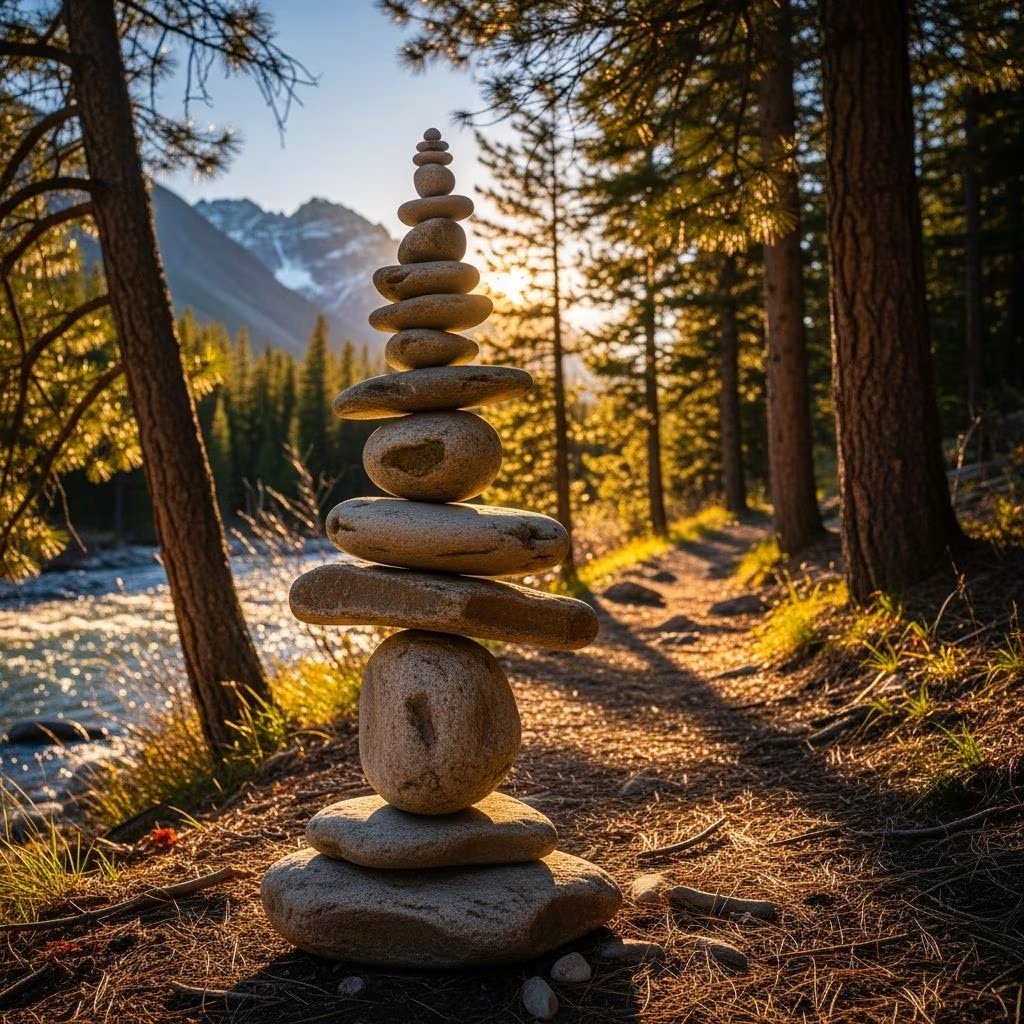
Balanced towers of stones dot trails worldwide, captivating hikers with their precarious beauty. Known as cairns or stone sculptures, these structures blend ancient tradition with modern social media trends. Yet beneath their allure lies a debate: do they enhance or endanger our natural spaces? This article delves into the origins, benefits, risks, and guidelines surrounding rock stacking, empowering you to hike responsibly.
Humans have piled rocks for millennia, from prehistoric markers to spiritual monuments. In rugged terrains, these stacks guided travelers through fog-shrouded mountains or featureless deserts. Today, they symbolize mindfulness, with enthusiasts balancing stones as meditation.
Social media amplifies this practice. Platforms showcase gravity-defying towers, inspiring millions to recreate them. What began as survival tools now serves as photo ops, blending art with adventure. However, popularity breeds problems in protected areas like national parks.
Not all rock piles are amateur creations. Park rangers in select U.S. national parks build and maintain cairns to delineate paths in remote zones. At Carlsbad Caverns National Park, these markers aid backcountry navigation, preventing disorientation. Similarly, Acadia National Park features Bates cairns—distinctive shapes crafted since 1896 by Waldron Bates, whose designs still influence trail maps.
El Malpais and Hawaiʻi Volcanoes National Parks rely on cairns for lava fields and volcanic terrain where signs fail. Michael Larson, a National Park Service spokesperson, urges hikers not to dismantle these: “A well-placed cairn can save lives.” In essence, official cairns are lifelines, calibrated for safety.
While official markers help, visitor-built towers proliferate unchecked. In Sedona’s state parks, dozens have ballooned to hundreds over a decade. This surge invades wilderness, turning pristine vistas into cluttered galleries. Hikers encounter faux cairns mimicking real ones, sparking confusion.
Capitol Reef National Park explicitly avoids maintaining cairns, warning against reliance on ornamental stacks. Tampering or adding to them risks collapse or misdirection, especially for novices following misleading piles.
Each relocated rock disrupts delicate ecosystems. Beneath trails, lichens, mosses, and microbes form microhabitats. Uprooting stones exposes soil to erosion and halts cryptobiotic crust regrowth, vital in arid regions.
On slopes, fallen stacks can trigger landslides, endangering those below. Cumulative impacts amplify: thousands of daily visitors multiply minor disturbances into lasting scars. The Leave No Trace Center emphasizes: disturbing rocks harms vegetation and invites invasive species.
These effects compound in high-traffic areas like Cairns region’s national parks, where fragile reefs and rainforests border trails.
Rock stacking disregards Indigenous heritage. For Native American tribes, stones hold spiritual weight—cairns as prayer sites or ancestral signals. Unauthorized towers profane these, akin to graffiti on sacred grounds.
In Australia near Cairns, Aboriginal custodians view stone arrangements as cultural artifacts. Modern stacks erode this legacy, mirroring colonial disruptions. Respect means leaving stones untouched.
The U.S. National Park Service bans unofficial cairns under vandalism and littering statutes, like carving trees or dumping trash. Penalties apply, protecting resources for all. Policies vary: some parks permit artistic stacks in designated zones; most prohibit them outright.
| Park Example | Cairn Policy | Reason |
|---|---|---|
| Acadia NP | Maintained Bates cairns only | Historical navigation |
| Carlsbad Caverns NP | Official backcountry markers | Safety in remote areas |
| Capitol Reef NP | No maintenance; ignore visitor stacks | Prevent confusion |
Always consult park websites or apps pre-hike. Australia’s Great Barrier Reef Marine Park and Daintree National Park echo these: no alterations to natural features.
Nature lovers decry stacks as eyesores. Photographers seek unmarred compositions; artificial towers intrude, detracting from raw beauty. High Country News calls for halting the trend: “Leave the stones alone.”
In Cairns’ lush tropics, where ancient rainforests meet coral seas, stacks clash with untouched splendor. They symbolize human dominance over wilderness ideals.
Stacking’s appeal—mindfulness, creativity—needn’t harm nature. Try these low-impact options:
These foster presence sans permanence. Apps like AllTrails offer virtual cairn-building challenges.
Japan’s shakadō—stone stacking—ties to Shinto rituals but confines to beaches. Scottish highlands use official cairns sparingly. In New Zealand’s Fiordland, rangers dismantle tourist stacks to preserve Māori sites.
Near Cairns, Queensland’s Wet Tropics and Daintree enforce strict no-touch policies, safeguarding World Heritage biodiversity. Global consensus: prioritize official markers; shun unofficial ones.
Seven principles guide ethical hiking:
“Leave what you find” directly bans stacking. Adopted by parks worldwide, it ensures timeless access.
Leave it alone. It might be official or mislead others if altered.
No—official ones aid navigation; unofficial harm environments.
Often yes, if tides erase them and no rules prohibit. Check locally.
Contact park rangers via apps or hotlines.
Frame natural formations or use editing apps ethically.
Rock stacking’s allure stems from creativity and calm, but protected lands demand restraint. By heeding rules, respecting cultures, and minimizing impacts, hikers preserve magic for generations. Next trail outing, admire—don’t add. Your footprint: invisible, your memories: eternal.
