

 Travel Essentials
 Travel Essentials

Comprehensive guide covering entry fees, hiking trails, scenic drives, permits, and seasonal tips for visiting Rocky Mountain National Park in Colorado.
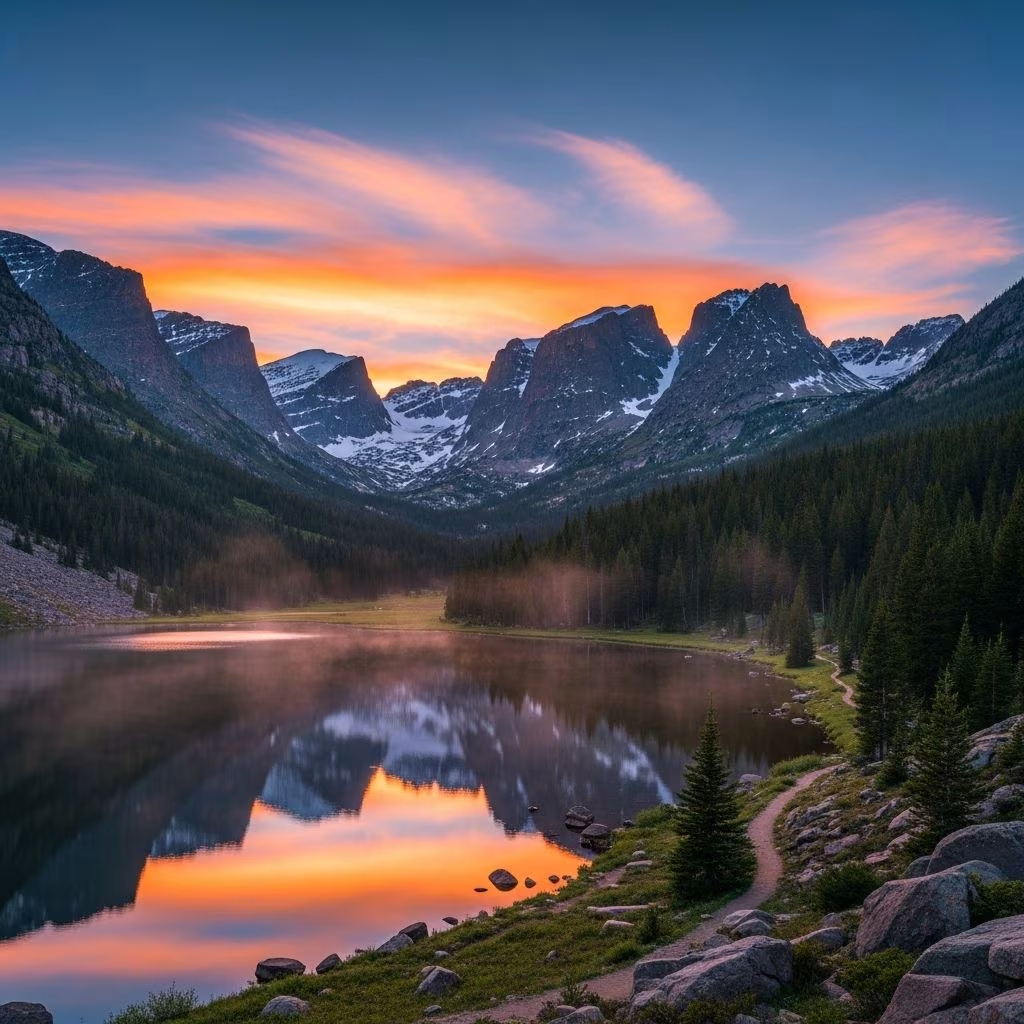 Travel Essentials
Nestled in northern Colorado, Rocky Mountain National Park spans 415 square miles of pristine wilderness, offering visitors an extraordinary escape into alpine peaks, crystalline lakes, and abundant wildlife. Whether you’re a first-time visitor or a seasoned hiker, this mountain sanctuary provides experiences for every skill level and interest. Understanding the fundamentals of accessing and navigating this remarkable park ensures you maximize your time and create memories that will last a lifetime.
Before embarking on your Rocky Mountain adventure, familiarizing yourself with access points and entry procedures will streamline your visit. The park maintains multiple entrance stations, each providing different access routes through its diverse landscape.
The park operates on a straightforward fee structure designed to accommodate various visit durations:
| Pass Type | Cost | Duration | Includes |
|---|---|---|---|
| Daily Vehicle Pass | $30 | 24 hours | Single vehicle entry |
| Weekly Park Pass | $35 | 7 days | Unlimited vehicle entries |
| America the Beautiful Pass | $80 | 12 months | Access to all national parks |
Payment at entrance stations is restricted to debit and credit cards, though cash purchases are accepted at visitor centers located at all three main entrance stations. This cashless system ensures efficient processing during peak visitor seasons.
During peak seasons, the park implements a timed entry system designed to manage visitor flow and protect the Bear Lake corridor, one of the park’s most pristine and heavily visited areas. Understanding this system is crucial for planning your visit.
Timed Entry Plus (Full Park Access): This permit grants comprehensive access to all park areas, including the popular Bear Lake road corridor. Valid from 5:00 AM to 6:00 PM daily, this permit enables visitors to explore the park’s most iconic trails and attractions. Entry must occur within your selected two-hour window.
Timed Entry (Standard Access): This option provides park-wide access excluding the Bear Lake corridor. Operating from 9:00 AM to 2:00 PM, this permit suits those prioritizing Trail Ridge Road, the Alpine Visitor Center, and trails like Gem Lake and the Longs Peak approach. This option offers more flexibility for visitors with later start times or flexible schedules.
Reservations outside these timed windows are not required, allowing spontaneous visits during early morning or evening hours when demand is lower.
Maximizing your park experience depends heavily on strategic planning. Different visit durations accommodate varying interests and fitness levels.
For those with limited time, a focused day trip can capture the park’s highlights. Begin at the Bear Lake Trailhead, completing the gentle circuit around Bear Lake, then progressing to Dream Lake and ultimately to Emerald Lake. These interconnected trails showcase alpine beauty without requiring extreme exertion.
Following morning hikes, drive Trail Ridge Road, North America’s highest continuously paved highway, ascending to 12,183 feet. Stop at designated viewpoints along this remarkable engineering achievement, pausing at the Alpine Visitor Center (11,800 feet) to absorb panoramic vistas. The descending western section offers equally stunning perspectives, particularly around the Colorado River viewpoints near Timber Lake Trailhead and the historic Holzwarth Site.
Day One Focus: Begin with early morning hikes connecting Nymph, Dream, Emerald, and Bear Lakes from the Bear Lake Trailhead. Following midday rest, tackle Trail Ridge Road if weather permits, stopping at multiple overlooks and the Alpine Visitor Center.
Day Two Focus: If weather disrupted Trail Ridge Road the previous day, prioritize this scenic drive in morning hours. Alternatively, venture to Grand Lake on the park’s western boundary, exploring the Holzwarth Historic Site and attempting the manageable Ute Trail to Tombstone Ridge, a family-friendly trek offering exceptional panoramic views.
Visitors with flexible schedules can execute comprehensive exploration across seven days:
Rocky Mountain National Park maintains over 300 miles of hiking trails, accommodating everyone from casual strollers to elite mountaineers. Trail selection depends on fitness level, time availability, and alpine experience.
The Bear Lake loop represents an ideal introductory experience, requiring minimal elevation gain while providing exceptional mountain scenery. Dream Lake and Emerald Lake extensions add progressive difficulty for those seeking slightly more challenge.
Flattop Mountain to Hallett Peak presents a 10.4-mile strenuous route consuming 6-8 hours, ascending to 12,718 feet with unobstructed 360-degree panoramas. This hike provides an excellent preparation for those considering Longs Peak. Sky Pond and Mills Lake offer stunning alpine lake destinations requiring moderate-to-strenuous effort.
Longs Peak, the park’s only fourteener and highest mountain, represents the ultimate hiking achievement. The predominant Keyhole Route spans 15 miles round-trip via the East Longs Peak Trail, requiring extensive preparation and mountain fitness. The Boulder Field campsite at 12,740 feet provides staging for summit attempts, with reservations essential six months in advance.
Visitors preferring vehicular exploration discover equally remarkable experiences through strategic driving.
This engineering marvel ascends from approximately 7,700 feet to 12,183 feet, traversing delicate alpine tundra ecosystems rarely accessible by automobile. The road operates seasonally, typically closing after the first significant autumn snowfall and reopening in late spring. Multiple pullouts enable photography and observation of alpine wildlife, including marmots and pikas.
For those seeking less-trafficked scenic driving, Old Fall River Road provides an 11-mile one-way gravel experience connecting Horseshoe Park to the Alpine Visitor Center. Originally constructed in 1920 as the park’s inaugural road, this route winds through dramatic mountainous terrain, including a brief stop at Chasm Falls, offering an authentically rugged perspective of the park’s landscape.
The park supports substantial populations of iconic Rocky Mountain fauna, making wildlife viewing a primary visitor attraction. The open meadows and trail corridors provide excellent observation opportunities for mule deer, elk, bighorn sheep, and numerous bird species. Higher elevations reveal alpine specialists including pikas and marmots. Early morning and evening hours typically offer peak wildlife activity, while maintaining appropriate distance preserves animal welfare and visitor safety.
The park operates year-round, 24 hours daily, yet seasonal variations significantly impact visitor experience. Summer months (June through September) offer reliable weather and complete trail accessibility, though crowds peak during this period. Shoulder seasons (May and September through October) provide moderate temperatures and reduced congestion. Winter transforms the landscape dramatically, with snow coverage limiting high-elevation access while creating distinctive alpine scenery.
The official National Park Service website provides current conditions, permit availability, and weather forecasts essential for trip planning. Visitor centers at primary entrances offer interpretive displays, knowledgeable staff, and detailed trail information. Mobile applications and downloadable maps enable offline navigation throughout remote park areas.
Summer (June-September) offers complete trail access and stable weather, though expect significant crowds. Shoulder seasons (May, September-October) provide exceptional conditions with reduced visitor density, making these periods ideal for those seeking balance between accessibility and solitude.
Yes, entry outside the 5:00 AM to 6:00 PM window (for Timed Entry Plus) or 9:00 AM to 2:00 PM window (for standard permits) does not require reservations, though general park admission fees remain applicable.
The Keyhole Route requires substantial altitude experience, physical conditioning, and typically 10-12 hours of hiking time. Altitude sickness, weather exposure, and rock scrambling create significant challenges; advance preparation and acclimatization are essential.
Pet policies vary by location; pets are generally restricted from trails but permitted in certain developed areas. Specific restrictions apply to sensitive ecosystems and wildlife habitats.
