

 Travel Essentials
 Travel Essentials

Discover how to traverse the Canadian Rockies by rail with comprehensive route options, service tiers, and planning essentials for an unforgettable mountain journey.
 Travel Essentials
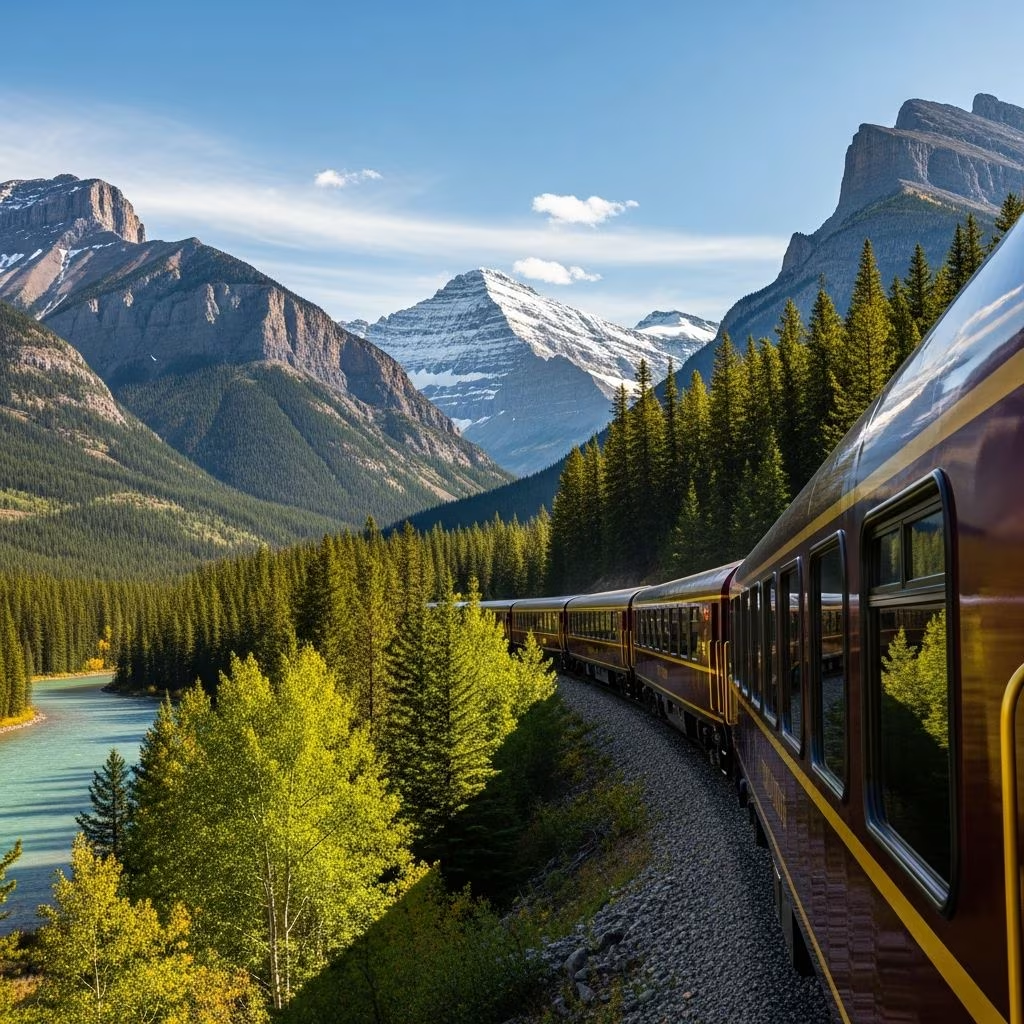
The Rocky Mountaineer represents a distinctive approach to experiencing the Canadian wilderness, operating as the sole passenger rail service traversing the historic Canadian Pacific Railway corridor through the Rocky Mountains. Operating seasonally from mid-April through mid-October, this all-daylight train service prioritizes unobstructed viewing of the landscape, allowing passengers to witness the dramatic mountain scenery, rushing rivers, and varied wildlife without missing moments due to darkness. The fundamental design philosophy centers on maximizing visual experiences, with glass-domed observation areas positioned to capture panoramic vistas throughout the journey.
This rail journey connects the coastal metropolis of Vancouver, British Columbia, with premier mountain destinations including Banff, Jasper, and Lake Louise in Alberta. The service operates in both eastbound and westbound directions, providing flexibility for travelers planning their Canadian Rockies expedition. Unlike conventional tourist trains, the Rocky Mountaineer functions as a modern luxury transportation option rather than a novelty attraction, combining comfortable accommodation with gourmet dining prepared by professional chefs.
The Rocky Mountaineer operates multiple distinct routes, each offering unique perspectives of the landscape and varying journey durations. Understanding these route options helps travelers select the experience that best aligns with their interests and available time.
The First Passage to the West represents one of the original routes established when the Rocky Mountaineer launched service in 1990, operating between Vancouver and either Banff or Lake Louise with an overnight stop in Kamloops. This two-day journey traverses the same historic railway corridor used by the final regular passenger train service before discontinuation, making it the only contemporary passenger rail option serving these specific mountain destinations. The route passes through diverse landscape zones, beginning in British Columbia’s lower elevations and ascending into the heart of the Canadian Rockies. Travelers experience dramatic elevation changes, river valleys, and approaching views of significant peaks, culminating in arrival at either the alpine town of Banff or the glacial region near Lake Louise.
The Journey through the Clouds extends the experience to two days while redirecting northward from Kamloops toward Jasper, Alberta. This route follows the initial segment similar to First Passage to the West before diverging along the Thompson River through the Clearwater region. The journey showcases Mount Robson, recognized as the tallest mountain in the Canadian Rockies, with the route following river valleys and passing through untouched forest before arriving in the small mountain town of Jasper in the evening. This option appeals to travelers seeking a less crowded mountain destination and preferring the wilderness character of Jasper over the more developed alpine settings of Banff or Lake Louise.
The Rainforest to Gold Rush represents the longest available journey, spanning three days and traversing Vancouver, Whistler, Quesnel, and ultimately Jasper. This route extends the experience by incorporating Whistler’s coastal mountain environment before transitioning through gold rush heritage areas en route to the Canadian Rockies. Travelers on this extended itinerary access additional outdoor experiences, including gondola rides in Whistler and extended exploration of multiple national parks.
The Passage to the Peaks functions as a reverse route, departing from Banff and traveling eastward through the heart of the Canadian Rockies toward Jasper. This route traverses significant landmarks including Stoney Creek Bridge and Mount Robson, providing different perspectives of the landscape compared to westbound journeys. This directional variation allows repeat travelers to experience familiar terrain from alternative vantage points.
The Rocky Mountaineer offers multiple service levels designed to accommodate different preferences and budgets, with each tier providing distinct advantages while maintaining the core experience of daylight rail travel through mountain scenery.
| Service Tier | Key Characteristics | Dining Experience |
|---|---|---|
| SilverLeaf | Standard upper-deck seating with windows, comfortable furnishings | Chef-prepared breakfast and lunch with regional specialties |
| GoldLeaf | Lower-level enclosed observation area with glass dome, premium seating | Gourmet multi-course meals, full beverage service, exclusive dining room |
Both service tiers include luggage handling and rail station transfers at intermediate stops, eliminating logistical concerns for travelers. The distinction primarily centers on observation comfort, dining sophistication, and access to exclusive spaces rather than fundamental journey quality.
Vancouver serves as the western terminus for all Rocky Mountaineer routes, providing access to this cosmopolitan Pacific coast city before or after the mountain journey. Travelers can incorporate urban exploration, dining, and cultural activities alongside their rail experience.
Most Rocky Mountaineer routes include an overnight accommodation in Kamloops, positioning this community as a strategic midpoint where passengers disembark, explore the local area, and rejoin the train the following morning. This arrangement provides respite from continuous rail travel while maintaining journey momentum.
Banff, established in 1885 as the townsite hub of Banff National Park, functions as a terminal destination for First Passage to the West journeys. This lively mountain community features renowned restaurants, outdoor adventure opportunities, and serves as the gateway to exploring glaciers, mountain peaks, lakes, and waterfalls designated as a UNESCO World Heritage Site. The compact townsite allows pedestrian exploration of Banff Avenue and nearby attractions.
Jasper represents a contrasting mountain destination characterized by a more relaxed atmosphere compared to Banff, offering what some describe as the “gentle giant of the Rockies.” This small mountain town provides balanced opportunities for adventure and discovery alongside relaxation options, appealing to travelers seeking alternative mountain experiences beyond the more developed resort environments.
Lake Louise functions as an alternative terminus, providing access to one of the Canadian Rockies’ most photographed locations and serving as a base for exploring the surrounding glacial landscape, turquoise waters, and alpine meadows.
The railway corridor traverses remarkably diverse landscape zones, transitioning from lower elevation valleys through forest regions and ascending into alpine terrain. Passengers encounter significant geological landmarks including Hell’s Gate, dramatic river canyons where water has carved through mountain rock, and Pyramid Falls, a cascading waterfall visible from the train. Mount Robson, towering as the Canadian Rockies’ highest peak, provides a distinctive landmark visible on northbound routes to Jasper.
The route passes through pristine forest ecosystems, open meadowlands, and along river valleys where wildlife sightings remain possible, though not guaranteed. Stoney Creek Bridge represents an engineering highlight where the railway spans a significant gorge with dramatic perspective.
The Rocky Mountaineer operates within a defined seasonal window from mid-April through mid-October, aligning with optimal weather conditions for mountain travel and maximizing natural visibility. Spring and early summer offer extended daylight hours and often-favorable weather, though late summer and early autumn provide equally spectacular mountain scenery with potentially fewer travelers. Winter operation remains unavailable due to snow conditions and reduced daylight hours.
Travelers should consider available time, destination preferences, and experience objectives when selecting routes. Two-day journeys accommodate travelers with limited vacation time, while the three-day Rainforest to Gold Rush option suits those seeking extended immersion. Geographic preferences—whether prioritizing Banff’s alpine setting, Jasper’s wilderness character, or Lake Louise’s glacial scenery—should influence route decisions.
Budget considerations and comfort priorities determine service tier selection. GoldLeaf service justifies premium pricing through elevated dining experiences and enhanced observation facilities, while SilverLeaf provides core journey experiences at more accessible price points.
No, the Rocky Mountaineer operates seasonally from mid-April through mid-October, corresponding with optimal travel conditions in the Canadian Rockies.
Rocky Mountaineer operates as one-way rail service, with travelers beginning and ending their journeys at different locations. This arrangement eliminates return travel while exploring multiple destinations.
Both SilverLeaf and GoldLeaf service include chef-prepared breakfast and lunch, with GoldLeaf providing more elaborate multi-course dining experiences. Evening meals require separate arrangements during overnight stops.
Wildlife sightings remain possible but are not guaranteed, as animals are wild and unpredictable. The train’s daylight operation and extended journey through pristine ecosystems increase encounter possibilities.
Comfortable clothing suitable for variable weather, sunscreen, binoculars for wildlife observation, and a camera represent essential items. The all-daylight format means bringing entertainment for evening time in overnight stops.
The Rocky Mountaineer functions most effectively as the centerpiece of a broader Canadian Rockies experience rather than as a standalone excursion. Travelers should consider extending stays in Banff, Jasper, or Lake Louise to incorporate activities such as hiking, lake excursions, wildlife tours, and scenic drives through national parks. Many visitors combine rail travel with helicopter tours, gondola rides, or guided wilderness explorations available in these mountain destinations.
The luxury rail journey provides an ideal transition experience, offering comfortable passage between destinations while establishing foundational familiarity with the landscape. This approach allows subsequent days in mountain communities to build upon the geographical context and scenic understanding developed during rail travel.
Luggage handling arrangements and rail station transfers included in Rocky Mountaineer fares eliminate transportation logistics concerns, allowing travelers to focus on the experience rather than managing belongings. The professional handling system ensures belongings travel with passengers while minimizing personal baggage burden during exploration time in overnight stops.
Advance booking remains advisable, particularly for peak-season travel from June through September, as routes reach capacity and premium service tiers may sell out weeks in advance.
