

 Travel Essentials
 Travel Essentials

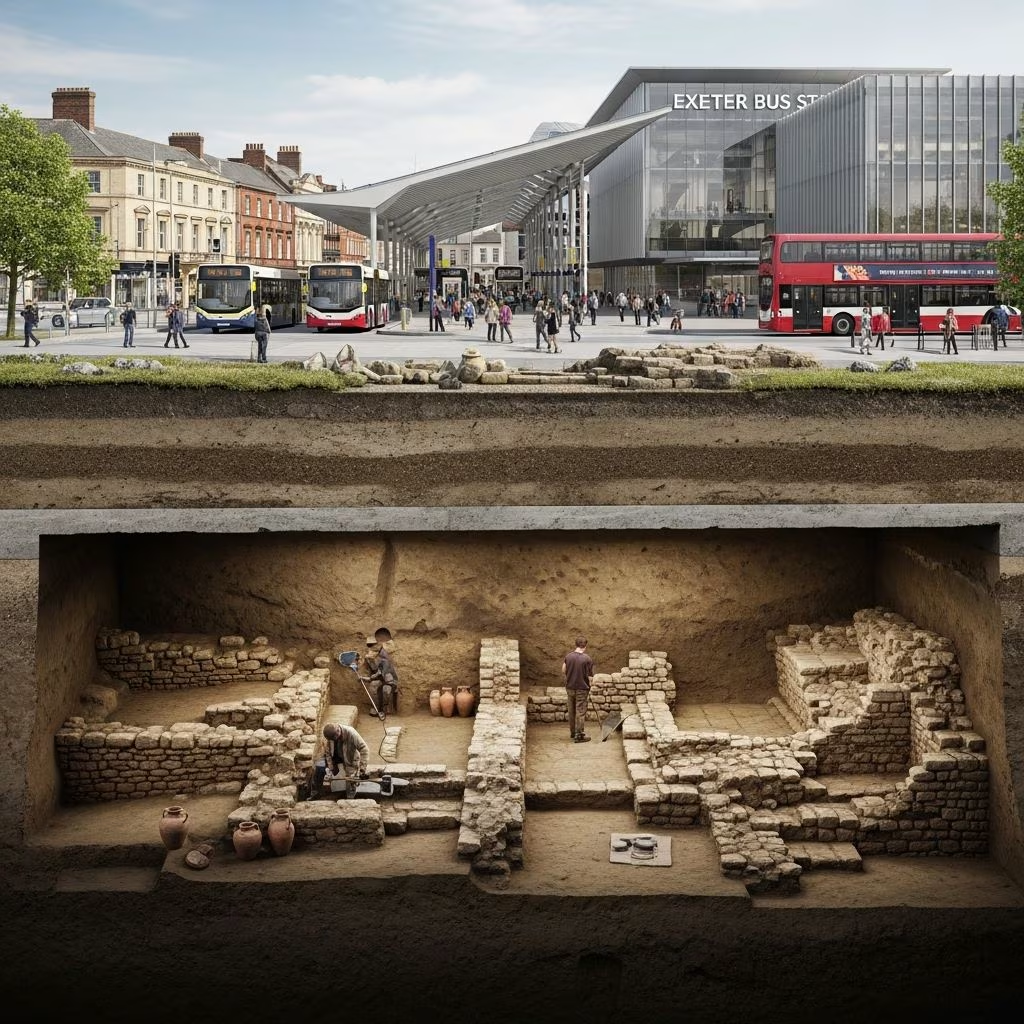
Archaeologists uncovered a Roman fort beneath Exeter’s bus station, along with coins and pottery that reveal the city’s early military past.
 Travel Essentials
In the heart of modern Exeter, where commuters rush through a 1960s bus station, lies evidence of a forgotten chapter in Britain’s Roman past. Recent redevelopment work has brought to light remnants of an early Roman military installation, challenging assumptions about the city’s ancient layout and highlighting the layered history beneath urban infrastructure.
The revelation came during preparatory excavations for a new bus station and leisure complex. Workers from Kier Construction, in collaboration with Cotswold Archaeology’s Exeter team, stumbled upon significant archaeological features while assessing the site between Bampfylde Street and Cheeke Street. What began as routine surveying quickly escalated into the identification of three substantial ditches, marking the eastern boundary of a previously undocumented Roman fort or defended compound.
These ditches, running parallel to one another, featured a characteristic ‘ankle-breaker’ design—deep and narrow to impede enemy cavalry and infantry. The first ditch appeared at the site’s northern edge, with two more uncovered nearby, suggesting a structured defensive perimeter.
Inside the fort likely extended westward, beneath the existing bus station, Bampfylde Street, and possibly Sidwell Street, though much of the interior was obliterated by 1960s construction that predated modern archaeological mandates.
Accompanying the structural remains were portable finds that paint a vivid picture of daily military life. Archaeologists recovered Roman coins, locally produced pottery crafted for military use, and luxurious Samian ware—glossy red tableware imported from Gaul (modern France). These items, typically associated with legionary garrisons, indicate the site’s occupation shortly after the Roman invasion of Britain in AD 43.
Post-excavation analysis of these artifacts will provide precise dating and further context, with results slated for publication by local experts.
Exeter, known anciently as Isca Dumnoniorum, served as a pivotal fortress during Rome’s subjugation of the Dumnonii tribe in southwest England. Garrisoned by up to 5,500 legionaries, the main fort—now underlying Cathedral Green—controlled key roads and river access. Satellite outposts like the newly found one supported this hub, securing routes against local resistance.
This discovery marks the first evidence of a fort along the eastern road from Isca, expanding the known network. Prior finds were confined to southern approaches, underscoring Exeter’s role as a conquest nerve center in the mid-1st century AD.
| Roman Site | Location Relative to Isca | Key Features | Date |
|---|---|---|---|
| Main Fortress (Isca Dumnoniorum) | City Center (Cathedral Green) | Legionary garrison, walls | AD 50-75 |
| New Bus Station Fort | East, 0.5km NE | Defensive ditches, artifacts | Early AD 40s-50s |
| Topsham Supply Base | South, near river | Logistics depot | AD 50s |
The fort’s position, parallel to the Sidwell Street Roman road (100m northwest), optimized surveillance of eastern approaches. Later civilian ditches overlay the military ones, indicating a transition to urban development as the conquest stabilized. This evolution mirrors broader patterns: temporary forts paving the way for permanent colonies.
Andrew Pye, Exeter City Council’s heritage officer, emphasized the find’s significance: it affirms the region’s criticality in Rome’s initial push into Britain, where fierce tribal opposition demanded robust defenses. The site’s survival, despite WWII bombing and post-war rebuilding, surprises experts, proving that ‘low-potential’ urban zones can yield treasures.
The bus station, erected in the early 1960s without archaeological oversight, destroyed much of the site. Current laws mandate pre-construction surveys, enabling this discovery but also incurring costs. The project faced a three-week delay, with expenses totaling £56,608 for excavation, soil management, and equipment, plus £8,290 in consultancy fees.
Despite risks flagged in 2017 project registers—predicting high-impact delays—council leaders assured no budget overruns or timeline threats. Initial surveys missed the fort due to shallow probing, highlighting limitations of non-invasive methods.
Cotswold Archaeology meticulously recorded the features before redevelopment proceeded. Finds will undergo specialist study, contributing to publications on Exeter’s Roman phase. The new complex incorporates these insights, potentially with interpretive displays to educate visitors.
This event echoes prior Exeter digs, like the 1970s Cathedral Close survey and 2015 Topsham base, reinforcing the city’s archaeological richness. It advocates for advanced pre-dev surveys using geophysics to preempt surprises.
Discoveries like this illuminate how Roman military logistics underpinned imperial expansion. The fort likely housed a cohort or stored supplies, bolstering Isca’s dominance over Devon and Cornwall.
In contemporary terms, it stresses balancing growth with heritage. Exeter’s council model—allocating funds proactively—sets a precedent for UK cities on Roman substrates, from London to York.
Three parallel Roman ditches, coins, military pottery, and imported Samian ware, indicating a fort from the AD 40s.
It reveals a new eastern satellite fort, filling gaps in Exeter’s early Roman defenses.
Yes, by three weeks, but within budgeted provisions.
Under the old bus station, east of Roman walls, near Sidwell Street.
Likely post-analysis; check local museums like the Royal Albert Memorial Museum.
