

 Travel Essentials
 Travel Essentials

Explore the Roman ruins of Istria, Croatia, featuring Pula's iconic Arena, imperial villas, and ancient sites across the peninsula and islands.
 Travel Essentials
Istria, the sun-kissed peninsula in Croatia, stands as a living testament to Roman ingenuity, dotted with remarkably preserved structures that whisper tales of emperors, gladiators, and opulent villas. This region boasts over 300 archaeological spots, offering travelers a chance to step back into the era when Rome’s influence stretched across the Adriatic.
At the peninsula’s core lies Pula, home to the densest concentration of Roman relics outside Italy. Dominating the skyline is the Pula Arena, a 1st-century limestone amphitheater that ranks as the sixth largest surviving from the Roman Empire and one of just four still hosting events today.
Constructed around 27 BC to 68 AD, this sea-facing colossus once seated 20,000 spectators for gladiatorial combats and naval battles. Its intact facade, complete with 72 exterior arches, showcases advanced engineering: underground tunnels for beasts and a retractable awning for shade. Today, it pulses with life during the Pula Film Festival and summer concerts, bridging antiquity with modernity.
Nearby, the Arch of the Sergii (Golden Gate), built between 29-27 BC, commemorates three brothers’ victory in Roman civil wars. Its ornate carvings of chariots and deities frame a passageway that once linked the forum to the sea. Just beyond stands the Temple of Augustus, dating to 2 BC-14 AD, dedicated to the emperor and Roma. Miraculously rebuilt after WWII bombings, its pristine interior houses votive statues, evoking the piety of ancient worshippers.
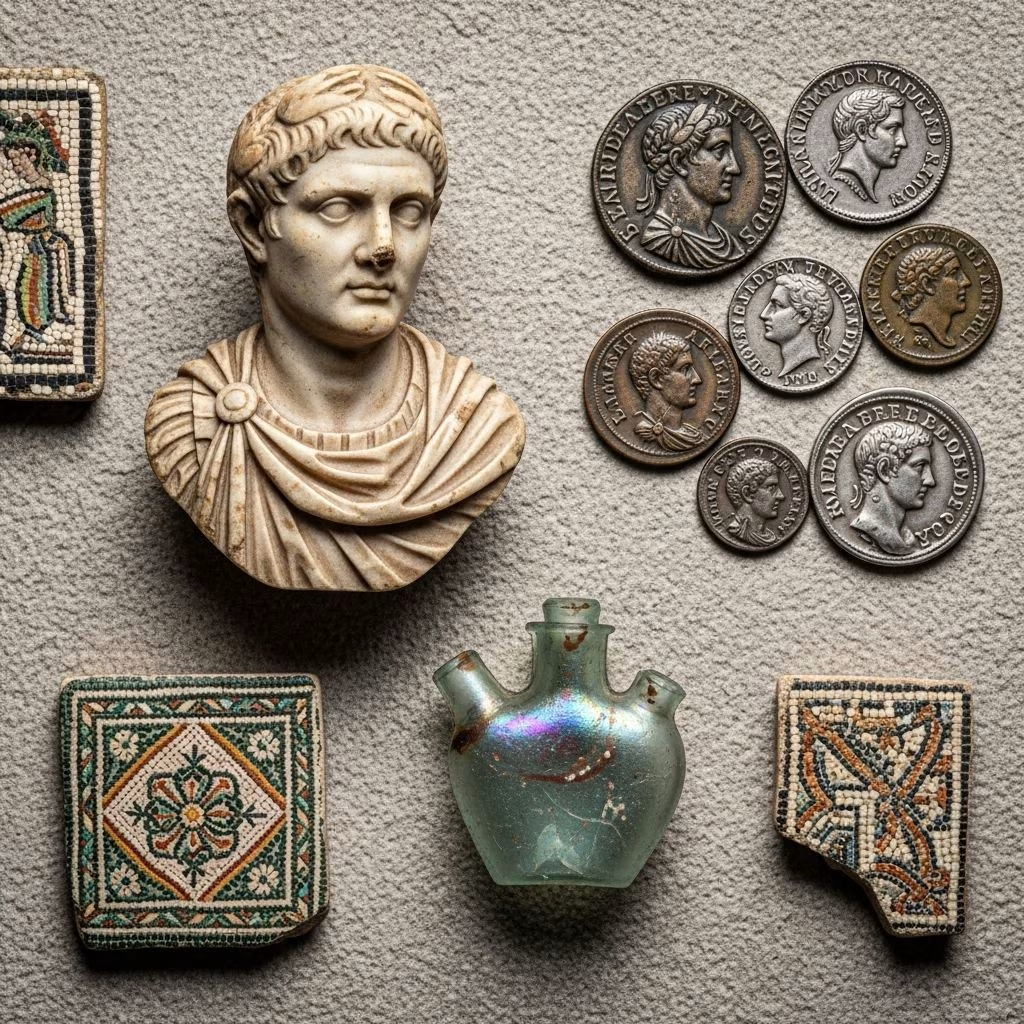
Other gems include the Twin Gates and a mosaic floor unearthed in the old town, remnants of forums and roads that mapped daily Roman life. Pula’s ruins aren’t isolated; they weave into vibrant cafes and markets, making history accessible and immersive.
Venturing south, the Vižula Archaeological Park near Medulin reveals the opulence of elite Roman living. Here, foundations of Crispus’ Villa—linked to Emperor Constantine’s son—span a peninsula jutting into the sea. Expanded in the 4th century to nearly 2.5 acres, it featured baths, pools, and mosaics rivaling those in Italy.
Picnickers and swimmers now relax amid these stones, where imperial intrigue unfolded. Further inland near Valtura, Nesactium emerges as an ‘archaeological paradise.’ This fortified site witnessed the decisive 177 BC battle where Romans crushed the Histrian tribes, securing Istria’s conquest. Walls, temples, and homes illustrate classical urban planning.
| Site | Key Period | Highlights | Modern Use |
|---|---|---|---|
| Vižula | 1st-4th century AD | Imperial villa foundations, sea views | Beach park, picnics |
| Nesactium | Pre-Roman to Roman | Defensive walls, battle site | Hiking trails, history tours |
Off Istria’s coast, the Brijuni Islands National Park shelters some of the largest Roman complexes. In Verige Bay on Veli Brijun, two sprawling villas flanked by temples to Neptune, Mars, and Venus formed a 2nd-century elite sanctuary. Mosaics, aqueducts, and harbor remnants hint at lavish parties for senators and emperors like Diocletian.
Byzantine layers add depth, with a 5th-century castrum at Dobrika Bay blending Roman villa origins with later fortifications. Accessible by boat, these sites offer serene exploration amid deer-filled forests and sapphire waters, contrasting mainland bustle.
In Poreč, Roman ruins complement the 6th-century Euphrasian Basilica’s golden mosaics. The city’s forum and temple bases underscore its role as a key port. Nearby, Trieste’s Roman theatre and forum—though on Italy’s edge—extend Istria’s cultural continuum, with ruins blending into elegant piazzas.
Istria’s Roman footprint extends to over 300 sites, from aqueducts in Vodnjan to theaters in Rovinj’s shadows, each revealing trade, conquest, and daily life.
Getting There: Fly into Pula Airport; rent cars for flexibility. Brijuni requires ferries from Fažana.
Best Time: May-October for mild weather and events; avoid peak July-August crowds.
Costs: Arena €10-20; parks €5-15; combo tickets save 20-30%.
Accessibility: Pula sites are walkable; islands involve light hiking.
Rome arrived in 177 BC, subduing Histrians at Nesactium. By Augustus’ era, Istria thrived as a quarry-rich province supplying limestone for the empire. 1st-century AD saw amphitheaters and arches rise; 4th-century villas peaked under Constantine. Post-Rome, Byzantines and Venetians layered their marks, but Roman bones endure.
Croatian authorities, with EU funding, restore sites like the Arena’s acoustics for concerts. Parks like Vižula balance tourism with conservation, using info boards and apps for virtual reconstructions. These efforts ensure Istria’s ruins educate future generations on sustainable heritage tourism.
Yes, it hosts the Pula Film Festival, concerts by stars like Sting, and operas, accommodating up to 5,000 today.
Absolutely—at Vižula and Brijuni beaches, where ancient foundations meet clear Adriatic waters.
4-5 days: 2 for Pula/Poreč, 1 for south (Vižula/Nesactium), 1 for Brijuni.
Yes, with playgrounds at parks and interactive museums; kids love gladiator stories.
Arena at sunset, Arch of Sergii with sea backdrop, Brijuni temples amid nature.
Istria’s Roman sites transcend stone; they invite sensory immersion—echoes in arenas, breezes over villas—crafting unforgettable journeys through time.
