

 Travel Essentials
 Travel Essentials

Explore Tunisia's exceptional Roman ruins, from the grand Colosseum of El Jem to the underground homes of Bulla Regia, offering a glimpse into imperial grandeur amid stunning landscapes.
 Travel Essentials
Tunisia stands as a treasure trove of Roman architectural brilliance, preserving some of the Mediterranean’s most intact relics from the empire’s golden age. These sites, blending Punic, Numidian, and Roman influences, offer travelers an immersive dive into a bygone era of emperors, gladiators, and opulent villas.
Following the destruction of Carthage in 146 BCE, Rome transformed the region into the prosperous province of Africa Proconsularis, with Carthage reborn as its capital. Emperors like Trajan and Hadrian fueled a construction boom, erecting cities, aqueducts, theaters, and baths that dotted the landscape. This era of wealth from olive oil, grain, and trade left an indelible mark, visible today in ruins that rival those of Italy itself.
Tunisia’s arid climate and relative under-tourism have safeguarded these monuments, allowing visitors to wander freely among columns, mosaics, and forums without crowds. Many sites charge modest fees and remain peacefully isolated, perfect for contemplation.
No exploration of Roman Tunisia begins without the awe-inspiring amphitheaters, built for spectacles that captivated thousands.
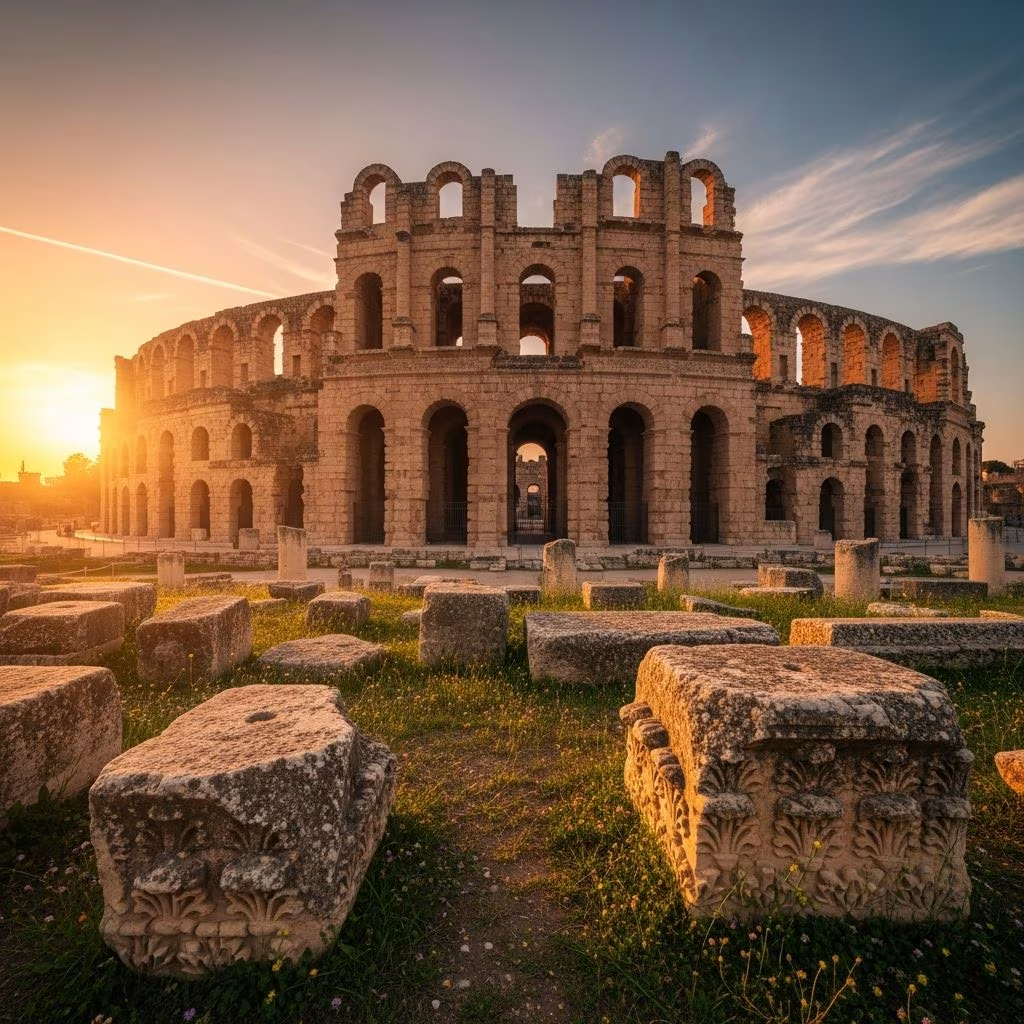
The colossal amphitheater at El Jem, known anciently as Thysdrus, ranks as the fourth largest in the Roman world, seating up to 35,000—more than the town’s population. Constructed around 238 CE, its honey-colored stone facade withstands the centuries, offering tunnels, arches, and seating tiers for exploration. Unlike Rome’s overcrowded counterpart, you can climb freely and inspect intricate brickwork.
Adjacent, the El Jem Museum showcases exquisite mosaics from nearby villas, including a vivid Dionysus procession. A combined ticket grants access, revealing the site’s cultural depth.
Dougga, a UNESCO World Heritage site, exemplifies a complete small Roman town atop Numidian roots. Its Capitoline temple, with six towering columns supporting a pediment depicting Emperor Antoninus Pius, dominates the skyline. Meandering pre-Roman streets contrast with orderly Roman grids, while a theater, baths, and forum invite hours of discovery.
The site’s elevation provides sweeping views, and its isolation enhances the sense of time travel.
In central Tunisia’s Sbeitla, Sufetula’s ruins integrate seamlessly with the modern town. The pristine forum features three grand temples to Jupiter, Juno, and Minerva, among the empire’s finest. Byzantine churches with mosaic baptismal fonts highlight its post-Roman Christian prominence, sustained by fertile olive groves until Arab conquests.
This longevity explains the exceptional preservation, with arches, columns, and streets evoking daily ancient life.
Bulla Regia innovates with subterranean homes, dug into hillsides to escape summer heat. Elite residences boast vaulted ceilings, atriums, and vibrant mosaics, some still intact. Above ground, a theater, forum, and triumphal arch add to the splendor. Occupied until the 1960s, the site’s continuous use preserved its structures.
These cool cryptoporticus homes distinguish Bulla Regia, offering a rare peek into Roman engineering ingenuity.
Perched remotely, Thuburbo Majus reveals a prosperous colony with a grand Capitol, forum, temples, and baths. A lavish summer villa’s mosaics depict elite leisure. Pair it with nearby Zaghouan’s aqueduct temple for a full day.
UNESCO-listed Carthage layers Punic foundations with Roman overlays, including the vast Antonine Baths overlooking the bay. Byrsa Hill yields panoramic views and a museum. This site’s multicultural tapestry—from Phoenician ports to Roman capital—makes it essential.
Utica, among North Africa’s oldest settlements, features Roman forums, baths, theaters, and mosaics. A local guide unveils hidden gems.
Maktar’s triumphal arch, forum, basilica, and unique schola juvenum (youth school) reflect Numidian origins evolving under Rome.
Near Tunis, Uthina’s palaestra and baths, funded by veterans like the Petronii family, feature rare marbles. A recent farmhouse demolition uncovered more.
Tunisia’s sites cluster regionally: northern Carthage/Utina/Uthina; central El Jem/Sufetula; northwestern Dougga/Bulla Regia/Thuburbo Majus. Rent a car for flexibility, as public transport lags. Spring or fall avoids heat; modest dress respects sites.
| Site | Location | Highlights | UNESCO? |
|---|---|---|---|
| El Jem | Central | Amphitheater, museum | Yes |
| Dougga | Northwest | Capitole, theater | Yes |
| Carthage | North | Baths, Byrsa Hill | Yes |
| Bulla Regia | Northwest | Underground villas | No |
| Sufetula | Central | Forum temples | No |
Yes, major sites are secure with guards; check travel advisories.
Dougga for completeness, El Jem for drama—visit both!
Many sites like Bulla Regia and El Jem Museum feature originals.
5-7 days with a car; base in Tunis or Sousse.
Yes, especially Carthage and Dougga blend eras.
These ruins, protected by UNESCO and locals, face threats from climate and neglect. Support through respectful visits sustains them for future generations.
